

























































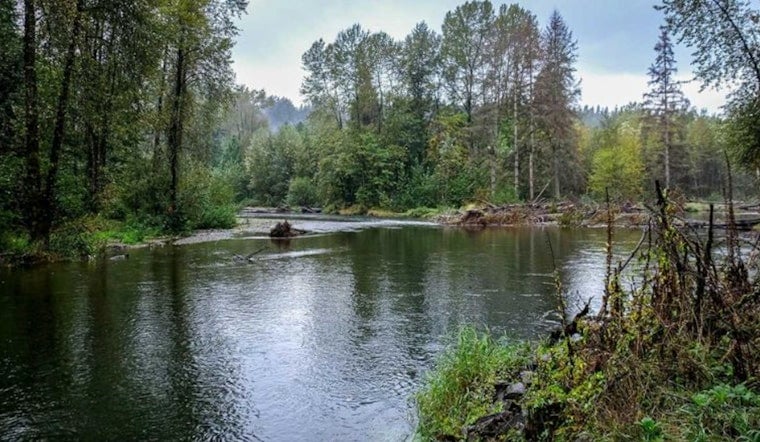
King County has closed the book on a decade-long fight over a proposed asphalt plant along the Cedar River, purchasing the disputed property on State Route 169 for $14 million and setting it aside for public use. Officials say the land will be preserved for parks, trails, and habitat restoration rather than industrial development, ending a saga that pitted local residents against a permitted manufacturing project for years.
The county bought the 18825 Renton-Maple Valley Road parcel from Lakeside Industries, securing it for $2.7 million below its appraised value using county reserve funds rather than new taxes, according to KIRO Newsradio. As FOX 13 Seattle reports, the purchase protects a watershed that supplies drinking water to more than 1.6 million residents.
King County Councilmember Reagan Dunn announced the purchase and executed a ceremonial deed transfer on Saturday during the Fairwood 60th Anniversary Celebration at Petrovitsky Park, where local leaders and community members gathered for the signing, per the Federal Way Mirror. The public event capped years of regulatory battles, legal challenges, and negotiations that began long before anyone expected the site to end up as parkland.
A Decade of Zoning Fights and Wellfield Warnings
The trouble traces back to a 2008 county zoning designation originally intended for a landscaping company, which legally permitted heavy industrial operations on the property and created a persistent legal obstacle for anyone trying to stop future development, according to Seattle Weekly. That zoning quietly opened the door years later when Lakeside Industries proposed relocating its asphalt manufacturing operations to the SR-169 site in 2017, aiming to replace its existing plant along SR-18 in Covington, according to the Greater Maple Valley Unincorporated Area Council.
Despite a temporary emergency moratorium sponsored by Dunn in 2017, the county's Department of Local Services Permitting Division went on to approve shoreline and development permits for the plant in April 2022 after years of public comment. Water District 90 had already passed Resolution No. 1041 in April 2018 formally opposing the facility, after determining the property sat within the 10-year recharge zone of one of the district's drinking water wellfields, according to the City of Renton.
Legal Challenges Give Way to a Negotiated Deal
Local opposition group Save the Cedar River filed a land-use petition in Superior Court in May 2024 to overturn the county's permit approval, but the court ruled against the group, exhausting its judicial options. That legal setback pushed the fight toward negotiation: Save the Cedar River and Lakeside Industries reached a preliminary compromise in July 2025 to cancel the asphalt plant altogether and permit a commercial warehouse instead, a deal that served as a transition step toward full preservation.
That opening allowed King County Councilmembers Dunn and Rod Dembowski to partner with the King County Flood Control District in October 2025 to formally begin public purchase negotiations with Lakeside Industries, according to King County. Flood district involvement helped make public acquisition funding possible, setting the stage for this week's finalized sale.
What Comes Next for the Cedar River Corridor
County officials intend to integrate the newly acquired parcel into the regional trail system while establishing public park spaces, athletic fields, and restored fish and wildlife habitats along the river corridor. The property is expected to serve as both open space and a flood control buffer, a markedly different fate than the asphalt manufacturing facility once slated for the site. For residents who spent years fighting the project, the deal closes out a rare case where community pressure, market shifts, and government coordination converged to turn a contested industrial site into public land.





