

























































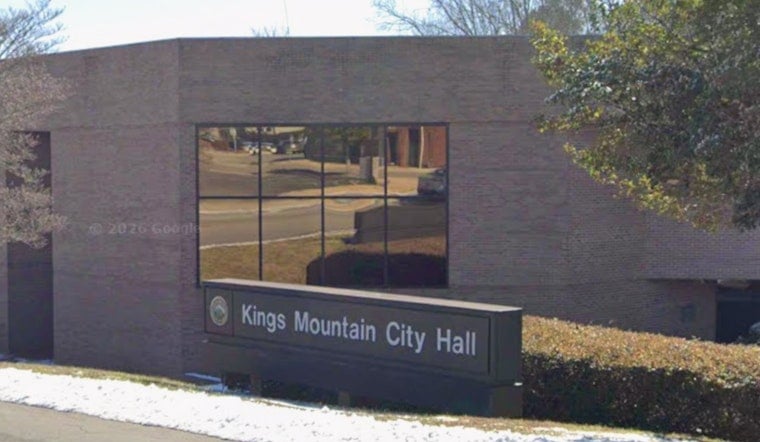
Kings Mountain's data center moratorium was set to expire the same day its city council met to decide its fate, and on Tuesday the council voted 6-1 to extend the freeze on new data center projects for another full year. Councilmember Scott Neisler cast the lone dissenting vote, while the rest of the council kept the door open to end the pause early if circumstances change.
The vote, first reported by Queen City News, extends a pause that began in February, when the city's original 182-day moratorium took effect. At the time, Kings Mountain's planning director recommended the freeze, and Development Services Director Henry Earle told the council the city's Unified Development Ordinance had no specific standards or definitions for data centers at all, only general zoning rules, according to Kings Mountain's official council minutes.
What The Pause Actually Covers
The moratorium does not touch what's already running. Kings Mountain is home to the T5 Data Centers campus, a 280-acre site at 131 Riverside Court that continues to operate unaffected under the freeze, according to a Facebook post detailing the council vote. What remains stalled is a newly proposed 80-acre AI data center project off Interstate 85, backed by a Miami-based LLC — a project whose ownership structure was previously reported by David Schuman on Facebook.
Per the seed reporting, developers have approached city officials directly about building data centers in Kings Mountain, and staff have since engaged the planning and zoning board and held discussions with industry and civic leaders while working to build out an actual ordinance. Council members said they wanted more time to understand what these projects could mean for residents' utility bills, for noise, and for water resources before allowing new construction to move forward.
Water And Power Worries Driving The Pause
Those water concerns are not abstract in Kings Mountain. Local environmental worries have centered on large-scale land clearing and sediment runoff near Moss Lake, the city's primary drinking water source, prompting city leaders to organize public water forums earlier this year, according to reporting from Citizen Portal.
The power question carries statewide weight too. Duke Energy has estimated that a single 300-megawatt data center can draw as much continuous electricity as 225,000 homes, a factor utility watchers cite in North Carolina's 22% rise in average residential electricity bills between 2020 and 2026, as reported by WCNC.
Part Of A Statewide Pattern
Kings Mountain is far from alone. More than 30 local governments across North Carolina, from Charlotte and Asheville to rural Davie and Orange counties, have enacted their own temporary data center moratoriums since February as public pushback over noise and utility strain has grown, per the Carolina Journal. Charlotte itself initiated its own moratorium on data centers, according to the seed report, a move Hoodline detailed in its coverage of Charlotte's neighborhood data center fight.
State lawmakers introduced legislation in 2026 addressing data center permitting and utility usage, and among the bills moving through Raleigh is House Bill 1189, which proposes a statewide two-year moratorium on permits for data centers built for electrical loads of 100 megawatts or more while directing the UNC Collaboratory to study grid and environmental impacts, according to a summary from the UNC School of Government's legislative reporting service. Separately, North Carolina enacted Senate Bill 257, later adjusted by House Bill 56, repealing the state's 7% sales and use tax exemption on electricity consumed by eligible data centers effective August 30, per Grant Thornton.
Legal Risk Looms Over Local Freezes
Any local moratorium still has to follow the rules laid out in North Carolina General Statute § 160D-107, which requires written findings defining the problem, a clear end date and work schedule, and explicit exemptions for projects with pre-existing valid permits or vested site plans, according to a legal summary from the UNC School of Government. That statutory carve-out is exactly why active builds like T5's Riverside Court campus keep running while newer proposals sit frozen.
Developers are increasingly testing those limits in court. Developer ECO TIP West LLC sued Chatham County this year over an $11 million project, arguing that prior zoning approvals had established statutory vested rights that a temporary moratorium could not displace, according to a client alert from WilmerHale. It's the kind of legal exposure Kings Mountain's council will be watching closely as its own 12-month clock starts running.
Whether the city can finish updating its Unified Development Ordinance before that year is up remains an open question, as does how pending state tax and legislative changes might shift developer appetite in Cleveland County. For now, the 80-acre I-85 project stays on hold, and Kings Mountain joins a growing list of North Carolina communities — including Statesville along the same I-85 corridor, which Hoodline reported extended its own 180-day pause — trying to write the rules before the next data center arrives.





