

























































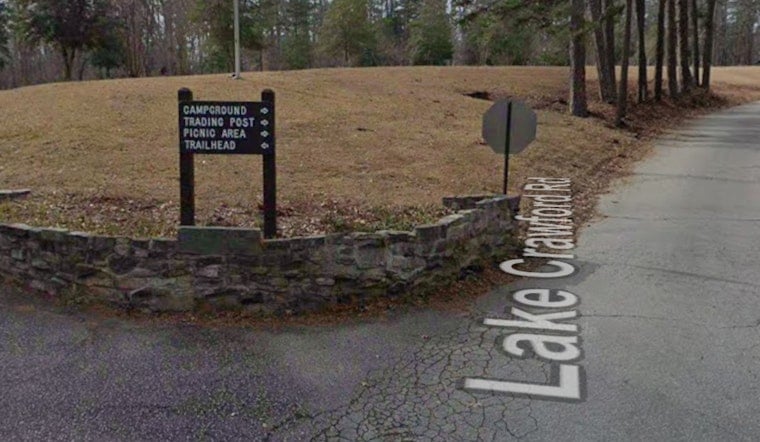
Kings Mountain State Park is on track to grow by nearly 600 acres, after the Open Space Institute acquired a 588-acre parcel adjacent to the park in York County yesterday. The land includes forests, rolling pastures, wetlands, and streams that support biological diversity and water quality, and it is destined to eventually become part of South Carolina's state park system.
The Open Space Institute will retain ownership of the property for several years before transferring it to the South Carolina Department of Parks, Recreation and Tourism, according to the Greenville Journal. Once the transfer is complete, the state agency plans to use the property to expand Kings Mountain State Park, which currently spans 6,885 acres and includes two fishing lakes, 16 miles of hiking trails, campgrounds, and a 19th-century Living History Farm, per Wikipedia.
The South Carolina Conservation Bank identified the property as a high-priority conservation target, and the state agency provided essential funding support for the deal, the Greenville Journal reported. The Green South Foundation contributed additional funding, while the Arizona-based Land Advisors Organization facilitated the transaction through its South Carolina office.
A Buffer Against Rapid Growth
Nate Berry framed the acquisition as a direct response to development pressure building around the park. “By expanding Kings Mountain State Park, we are enhancing access to nature while preserving intact green corridors, wetlands, and wildlife habitat in a part of the Southeast experiencing rapid growth,” Berry said, according to the Greenville Journal's reporting. The 588-acre parcel is expected to provide permanent protections against development of what the outlet described as an essential natural corridor.
That growth is not abstract. York County's population reached an estimated 311,001 residents in 2026, a figure representing growth of more than 37% since the 2010 census as suburban development pushes southwest from Charlotte, according to World Population Review. U.S. Census Bureau estimates released in May 2025 showed York County municipalities including Fort Mill and the city of York ranked among South Carolina's five fastest-growing towns, each posting a 7.7% growth rate between July 2023 and July 2024, as reported by The Herald.
Part of a Statewide Conservation Push
The expansion fits into a broader statewide effort to slow the pace of land conversion. Over 230,000 acres in South Carolina were converted to developed land between 2014 and 2024, prompting Governor Henry McMaster to set a target of permanently preserving 10 million acres by 2050, per the South Carolina Land Trust Network. Since its creation under the South Carolina Conservation Bank Act of 2002, the state Conservation Bank has awarded roughly $359 million in grants to permanently conserve more than 413,000 acres of forestland, farmland, and historic sites statewide, according to reporting from Citizen Portal AI.
State law places a specific limit on how the Conservation Bank can operate. Under South Carolina Code Section 48-59-60, the Conservation Bank Trust Fund is statutorily barred from acquiring land interests or real property through eminent domain or condemnation proceedings, meaning any funding tied to the Kings Mountain expansion depends entirely on a willing seller. This is not the Open Space Institute's first push around the park either — the nonprofit previously acquired nearly 50 acres in 2024 to fill what the Greenville Journal described as a critical conservation gap at the site, continuing what the outlet called its ongoing conservation efforts around Kings Mountain State Park.
A Park Already Tied to Bigger Networks
Kings Mountain State Park is already woven into a larger web of protected land. It directly adjoins the more than 4,000-acre Kings Mountain National Military Park, which commemorates a pivotal 1780 Revolutionary War battle and shares connected trail networks, according to the National Park Service. The state park also links to Crowders Mountain State Park in North Carolina via the 16-mile Ridgeline Trail, forming an interstate greenway corridor that crosses the state line, per the North Carolina Division of Parks and Recreation.
The park itself dates back to 1934, when it was built largely by the Civilian Conservation Corps during the Great Depression, and it earned a spot on the U.S. National Register of Historic Places in March 2008 for its rustic architecture. The Open Space Institute has shown it can manage large, multi-year land deals elsewhere in the state — the organization secured a $50 million federal grant in November 2024 to help preserve 62,000 acres in South Carolina's Pee Dee Basin, according to the National Fish and Wildlife Foundation. Exactly when the Open Space Institute will complete the formal transfer of the 588-acre parcel to state parks officials, and what new trails or camping options might eventually be added to it, remains unclear.





