

























































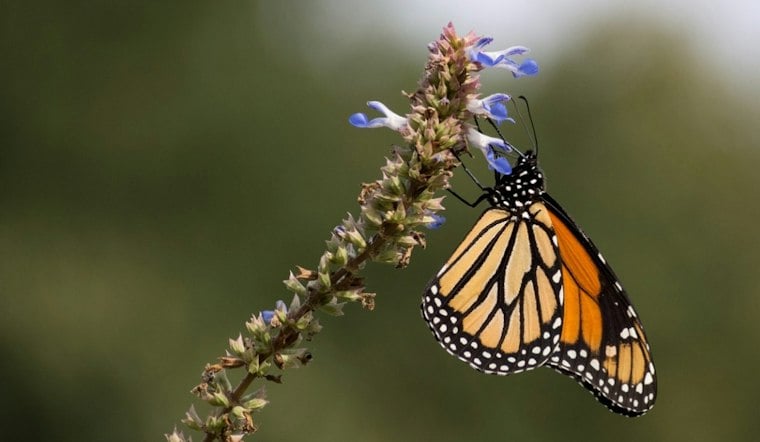
As cooler weather settles over Charlotte, monarch butterflies are passing through the region on one leg of an extraordinary journey — a trip that can stretch as far as 3,000 miles from the northern United States and Canada down to central Mexico. Along the way, many of them are stopping to rest and refuel in gardens scattered across the Charlotte area, turning ordinary backyard plantings into critical waypoints for a species facing long-term survival pressures.
Many monarchs make stops in Charlotte along the way, according to WCNC, which reported that these local gardens provide nectar for butterflies and bees, seeds for songbirds, and habitat for countless other species. The station's report highlighted a garden established in Charlotte's Palisades neighborhood through a partnership between the National Wildlife Federation and homebuilder Taylor Morrison, one example of how developers and conservation groups have teamed up to carve out monarch-friendly space in a growing metro area.
Why Flowers Alone Aren't Enough
Gardens do more than just look pretty along a monarch's route — they function as essential refueling islands. Adult monarchs feed from patches of flowering plants, which appear as stopping-off points to refuel their energy needs during the long flight, according to a publication from the University of Georgia's College of Agricultural and Environmental Sciences. But nectar plants only support the adult, migrating insect. Monarch larvae must feed on milkweed to develop and will not survive on other host plants, the same publication notes, which is why milkweed remains the non-negotiable ingredient in any garden meant to support the species across its full life cycle.
That dual need — nectar for the travelers, milkweed for the next generation — is part of why migrating monarchs need places to stop along the way at all. During their migration journey, monarch butterflies feed on the nectar of many flowering plants found in natural areas, along roadsides, on farms and in gardens, per North Carolina State University's forestry extension. The fall generation making this trip is sometimes called the super generation, capable of traveling as much as 3,000 miles from northern latitudes down to Mexico. Once they arrive, these monarchs spend the winter months, from early November to mid-March, in the Monarch Butterfly Biosphere Reserve in Mexico, the extension reports.
A Population Still Below Target, Despite a Recent Rebound
The scale of that overwintering habitat matters because the eastern monarch population remains below the recommended benchmark, with current population size still lower than the target of six hectares, according to the Monarch Joint Venture. There has been encouraging news in the most recent season: scientists found monarchs occupied 7.24 acres of forest during the 2025-2026 hibernation period, up from 4.42 acres the winter before — a 64% increase, according to the World Wildlife Fund.
Even so, the World Wildlife Fund cautions that there continues to be a long-term downward trend for eastern migratory monarchs, pointing to threats including extreme weather and the loss of breeding habitat. The organization also found that 6.30 acres of forest were degraded in the monarchs' critical winter habitat between February 2024 and February 2025, with illegal logging responsible for 4.58 acres of that total. Estimates of the overall decline vary by source: the North Carolina Zoo has said monarch butterfly populations have dropped by 80% over the last two decades, while WCNC's report cited a figure suggesting over 90 percent of the eastern population is gone — a discrepancy that reflects differing methods and timeframes rather than an agreed-upon single number.
Building a Waystation of Your Own
For Charlotte-area residents hoping to pitch in, the guidance from Monarch Watch is specific: the organization recommends including at least 10 milkweed plants made up of two or more species in any registered waystation. As of October 8, the nonprofit counted 59,109 registered Monarch Waystation habitats nationwide, a tally that keeps climbing as more homeowners and communities convert patches of lawn into pollinator habitat.
Charlotte's Palisades garden isn't the only community-driven project of its kind in North Carolina. The North Carolina Zoo has installed Pollination Stations at three Randolph County preschool sites and at the Child Development Center at Davidson County Community College, according to the zoo's own blog. The zoo shifted its approach starting in 2019, focusing on getting community members directly involved in building these habitats rather than managing them solely in-house — a model that mirrors the kind of neighborhood-level gardening now helping monarchs make their way through Charlotte each fall.





