

























































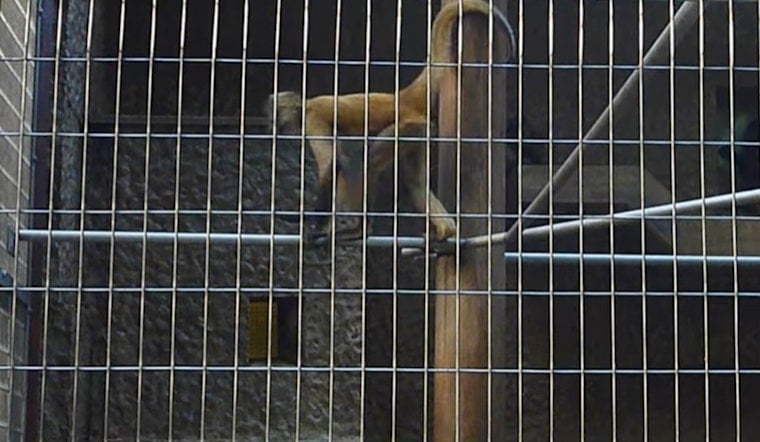
A North Knoxville woman named Jamie Fuller keeps 30 monkeys — capuchins, squirrel monkeys and spider monkeys — in backyard enclosures at her home, a menagerie that is entirely legal under Tennessee law even as Knoxville officials move toward capping how many primates any resident can own. Fuller spoke with Knox News about her animals and their enclosures, and photographer Brianna Paciorka captured her in the backyard with a spider monkey named Neyland Krue.
Fuller's collection sits at the center of a municipal push that predates the Knox News visit. According to Knox News, Fuller owns Neyland Krue among the spider monkeys, squirrel monkeys and capuchins housed on her property. Knoxville Chief Operating Officer Grant Rosenburg has proposed amending city ordinance to prevent residents from keeping more than four monkeys, a limit that would apply directly to setups like Fuller's.
A City Ordinance Built for Dogs and Cats, Not Monkeys
The proposed cap would close a gap in Knoxville's existing animal control code. Under Chapter 5 of the City of Knoxville Code of Ordinances, pet owners who keep more than four dogs or cats older than six months must apply for a special non-commercial permit through the Animal Control Board — but the code has historically lacked any explicit numerical limit on non-domesticated exotic pets like monkeys, according to city records. The Knoxville Animal Control Board met at the Young-Williams Animal Center on July 16 to advance the amendment discussion, per city documents.
That regulatory gap exists in part because state law ties the city's hands. Smaller non-human primates — including spider monkeys, capuchins and squirrel monkeys — are classified as Class III wildlife under Tennessee Code Annotated § 70-4-403, according to Justia Law, which means individuals can own them without a permit from the Tennessee Wildlife Resources Agency. Only Class I species considered inherently dangerous, such as chimpanzees and baboons, require strict commercial permits under state law. That framework is why maintaining dozens of monkeys in an outdoor backyard enclosure in Knoxville remains legal, leaving city zoning and animal control ordinances as the primary tool for setting limits.
A Rescue That Doubles as a Commercial Encounter Business
Fuller's operation isn't purely a rescue. She also runs Monkey Madness Encounters, a commercial venture based in Knoxville that offers private events, party bookings and paid monkey snuggle sessions running up to $400, and she advertises more than a decade of hands-on experience with primates. That dual identity — rescue and paid encounter business — places her enclosures at the intersection of local pet limits and the kind of scrutiny increasingly aimed at private primate keeping nationwide.
Federal authorities have ramped up enforcement against similar ventures elsewhere. In July, federal agents charged two operators of a Maryland “wildlife studio” for staging unauthorized commercial photo shoots and public encounters using captive spider monkeys and lemurs, a case Hoodline detailed in its report on the Towson wildlife-studio bust. That case illustrates a broader trend of federal agencies targeting individuals who charge the public for hands-on access to captive primates.
Escaped Monkeys Have Already Rattled East Tennessee
Concerns about backyard primate keeping in the region aren't hypothetical. In January, a stolen Cinnamon Capuchin monkey named Chester made regional headlines after breaking into a music and pawn shop in nearby Morristown, where he turned on sinks and damaged expensive instruments before police and animal control captured him, according to WBIR Channel 10. Chester was eventually identified through a microchip and returned to his original owner in Alabama, the station reported.
Knoxville's proposed four-monkey cap follows a pattern of tightening local animal welfare rules. In January 2023, the City Council passed amendments to Chapter 5 requiring shaded shelter and prohibiting unsupervised tethering for outdoor pets, WBIR reported at the time. The monkey cap discussion extends that same regulatory focus to a category of exotic pet the code had not previously addressed with a hard number.
Federal Scrutiny of Primate Ownership Runs Deeper in Tennessee
The debate over Fuller's monkeys also unfolds against a backdrop of serious federal cases involving primate abuse in the state. In June 2025, federal authorities unsealed a grand jury indictment against a Tennessee resident and co-conspirators accused of operating an international online ring that produced and distributed videos depicting the torture of monkeys, an investigation led by the FBI and the U.S. Fish and Wildlife Service that Hoodline covered in its report on the Tennessee-linked abuse ring. Nothing in the record ties Fuller to that case, but it underscores why federal and state officials have grown more attentive to private primate ownership in Tennessee.
At the federal legislative level, lawmakers have also pushed to end private primate ownership entirely. The Captive Primate Safety Act, reintroduced in Congress, would amend the Lacey Act to prohibit interstate sale, trade and private pet ownership of non-human primates nationwide, according to the Memphis Flyer. Proponents argue private citizens cannot meet the complex behavioral and housing needs that wild primates require, a position that echoes the concerns now driving Knoxville's own ordinance debate.
Fuller's history in primate rescue extends beyond Tennessee's borders. In December 2024, she publicly mobilized online advocacy for Ethan, a three-year-old rescued spider monkey suffering from metabolic bone disease after being recovered from a car crash in Texas, a condition that frequently affects captive primates fed improper diets. It's a detail that speaks to her long-standing role in cross-state primate rescue networks, even as Knoxville officials now weigh whether her backyard collection fits within the city limits they're trying to set.





