

























































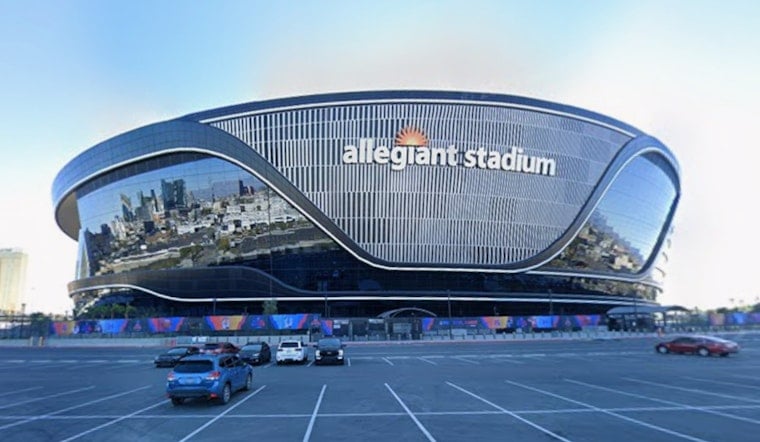
The Las Vegas Bowl will play its 35th edition on New Year's Eve at Allegiant Stadium this December, but the game's long-term survival is no longer guaranteed. Attendance has sagged since the bowl moved into the 65,000-seat stadium, star players are increasingly skipping the game, and the Las Vegas Convention and Visitors Authority has quietly pulled back its financial commitment.
The 2025 Las Vegas Bowl drew 34,269 fans on December 31 when Utah beat Nebraska 44-22 in Kyle Whittingham's final game as Utah's head coach, according to the Las Vegas Review-Journal. But that turnout was an outlier boosted by Whittingham's storyline. Across five games at Allegiant Stadium, the bowl has averaged just 24,137 attendees, filling barely a third of the venue's seats, per the same report from reporter Mick Akers.
A Shrinking Local Draw
Complicating matters further, the bowl has averaged 69 percent out-of-town attendees across those five Allegiant Stadium games, according to Las Vegas Stadium Authority data cited in the Review-Journal's reporting. That leaves the game unusually dependent on visiting fan bases rather than local ticket sales, a dynamic that becomes riskier as scheduling conflicts around the holidays and roster opt-outs keep top players away.
Steve Hill, CEO and president of the LVCVA, told the paper the authority needs a resolution on how bowl games affect Las Vegas, adding that discontinuing the game entirely remains a real possibility. The bowl's fortunes have also been squeezed by the growth of the College Football Playoff, which could expand to 16 or 24 teams and continues to pull marquee matchups and star power away from lower-tier bowls.
Money Getting Tighter
The financial backdrop tells its own story. The LVCVA previously approved a five-year sponsorship deal in 2021 that paid ESPN Events, which owns the Las Vegas Bowl, between $1.6 million and $1.8 million annually. That agreement expired with the 2025 game. In its place, the authority approved only a one-year sponsorship allocating $1.5 million for 2026 — a smaller commitment that the Review-Journal reports allows the LVCVA to evaluate the sponsorship's value before deciding whether to continue at all.
That sponsorship fee buys the LVCVA marketing assets tied to the week leading up to the game and the nationally televised ESPN broadcast, along with a ticket allocation for hosting clients. LVCVA officials have discussed the bowl's future directly with SEC commissioner Greg Sankey, the SEC and ESPN, according to the newspaper's reporting. Under the current format, the game features a team from the SEC playing an opponent from the Big Ten, Big 12, ACC or Pac-12. ESPN Events did not respond to a request for comment on the bowl's future as of August 11, per the Review-Journal.
A Legacy Built on Firsts
The Las Vegas Bowl carries a 34-year history that stretches back to its 1992 debut, when Mid-American Conference champion Bowling Green edged Big West champion Nevada 35-34 at Sam Boyd Stadium in front of 15,476 fans, according to University of Nevada Athletics. The game later hosted college football's first overtime contest in Division I-A history in December 1995 and, in December 2002, became the first FBS game to feature a female student-athlete when New Mexico kicker Katie Hnida attempted an extra point, per the Southern Nevada Sports Hall of Fame. ESPN Events lists it as the 13th-oldest bowl game in the sport.
The bowl's attendance peak also came at Sam Boyd Stadium, when 44,615 fans watched BYU defeat Oregon 38-8 on December 21, 2006, using temporary seating expansions, per the Hall of Fame's records. From 2001 through 2019, the game paired Mountain West against Pac-12 teams, including the 2019 matchup in which Washington beat Boise State 38-7 before roughly 21,000 fans at Sam Boyd Stadium, which then held about 35,000 fans, as the Review-Journal detailed. Sam Boyd Stadium is no longer available for games or events under the joint-use agreement after UNLV sold the stadium and surrounding land to Clark County, and UNLV itself moved into Allegiant Stadium for the 2020 season.
Bigger Events Are Winning the Budget Fight
The LVCVA's hesitation over a mid-tier bowl game comes as the authority pours resources into far larger spectacles. The board approved spending up to $40 million — a $25 million initial budget plus $15 million in contingency — to host the next College Football Playoff National Championship at Allegiant Stadium on January 25, 2027, as the Review-Journal reported in January 2025. Las Vegas was also selected to host Super Bowl LXIII in February 2029, a follow-up to Super Bowl LVIII in 2024, as Hoodline previously reported.
Those mega-events dwarf the bowl's economics. Participating teams in the Las Vegas Bowl have received payouts of $2.9 million each in recent years, well below top-tier non-playoff games like the Holiday Bowl's $4.55 million, according to FanBuzz. Meanwhile the LVCVA's own fiscal year 2027 budget runs $630 million, funded largely through Clark County room tax revenue, and includes a $347,000 salary for a Chief Sports Officer tasked with landing exactly the kind of marquee events now competing with the bowl for attention, per LVSportsBiz.
For now, the Las Vegas Bowl is still on the calendar for New Year's Eve at Allegiant Stadium, and the LVCVA remains what the Review-Journal describes as a longtime supporter of the event. But with ESPN holding the ultimate say over the bowl's future, and the College Football Playoff continuing to expand, the game's fate beyond this season — full continuation, a shift to a rotational event, or discontinuation altogether — is genuinely unresolved.





