

























































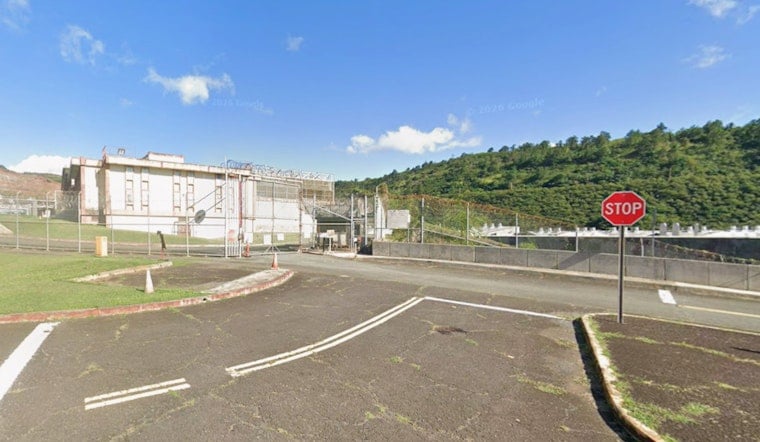
Aaron Ka'ehu was supposed to be safe. He had been placed in protective custody at Hālawa Correctional Facility after the prison gang Murder Inc. allegedly ordered a hit on him, according to a lawsuit filed on his behalf. On Jan. 3, the suit alleges, corrections officers instead gave gang members access to his unit, and Ka'ehu was beaten so badly that he has spent the past eight months in a hospital, unable to walk, talk or write.
The lawsuit, reported by Honolulu Civil Beat, describes what it calls a complete abandonment of protective custody security practices that day, alleging that on-duty staff either heard the prolonged assault and intentionally ignored it or willfully disregarded unit security. Protective custody rules are supposed to prohibit general population inmates — where gang members are typically housed — from entering protective custody modules at all. The suit says corrections officers at Hālawa let that barrier collapse.
Ka'ehu's mother and guardian, Cheryl Ka'ehu-Anderson, told Civil Beat she wants the whole world to know what is going on in the prison. Her son suffered bleeding in the brain, permanent brain damage, broken facial bones and broken ribs in the attack, according to the lawsuit, and he remained unattended, choking on his own blood in his cell, for hours afterward. The suit further alleges that staff failed to make mandatory security checks after the attack.
A Threat That Followed Him From Arizona
Ka'ehu was serving up to 20 years in prison for sexually assaulting a Canadian tourist in 2014, a conviction later affirmed on appeal, and he was transferred from Saguaro Correctional Center in Arizona to Hālawa last fall, according to the lawsuit. Court filings allege Murder Inc. threatened Ka'ehu while he was still at Saguaro in January 2025, and that the lawsuit also claims he had a prohibited romantic relationship with a female correctional officer at the Arizona facility in 2023. Saguaro, run by CoreCivic, holds roughly 800 to 1,000 Hawaiʻi male prisoners under a long-term contract, and the ACLU of Hawaiʻi asked the U.S. Department of Justice in 2024 to investigate homicides, stabbings, drug overdoses and staff contraband smuggling there.
Murder Inc. has a documented history of exerting violent control inside Hawaiʻi facilities. At Oʻahu Community Correctional Center, gang leaders reportedly enforced a code forbidding inmates from speaking directly to guards and controlled cell assignments before a fatal 2023 beating, according to reporting cited in the case. The gang was also linked in court proceedings to the October 2024 killing of inmate Raita Fukusaku inside Hālawa, who was allegedly targeted for assassination and killed in his cell by a cellmate.
Lawsuit Seeks Lifetime Care Costs
The lawsuit names the state, Hālawa warden Shannon Cluney and other unnamed defendants, alleging deliberate indifference to Ka'ehu's danger, medical needs and constitutional rights. It seeks compensation for what it describes as the catastrophic destruction of Ka'ehu's life, along with medical and 24-hour nursing-care costs and punitive damages — care the suit says Ka'ehu will need for the rest of his life.
Department of Corrections and Rehabilitation spokesperson Tommy Johnson said the department cannot comment on pending or current litigation. Hawaiʻi's prison system has faced costly judgments before: a 2022 wrongful-death judgment over a Hālawa inmate suicide awarded $1.375 million to the man's estate, and other Hālawa inmate death cases have resulted in hundreds of thousands of dollars in payouts in recent years.
Part of a Longer Pattern at Hālawa
Ka'ehu's case arrives amid a stretch of documented violence at the facility. Godwyn Foster died at Hālawa in early August after an apparent assault, Hoodline previously reported, marking the third fatal attack at the prison in two years. Foster's death was the sixth murder or suspected murder across Hawaiʻi's state correctional system since May 2024.
The alleged breakdown in supervision described in the lawsuit fits a broader pattern of institutional strain. A January 2025 survey by the Hawaiʻi Correctional System Oversight Commission found unsustainable working conditions across state facilities, with acute officer shortages forcing staff into double and triple shifts. By April 2025, Honolulu's emergency medical services chief had formally warned prison administrators that paramedics would no longer enter state correctional facilities without dedicated security escorts, citing safety threats to first responders.
Staff corruption has compounded the security concerns. A federal indictment in May charged ten people in an Oʻahu drug ring, alleging an on-duty Hālawa guard accepted a pound of methamphetamine to smuggle into the prison for an inmate, with search warrants yielding more than 20 pounds of methamphetamine across the broader investigation. The state has also been debating how to house more inmates at Hālawa: in March, lawmakers advanced House Bill 1769 to cut out-of-state prisoner transfers by 25% by 2029, even as the Department of Corrections and Rehabilitation has warned the facility lacks the design capacity for returning medium-security inmates.
Hawaiʻi officially reorganized its former Department of Public Safety into the Department of Corrections and Rehabilitation on Jan. 1, 2024, under Act 278, a reform explicitly meant to shift state facilities from a punitive model toward rehabilitation. Ka'ehu's alleged beating came just two days after the second anniversary of that reorganization taking effect, a timeline that underscores the gap between the state's stated goals and conditions his lawsuit describes inside Hālawa's walls.





