

























































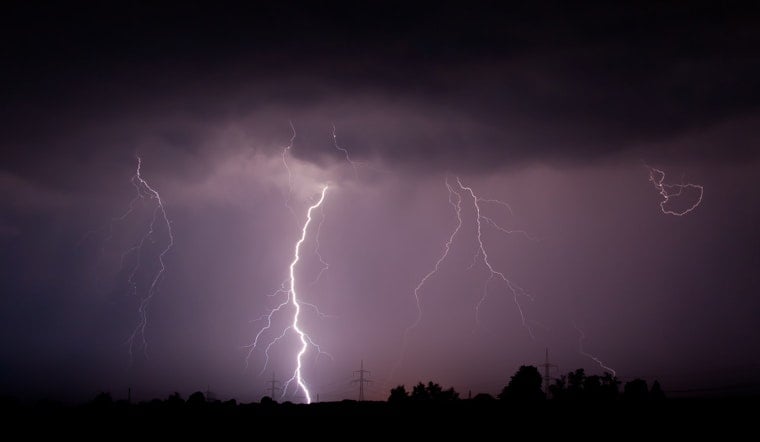
A townhome fire broke out along Wyatt Brook Way in Raleigh on Friday evening just as a line of severe storms rolled through the Triangle, bringing tornado warnings, damaging wind gusts and widespread reports of storm damage across the region. The blaze erupted after a lightning storm moved through the area, and crews responded quickly as the same system triggered a cascade of severe weather alerts across central North Carolina.
Friday was designated a WRAL Weather Alert Day, and for good reason. According to WRAL, the National Weather Service issued a tornado warning covering northwestern Moore County, eastern Montgomery County, southeastern Randolph County and southwestern Chatham County that remained in effect until 6:30 p.m., while separate severe thunderstorm warnings were also issued for Wake and Durham counties and for Harnett County. The storm produced wind gusts reaching 60 mph, per the National Weather Service. WRAL's Pinehurst camera captured rain moving through the area as the strong line of storms tracked east toward the Triangle.
Fire crews responded to the townhome fire on Wyatt Brook Way as the storm system pushed through, though WRAL's reporting notes it remains unclear whether the storm itself directly caused the blaze. The outlet said it had contacted the Raleigh Fire Department for more information. Separately, emergency dispatch records tracked by fire historian Legeros Fire Line show a two-alarm residential fire on Wyatt Brook Way dispatched around 4:41 p.m., with Engine 15 arriving to find heavy fire through the roof before crews got the blaze under control by 5:16 p.m. amid a suspected lightning strike.
A Stalled Front Fueled the Severe Weather
The intensity behind Friday's storms traces back to a stalled atmospheric front positioned along the Virginia–North Carolina border, according to WataugaOnline. That boundary anchored severe thunderstorm activity over the North Carolina Piedmont, generating heavy rain cells capable of dumping 3 to 5 inches of rainfall per hour. Stalled boundaries like this one tend to focus extreme localized rainfall and lightning rather than spreading storms thin across a wide area.
The same storm line caused broader damage beyond Raleigh. Severe thunderstorms across Wake and Johnston counties downed trees and disrupted electrical infrastructure Friday, leaving nearly 2,000 Duke Energy customers without power along the N.C. 210 and McGee's Crossroads corridor near the county border, Hoodline previously reported on the Willow Spring blaze from the same event, which also detailed a separate lightning-caused house fire in nearby Willow Spring.
What Counts as Severe, and Why Lightning Is So Dangerous
The National Weather Service officially issues a severe thunderstorm warning when a storm system is detected on radar or observed by spotters to produce wind gusts of 58 mph or greater, hail measuring 1 inch in diameter or larger, or a tornado threat. Under the agency's wind threat classifications, gusts between 58 mph and 74 mph are considered damaging winds capable of causing minor structural damage to roofs, peeling siding and knocking down tree branches — a range that matches the 60 mph gusts recorded Friday.
Late summer is peak season for this kind of weather in North Carolina. The State Climate Office of North Carolina notes the state typically experiences between 50 and 60 thunderstorms each year, with the highest concentration of severe convective weather occurring during the summer months. North Carolina has also recorded 200 lightning-related fatalities between 1959 and 2017, placing it third highest among all U.S. states for lightning deaths over that span, according to National Weather Service data relayed by WSOC-TV.
Indoor Risk and Property Losses Add Up
Lightning's danger doesn't end at the front door. Research from the Centers for Disease Control and Prevention shows approximately 32 percent of all lightning-related injuries occur indoors, often when electrical currents travel through building wiring, plumbing or landline electronics. Insurance Information Institute data cited by Farmers Insurance also ranks North Carolina among the top 10 states nationally for property insurance claims involving residential lightning damage.
Nationally, the scale of the problem is significant. National Fire Protection Association estimates show local U.S. fire departments respond to an average of more than 22,000 lightning-initiated fires annually, resulting in more than $400 million in direct property losses each year. Structure fires ignited by lightning strikes, like the one on Wyatt Brook Way, remain difficult to prevent without specialized lightning protection systems, since delayed attic detection can allow flames to spread before anyone notices smoke.
It remains unclear whether fire investigators have officially confirmed lightning as the ignition source for the Wyatt Brook Way fire, and the full tally of power restoration timelines and any event postponements across Wake and surrounding counties had not been detailed as of Friday night, per WRAL's reporting.





.jpg)