

























































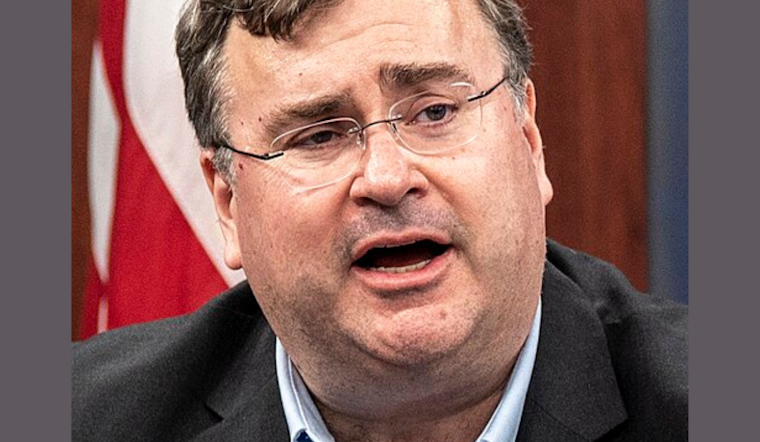
A federal magistrate judge in San Francisco has ruled that LinkedIn's current chief executive and its billionaire co-founder must sit for sworn depositions in a long-running antitrust lawsuit accusing the company of monopolizing the professional networking market. LinkedIn CEO Daniel Shapero can be questioned for up to four hours and former CEO and co-founder Reid Hoffman for up to three hours, both in San Francisco, in a case alleging LinkedIn controlled more than 97% of the professional networking market.
According to Reuters reporter Mike Scarcella, U.S. Magistrate Judge Laurel Beeler found that plaintiffs met the high bar necessary to question top corporate executives, rejecting LinkedIn's push to shield Shapero and Hoffman from questioning. LinkedIn had urged Beeler to bar the depositions entirely, contending the executives lacked first-hand knowledge of the API contracting practices at issue and that no amount of additional discovery would change that.
A Case Rooted in 2022, Revived After Near-Dismissal
The case, formally known as Todd Crowder et al. v. LinkedIn Corp., was originally filed in 2022 and initially dismissed in March 2023 as time-barred, before U.S. District Judge Haywood Gilliam Jr. allowed an amended complaint to move forward in March 2024, according to ClassAction.org. It remains docketed in the U.S. District Court for the Northern District of California as No. 4:22-cv-00237-HSG.
Plaintiffs allege LinkedIn used that dominant position to charge excessive prices for Premium subscriptions, claiming the company conditioned access to its valuable user data and APIs on non-compete agreements — effectively paying third-party partners not to launch competing professional networks, as detailed by Economic Times Legal.
An AI-Powered 'Barrier to Entry,' LinkedIn Calls Baseless
The complaint further claims LinkedIn built what plaintiffs describe as a "Data, Machine Learning, and Inference Barrier to Entry" starting around 2015, using aggregated profile data and artificial intelligence infrastructure to keep would-be rivals from ever scaling, according to Mogin Law LLP. LinkedIn has called the antitrust claims baseless, per the same Reuters report, and agreed to settle the case in 2025 before that deal fell apart.
A Settlement That Collapsed in Oakland
That settlement unraveled after Judge Gilliam denied preliminary approval in Oakland on December 17, 2025, citing serious deficiencies, according to Courthouse News. The proposed deal would have required LinkedIn to change certain business practices — including pausing enforcement of non-compete provisions in its API contracts for three years — but it provided no monetary compensation to subscribers while earmarking up to $4 million in attorney fees.
Just how many members the case could ultimately affect remains unresolved. Plaintiffs have said there are potentially hundreds of thousands of class members, per the outlet's report, while Competition Policy International puts the proposed class at roughly 9 million LinkedIn members nationwide who purchased Premium subscriptions between January 13, 2018, and the present, according to Competition Policy International. Named plaintiffs reside in states including Georgia, Texas, and Arizona and are seeking trebled damages and injunctive relief.
From a $26.2 Billion Sale to a Platform of 1.3 Billion
Hoffman, who co-founded LinkedIn and sold the company to Microsoft in 2016 for $26.2 billion, remains a billionaire closely tied to the platform's rise. Since that acquisition, LinkedIn's global membership has grown from 433 million to more than 1.3 billion, according to the same ClassAction.org account. Microsoft itself is not named as a defendant in the case, which focuses solely on LinkedIn Corporation's contracting practices, per Reuters.
The High Bar for Questioning Top Executives
Depositions of sitting chief executives and founders aren't granted lightly. Federal courts weigh such requests under the so-called Apex Deposition Doctrine, which shields C-suite leaders from discovery burdens unless plaintiffs can show the executive holds unique personal knowledge central to the dispute, according to Finnegan.
Beeler determined plaintiffs cleared that bar, ordering that five senior current and former LinkedIn executives in total — including Shapero and Hoffman — must submit to depositions, according to PYMNTS.
Split Courts, and Echoes of an Earlier Data Fight
The litigation is split across two Bay Area federal courthouses: Gilliam presides over overall trial proceedings in Oakland, while Beeler handles pretrial discovery disputes in San Francisco, according to GovInfo. The case also builds on years of scrutiny of LinkedIn's data practices, including an earlier Ninth Circuit dispute in which analytics firm hiQ Labs accused LinkedIn of violating the Sherman Act by blocking third-party access to public profile data, per the UC Law SF Scholarship Repository.
Judge Gilliam has not yet ruled on whether the lawsuit can proceed as a class action, leaving that question — and what the newly authorized depositions might reveal — unresolved. Plaintiffs are represented by Yavar Bathaee and Brian Dunne of Bathaee Dunne, while LinkedIn's defense includes Russell Cohen and Julia Chapman of Dechert.


.jpg)