

























































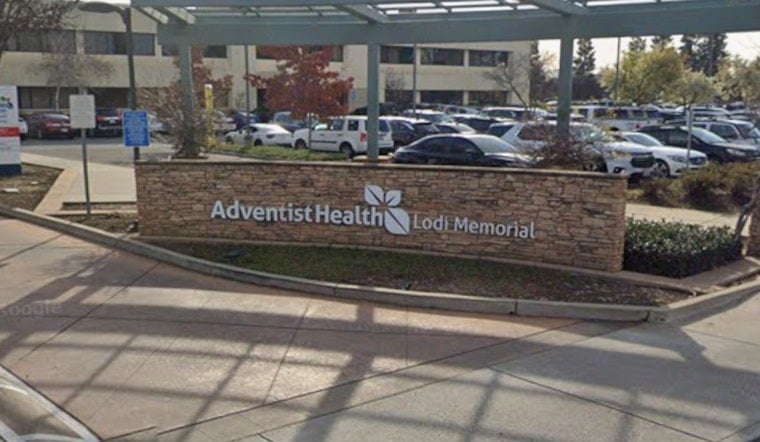
A 37-year-old Lodi man died Saturday after driving himself to Adventist Health Lodi Memorial Hospital with stab wounds, leaving investigators to work backward through an all-too-familiar puzzle: figuring out where the attack actually happened. Roberto Ramos was identified as the victim, and Lodi police say they are still trying to pin down the scene of the crime.
Officers were called to the hospital, located at 975 South Fairmont Avenue, after Ramos arrived with stab wounds and later died, according to CBS Sacramento. The hospital operates a 24-hour emergency department designated as a Level III Trauma Center, per San Joaquin County EMS, making it the primary facility where Lodi residents seek emergency trauma care. Lodi police are investigating Ramos's death and have said they believe the incident was isolated.
Because Ramos drove himself to the hospital rather than being found at a crime scene, detectives lack the kind of initial dispatch location that normally anchors a homicide investigation. That leaves open basic questions, including where the stabbing actually took place, whether any physical or video evidence has been recovered from Ramos's vehicle or his driving route, and whether a secondary crime scene has since been identified anywhere in Lodi.
A Familiar Pattern for Lodi Investigators
This is not the first time Lodi police have faced this exact scenario. In October 2024, two suspects were arrested following a similar fatal stabbing in which the victim was self-transported to a hospital by a family member before dying, as Hoodline reported in its coverage of that case. Cases like these force detectives to piece together timelines and travel routes after the fact, rather than responding directly to a reported crime in progress.
Ramos's death comes after a notably quiet stretch for the city. Lodi recorded seven homicides in 2024 before dropping to just one in 2025, a 71.4% year-over-year decrease, according to City of Lodi statistics — a trend Hoodline detailed in a report on the city's lowest total since 2017. That decline mirrored a broader statewide pattern: California homicides fell 17.5% in 2025 to 1,374 total incidents, alongside a 10.2% drop in overall violent crime, per data reported by ABC10.
What State Data Says About Motive
The California Department of Justice's 2025 Homicide report found that among cases with known contributing circumstances, 40.1% stemmed from an argument, 19.8% were gang-related, and 14.1% involved domestic violence, according to the same ABC10 report. It's unclear which, if any, of those categories might apply to Ramos's death, and Lodi police have not released details about a motive or suspect. Regionally, San Joaquin County recorded 5,447 total violent crimes in 2024, while neighboring Stockton saw homicides drop 34% during the first half of 2025 with a police clearance rate of 68.4%, per the SJC Data Compass.
If a suspect is eventually identified and charged, California law distinguishes between degrees of homicide under Penal Code Section 187, with second-degree murder carrying 15 years to life in state prison and first-degree murder carrying 25 years to life, according to Justia Law. Non-fatal edged-weapon attacks are typically prosecuted under Penal Code Section 245(a)(1) for assault with a deadly weapon, which carries up to four years in prison before escalating to homicide charges if a victim dies, per the Kann California Law Group.
Police Ask Public for Leads
Lodi police have asked anyone with information about Ramos's death to call 209-333-6727. The Lodi Police Department also operates a Special Investigations Unit focused on gang suppression and repeat violent offenders that can be brought to bear on cases like this one, according to a Lodi411 analysis of the department's structure. Residents who prefer to remain anonymous can also submit tips through Lodi Area Crime Stoppers at 209-369-2746 or 369crime.com, where information leading to an arrest may qualify for a cash reward of up to $1,000.




