

























































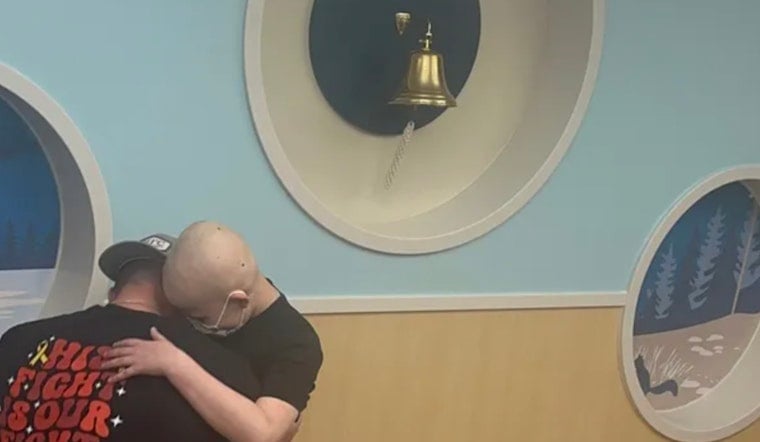
Six-year-old Jaxson Maison sat down at his Loganville home and shaved his head bald, a gesture of solidarity for his 13-year-old cousin Mason Jones, who is battling a relapse of leukemia hundreds of miles away in Texas. The emotional moment was captured on video and has since drawn more than 2 million views online.
Jaxson's family has been documenting the ordeal since Mason's diagnosis worsened, according to FOX 5 Atlanta, which first reported on the viral clip. Mason is currently undergoing treatment for Acute Myeloid Leukemia, or AML, a cancer he had already fought once before with an intense bone marrow transplant, according to a GoFundMe fundraiser organized by Kelly Maison.
The fundraiser, titled Support Mason's Second Fight Against Leukemia, was set up in March to help Mason's parents, Chris and Christine Jones, as they moved into the hospital full-time to be by his side. The family arranged for Mason's sister to stay with relatives so his parents could remain hospitalized with him throughout his renewed treatment, per the GoFundMe campaign.
A Rare and Aggressive Childhood Cancer
AML accounts for roughly 15% to 20% of childhood leukemia cases in the United States, and it tends to strike most often during a child's first year of life or during the teenage years, according to the American Cancer Society. That places Mason, at 13, squarely within the age range where the disease is more likely to appear. Leukemias overall remain the most common form of childhood cancer, with an estimated 9,680 children under 15 expected to be diagnosed with some form of cancer nationwide in 2026, the organization reports.
Relapses like Mason's present a particularly difficult medical challenge. When leukemic cells return in the bone marrow or blood after remission or a transplant, doctors often must turn to re-induction chemotherapy, targeted therapies, or a second stem-cell procedure to try to achieve lasting remission, according to the National Cancer Institute. Despite the grim odds a relapse can represent, pediatric cancer treatment overall has come a long way — the five-year survival rate for childhood cancer in the U.S. has climbed to nearly 85% in 2026, up from about 58% in the mid-1970s, per the American Cancer Society.
A Gesture With Deep Roots
Jaxson's decision to shave his own hair echoes a tradition long embraced by families and communities supporting children who lose their hair to chemotherapy. Head-shaving events tied to organizations like the St. Baldrick's Foundation have raised more than $380 million for childhood cancer research, according to the St. Baldrick's Foundation. The act serves a dual purpose: showing solidarity with a child undergoing treatment, and drawing attention and donations toward pediatric cancer research.
Loganville, where Jaxson lives, is a growing suburb spanning Walton and Gwinnett counties roughly 32 to 36 miles east of downtown Atlanta, with a population of more than 15,000 residents, according to U.S. Census Bureau data. The tight-knit community has rallied behind the video since it spread across social media in the past few days.
The Financial Toll of Long-Term Treatment
Beyond the physical and emotional strain, families facing extended pediatric cancer hospitalizations often face steep non-medical costs — travel, hospital meals, lodging, and lost income — that push many toward crowdfunding, according to the GoFundMe campaign supporting Mason's family. With Chris and Christine Jones now living at the hospital full-time, those costs have become a daily reality on top of the fear and uncertainty of Mason's second fight against the disease.
For now, Jaxson's shaved head stands as a small but powerful symbol from Loganville, a reminder that even a six-year-old can find a way to stand beside a cousin fighting for his life more than 700 miles from home.





