

























































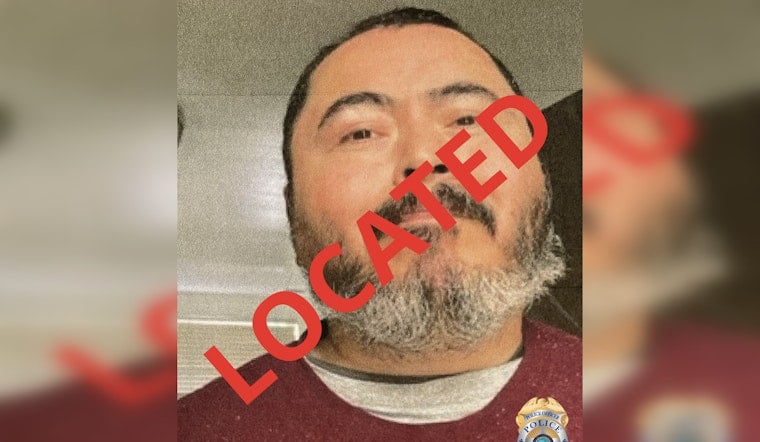
A 49-year-old man who walked away from his Long Beach residential care facility in June has been found safe more than two months later, some 14 to 18 miles north in Norwalk. Francisco Garcia was last seen leaving the facility on the 900 block of Martin Luther King Jr. Boulevard on June 10, according to the Long Beach Police Department, but authorities did not make a public appeal for help finding him until August 11 — a gap of more than nine weeks.
Garcia, described by police as disoriented and living with medical conditions, was located safe and unharmed on Wednesday, police said, as reported by MyNewsLA.com. No additional information was provided about where exactly in Norwalk he was found or how he ended up there. The outlet did not specify what led investigators to that location after such an extended absence.
Police flyers issued alongside the August appeal described Garcia as a Hispanic male standing 5 feet 11 inches tall and weighing approximately 245 pounds, with black hair and brown eyes. His clothing and intended destination were unknown at the time he vanished, according to a City of Long Beach press release. As Patch noted, the more-than-two-month delay between Garcia's disappearance and the public alert stands out sharply against how quickly other recent Long Beach cases were resolved.
A Delay That Outlasted Other Cases
When Long Beach police finally issued their public request for help finding Garcia in mid-August, they simultaneously announced that two other at-risk adults reported missing earlier that month — 39-year-old Marcos Solano and 42-year-old Tiffany Jones — had both already been located safely within days of being reported missing, per the same Patch report. That contrast leaves open questions about why Garcia's case took so much longer to reach the public, and how he survived disoriented for over ten weeks before turning up in Norwalk.
Under California Penal Code Section 14215, law enforcement is required to classify a missing adult as at-risk when there is evidence they need medical attention, have cognitive impairments or developmental disabilities, or have no prior pattern of running away, according to Justia Law. The Long Beach Police Department investigates all missing person reports through a specialized Missing Persons Detail operating out of its Broadway headquarters, collecting tips through dispatch and LA Crime Stoppers until a person is found, the city's press release states.
Wandering Is a Widespread Risk in Care Settings
Garcia's disappearance underscores a risk that extends well beyond his individual case. Data from the Los Angeles County Aging & Disabilities Department indicates that roughly 60 percent of people living with dementia or cognitive impairment will wander away from a care environment at least once. To address that risk, Los Angeles County launched L.A. Found in 2018, a countywide program that provides voluntary trackable radio frequency wristbands and GPS smartwatches to residents with cognitive disorders, according to the Los Angeles Times.
Since it began, L.A. Found has distributed devices to more than 1,800 county residents and helped locate at least 29 missing individuals as of late 2025, the Times reported. It remains unknown whether Garcia was enrolled in the program at the time he went missing.
Part of a Busy Stretch for Long Beach Search Efforts
Garcia's case is the latest in a string of at-risk missing-person incidents that have kept Long Beach authorities busy this month. Just two days before Garcia was found, Long Beach authorities and the U.S. Coast Guard rescued another missing at-risk individual, 53-year-old Paul Anthony Carbullido Jr., after he became lost in the ocean off Long Beach, according to iHeart. Anyone with information related to missing person cases in the city can contact the Long Beach Police Department's Missing Persons Detail or submit tips through LA Crime Stoppers.





