

























































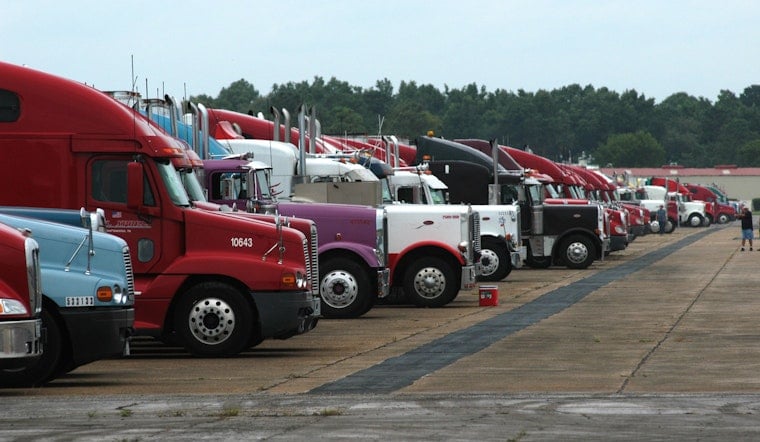
Louisiana's weigh stations are supposed to keep dangerously overweight trucks off state highways, but a new state audit shows a startling number of trucks are simply driving past them unchecked, while millions of dollars in penalties sit uncollected. During field visits at six weigh stations, auditors watched 733 out of 4,703 commercial trucks skip scales they were required to enter — a bypass rate of 15.6 percent.
The findings come from a performance audit formally issued August 5 by the Louisiana Legislative Auditor, evaluating how the Department of Transportation and Development (DOTD) and Louisiana State Police enforce commercial vehicle size and weight limits. As reported by New Orleans CityBusiness, the audit found that DOTD weighed fewer trucks, identified fewer violations, and collected fewer penalties during fiscal years 2023 through 2025, even as the agency increased staffing and funding over that same period. Louisiana State Police, meanwhile, also enforces the state's commercial vehicle size and weight limits, but the two agencies have limited communication and no formal coordination, according to the audit.
Under state law, trucks that illegally bypass an open weigh station face fines ranging from $100 to $500 per violation, according to WBRZ. Auditors estimated the 733 uncited bypasses they observed represented between $73,000 and $366,000 in lost fine revenue from that sample alone. The picture looks even worse over a longer stretch: more than 30,000 trucks illegally bypassed Louisiana weigh stations from May through December of 2025, a volume of skipped scales that could have generated between $3 million and $15.2 million in penalties, per the audit.
Stations Sit Closed, Fines Go Uncollected
Part of the problem is that the scales aren't even open when they're supposed to be. Louisiana weigh stations operated roughly half of their required hours following the 2023 transfer of operational authority to DOTD, falling far short of the agency's goal of keeping interstate stations open 18 hours a day, six days a week, according to CDLLife. Of the state's 17 weigh stations, 10 are currently operating while seven remain closed because of roadway, construction, or technology conditions.
Beyond the missed citations at the scale house, the state's collection problem runs deeper. Nearly $2 million in previously assessed commercial vehicle size and weight penalties remain uncollected by Louisiana authorities, the same report notes. Fines assessed at DOTD weigh stations skewed heavily toward carriers from outside Louisiana, with 80 percent of penalties falling on out-of-state trucks — and among carriers with more than one violation, nearly 77 percent were registered outside the state, making collection harder once those vehicles leave Louisiana roads.
DOTD had not used its authority to fine trucks for illegally bypassing weigh stations until it directed its police force to begin ticketing bypassers starting in May 2025. Since launching that pilot enforcement effort, DOTD Police have assessed $63,000 in bypass violation fines, the article notes. In response to the audit, DOTD said it has acquired 120 portable scales for mobile weight enforcement, with operations set to begin October 1 following an update of agency enforcement policies by September 1.
Two Agencies, Little Coordination
The audit points to a structural problem that predates this year's findings: responsibility for Louisiana's weigh stations has shifted back and forth between DOTD and State Police over the past 30 years, with DOTD resuming control of the stations in 2023. That churn has left the two agencies with complementary but separate responsibilities and little formal coordination between them, DOTD Secretary Robert Hodges said.
Auditors recommended that DOTD and State Police collaborate more closely and that State Police use DOTD's pavement condition and traffic volume data to help target enforcement. State Police pushed back on that recommendation. Hodges said on July 16 that he disagreed with the auditors' recommendations as written, arguing that road conditions and traffic volume are not primary indicators of size and weight violations and have limited value by themselves in directing enforcement resources. Both agencies are authorized to conduct mobile inspections on all state highways and already conduct periodic joint enforcement details when staffing and operational conditions permit, according to the audit.
DOTD also flagged a safety gap in its own operations: its officers lack access to criminal background checks, raising concerns when pulling over trucks that bypass weigh stations without knowing who is behind the wheel. Auditors noted that other states have moved toward virtual weigh stations and license plate readers to improve enforcement, but Louisiana would need a change in state law to adopt similar tools.
Lawmakers Eye 2027 Fixes
The audit warns that weakened truck weight enforcement could cost the state millions and accelerate damage to roads and bridges, and that lost fine revenue is money that could otherwise help maintain state infrastructure. Overweight and unpermitted trucks are worsening conditions on Louisiana highways and bridges, per the audit report, adding urgency to the enforcement gaps auditors identified.
Federal standards under the Surface Transportation Assistance Act cap standard commercial vehicle weight on interstate highways at 80,000 pounds gross vehicle weight, requiring special state permits for anything heavier or oversized. A prior Legislative Auditor report had already recommended that lawmakers raise permit fees on oversized and overweight trucks to generate dedicated revenue for highway repairs, particularly since out-of-state trucks passing through Louisiana often pay no local fuel taxes if they never stop to refuel.
Both State Police and DOTD have now indicated support for new legislation during the 2027 regular session that would give troopers stronger enforcement and fine-collection tools aimed at repeat out-of-state violators. In its response to the audit, State Police acknowledged that several operational deficiencies developed after weigh station control shifted to DOTD, underscoring that fixing the coordination gap may take a legislative push as much as new equipment on the highway shoulder.





