

























































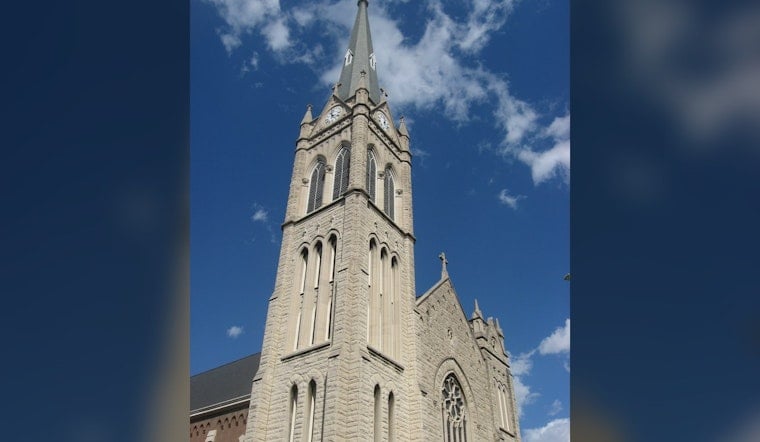
St. Boniface Catholic Church, the longest continuously operating church in Louisville, is on a list of parishes the Archdiocese of Louisville could shut down completely as part of a sweeping restructuring plan. Parish leaders have proposed an alternative: put a deacon administrator in charge of day-to-day operations, backed by two or three retired priests willing to pitch in, rather than close the doors on a congregation that has served the city since 1836.
The proposal came in a letter the St. Boniface parish council sent to the Archdiocese, which remains under consideration, according to WAVE News. Fred Williams, speaking for the parish, said St. Boniface wants to remain open but is trying to avoid an adversarial relationship with the Archdiocese as the process plays out. He also pointed to a blunt reality driving the whole conversation: there simply are not enough active priests to serve every parish.
That shortage is not unique to St. Boniface. Over 40 percent of pastors across the Archdiocese of Louisville were already serving more than one parish as of March, according to a report in The Record, the archdiocesan newspaper. The Archdiocese of Louisville spans 24 central Kentucky counties with 107 parishes serving roughly 164,784 Catholics out of a total regional population of 1.32 million, per Wikipedia. Nationally, less than one-third of U.S. Catholic adults attend Mass weekly and just 20 percent of U.S. adults identify as Catholic, according to a Pew Research study cited in the seed reporting.
A Draft Plan With St. Boniface On It
The Archdiocese released a draft plan in March with possible parish closures and mergers, and St. Boniface was one of six parishes citywide recommended for potential closure, as reported by WE News. According to the Archdiocese of Louisville, merged parishes are two or more parishes combining to form one religious community. The evaluation is part of a formal four-phase parish planning process the Archdiocese launched in 2025 to weigh changing demographics, priest availability, and facility costs, with a final comprehensive plan expected before the end of this year. Archbishop Shelton Fabre's office has said the process included consultation with pastors, parish leaders, and a parish planning committee, and that the Archdiocese met with pastors and parish leaders from all 107 parishes as part of that consultative process, which began in 2025.
So far, the Archdiocese has not responded directly to the St. Boniface parish council's letter, and the parish planning process remains incomplete. Williams and other parishioners argue the timing cuts against St. Boniface, since the parish sits in the growing NuLu area, where WE News reported that roughly 1,200 new residential units are planned or under development in the surrounding East Market/NuLu neighborhood — growth that parish supporters say undercuts any argument that the congregation is fading rather than poised to expand. Louisville Metro's Housing & Mixed Use Development Study aimed to identify opportunities to address the city's housing shortage by building new housing in key areas. Louisville Metro's NuLu Review Overlay District guidelines provide a flexible tool intended to help new development respond to the area's distinctive surroundings.
The Case for a Deacon-Led Parish
The parish's proposed arrangement — a deacon administrator supported by retired priests instead of a full-time active pastor — has been presented as an alternative to closing the parish. St. Boniface leaders say the arrangement would reduce the need for a full-time active pastor, addressing the Archdiocese's stated priest shortage without eliminating the parish altogether.
Even if the Archdiocese ultimately moves to merge or suppress the parish as a legal entity, closing the physical sanctuary is a separate and higher legal bar. Under Canon 1222, shutting down a church building — canonically known as relegating it to profane use — requires the bishop to demonstrate a grave reason after consulting the presbyteral council, according to CatholicPhilly. That distinction matters for a building with St. Boniface's pedigree.
A Sanctuary on the National Register
The current Gothic Revival sanctuary was built in 1899 and rebuilt on the same site in 1900, according to the Kentucky Historical Society. The building was added to the National Register of Historic Places in 1982. The parish was established to serve Louisville's German immigrant population. The campus also hosts Nativity Academy at St. Boniface, an independent Catholic-tradition middle school founded in 2003 by former parish pastor Fr. Timothy Hogan to serve urban youth.
For now, the fate of the parish and its historic sanctuary hinges on a plan still in progress. The Archdiocese has said it plans to finalize its parish plan this fall, leaving St. Boniface's parish council, its remaining supporters, and the students at Nativity Academy waiting to see whether their proposal for a deacon-led future will be enough to keep the 190-year-old parish's doors open.





