

























































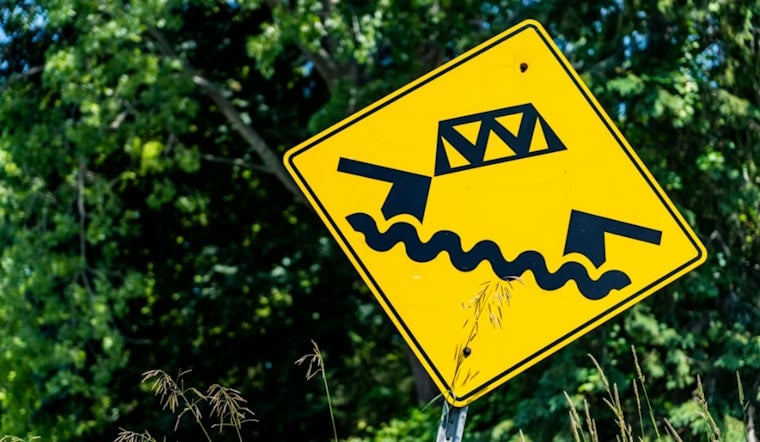
Russell Stoner was warned moments before it happened: do not cross that bridge. He didn't listen in time, and as he tried to make his way over the span into Lower Nahiku, it gave way beneath him, sending him nearly five or six feet down as the structure crumbled. Now Stoner is rigging a wood plank just to crawl across the gap and get to work, and he isn't alone — the entire Lower Nahiku community on Maui's east side is cut off after Hurricane Lala washed away the only bridge connecting them to the outside world.
The collapse, first reported by Hawaii News Now, has left Lower Nahiku residents without a way to bring in food, water or emergency supplies. Floodwaters ripped through properties in the low-lying community as the storm pushed nearly four feet of rain onto Maui, according to the outlet's reporting. Older residents live on the far side of the washed-out crossing, and neighbors say they still haven't figured out a safe way to get a walking bridge in place.
A Storm That Overwhelmed an Already Fragile Span
Hurricane Lala never made a direct landfall in Hawaii, but its outer bands brushed within roughly 30 miles of the islands and still managed to dump up to 48 inches of rain on parts of Maui County on August 15 and 16, according to CBS News. That deluge sent Makapipi Stream, which runs beneath the Lower Nahiku bridge, surging well past its banks. Nahiku resident Kurtis Chong Kee captured video of the stream raging during the storm, per the same reporting from Hawaii News Now.
The flooding was part of a much larger disaster. Statewide, Lala damaged or destroyed at least 100 homes and knocked out power to roughly 200,000 customers as it skirted the islands as a Category 1 storm, per Inside Climate News, with Hawaii Island absorbing the worst structural damage from mudslides in Waiohinu. Closer to home, Hawaiian Electric reported nearly 6,800 Maui County customers without power by August 17, and the county set up shelters and Starlink charging hubs in Hana and Upcountry, according to Maui Now. Lower Nahiku residents currently have neither power nor cell service, compounding the isolation left by the bridge's collapse.
A Decade of Disputed Ownership
This isn't the first time the Lower Nahiku bridge has failed its community. Maui County barricaded and closed the span back in September 2014 over severe safety hazards, but even then the county maintained it lacked legal jurisdiction over the bridge because the road crosses private land, a dispute detailed in the Maui News archives. Residents say they ended up fixing the bridge themselves in 2019, and per Hawaii News Now, they say the wooden structure was then left to deteriorate again, with Stoner saying officials have not adequately supported people living on his side of the crossing.
The road itself is a narrow, 2.5-mile dead-end spur off the Hana Highway near mile marker 25, winding through rainforest down to the coastal ruins of Nahiku Landing — the sole land corridor for residents below the highway. Maui County did maintain the wooden bridge for decades, according to Hawaii News Now's report, even as the underlying jurisdictional questions went unresolved. As recently as 2016, East Maui community members petitioned the county to redirect more than $1 million earmarked for a proposed Nahiku Community Center toward repairing this same bridge and nearby Kuhiwa Gulch culverts, warning that rising stream levels routinely stranded homeowners.
Federal Bridge Money Bypassed This Spur
The irony isn't lost on residents that just last month, money was flowing to bridges elsewhere on the Hana Highway corridor. U.S. Senator Brian Schatz announced $24 million in federal funding in July for the Hawaii Department of Transportation to rehabilitate or replace six high-priority bridges between Huelo and Hana, including spans over Kailua and Mokulehua streams, as Hoodline reported at the time. Off-highway spur roads like Lower Nahiku's were not included in that package.
Now, according to Hawaii News Now, Maui County officials say they are looking into who actually owns the bridge — the same question left unanswered for more than a decade. Nahiku residents have called on Maui County Mayor Richard Bissen both to restore access to a nearby coastal fishing area and to secure a reliable way to get supplies to the isolated side of the community, where a proposed walking-bridge span would need to measure roughly 40 feet to close the gap.
What Comes Next
For now, residents are attempting to develop their own walking bridge, Stoner told Hawaii News Now, echoing the same self-reliance that led the community to repair the crossing themselves in 2019. It remains unresolved whether Maui County or the State of Hawaii will step in with an emergency declaration to take temporary control of the right-of-way, how emergency responders will get food and medicine to stranded kupuna on the far side of the washout, or whether any permanent rebuild will finally settle the land title dispute that has shadowed this bridge for more than a decade.
Environmental regulators have also reshaped the stream running beneath the span in recent years: in June 2018, the Hawaii Commission on Water Resource Management ordered full streamflow restoration for Makapipi Stream, ending decades of sugar plantation water diversions and returning natural flow to the streambed, according to Hawaii Public Radio. Scientists have pointed to a strong El Niño pattern, which elevated Central Pacific sea surface temperatures, as a driver behind the unusually intense 2026 storm season, per Inside Climate News. For a remote community with roots stretching back to the Nahiku Rubber Plantation — the first commercial rubber operation on U.S. soil, incorporated in 1905 before closing in 1916 — the washed-out bridge is the latest chapter in a long history of isolation on this stretch of coastline.





