

























































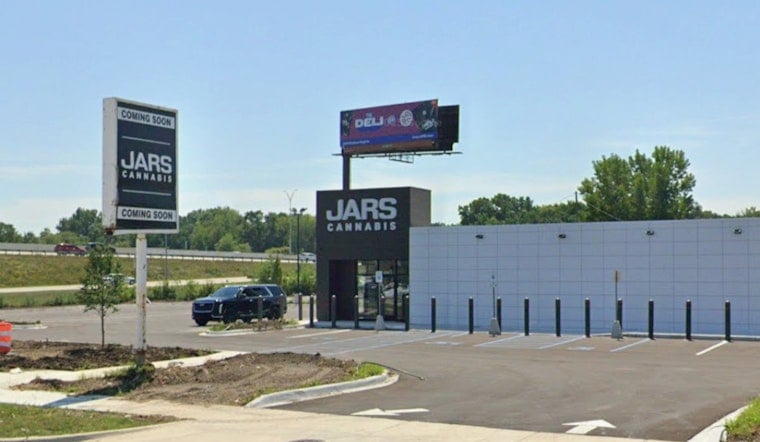
A cannabis dispensary on 12 Mile Road in Madison Heights has convinced the city to rip out a police license plate reader camera that once stared straight into its parking lot — a surveillance fixture the store said was scaring off customers who feared getting logged into a government database just for buying legal weed. JARS Cannabis and the city struck a revised settlement removing the camera from the entrance to the store near the I-75 southbound ramp, ending a monthslong standoff that included a homemade protest sign and threats of municipal sanctions.
According to ClickOnDetroit, Madison Heights and the company reached the new agreement after the city's original settlement with JARS had required a Flock Safety camera at the dispensary's entrance with live police access. That original camera was installed at 1031 and 1035 W. 12 Mile Road, on a site the dispensary redeveloped from a former party store, demolishing an adjacent building to make room, according to C & G Newspapers. The station's report notes the camera pointed directly at the dispensary's parking lot before it was removed; another Flock camera remains about 50 yards away, but it faces the street rather than the lot.
How a Lawsuit Turned Into a Surveillance Deal
The camera requirement traces back to a 2022 lawsuit. JARS, operating under Arctic Fox LLC, sued Madison Heights in November 2022 after the city denied it a retail license because local caps on dispensaries were already full, per the same account from Policy, Decoded. The resulting settlement, approved by the Madison Heights City Council in January 2024, required Arctic Fox to pay $175,000 upfront, $25,000 annually to a community fund, and 1% of net profits — plus install the police-accessible camera at the parking lot entrance.
The store finally opened in September 2025. Once it did, JARS said it began hearing from customers worried that visiting a legal cannabis business meant their license plates would land in a searchable police database. Per ClickOnDetroit, the dispensary described the situation as a responsibility it had to address and said it had real concerns about increased surveillance of its customers.
A Sign, a Threat, and a New Deal
JARS responded by posting a “No Flock Zone” sign in front of the camera, physically blocking its view of the lot, the outlet reports. The city did not take that quietly — Madison Heights threatened sanctions against JARS if the sign wasn't removed, setting up a standoff between the dispensary and the municipality that had once required the camera as a condition of doing business at all.
The dispute ended with Madison Heights Mayor confirming, per ClickOnDetroit, that the city entered into a revised settlement agreement removing the camera from the lot entrance. That revised deal is still pending final approval by the city council. JARS addressed the resolution on social media, thanking, in the company's words, people who spoke up, shared information, and held the company accountable — and saying it had placed the sign specifically to block the camera from recording.
Part of a Wider Pushback on Flock Cameras
Madison Heights is hardly alone in wrestling with Flock Safety, the license plate reader vendor valued at $8.4 billion that operates networks across more than 6,000 U.S. communities, according to Crain's Detroit Business. The company's cameras log not just plate numbers but vehicle color, make, model, and even bumper stickers, fueling critics' fears of a searchable log of ordinary drivers' daily movements.
Metro Detroit has already seen sharper conflict over the technology. In July, police in Wayne opened a criminal investigation after someone physically cut a Flock camera down from its mounting pole, per Metro Detroit News. Around the same time, Hoodline reported that Sumpter Township pulled the plug on its cameras amid a budget crisis, while Westland and Ferndale have let their own Flock contracts lapse or canceled them outright, and Clawson's council deadlocked 3-3 in May over renewing its four-camera system.
The friction has reached the state legislature, too. Michigan State Senator Jim Runestad introduced Senate Bill 1131 in July, which would require police to get a search warrant before accessing license plate reader databases outside active cases and force deletion of stored data after 14 days, according to WTVB. More than 180 law enforcement agencies in Michigan currently run Flock cameras with no uniform statutory limits. Separately, fifteen Democratic state lawmakers sent a letter to the Michigan Department of Transportation in July demanding the state end contracts letting police and federal agencies mount Flock cameras on state highway corridors, as reported by CBS News Detroit.
Questions Over Accuracy and Oversight Remain
Some of the pushback centers on whether the technology even works as advertised. An internal Los Angeles Police Department audit found Flock cameras generated a 32.3% false-positive rate for stolen vehicle alerts over a two-month span, producing 161 false alerts, according to BroBible — numbers that worry civil liberties advocates concerned about unnecessary traffic stops built on bad data. More than 50 local government jurisdictions nationwide have canceled, suspended, or deactivated Flock systems in 2026 over privacy and data-sharing fears.
For its part, the Michigan Cannabis Regulatory Agency enforces strict internal video security requirements for licensed dispensaries, but state rules do not require license plate readers or public traffic monitoring outside retail stores. That distinction underscores that the camera at JARS was never a state mandate — it was a municipal condition Madison Heights itself demanded, and one it has now agreed to unwind, at least at the dispensary's front door.




