

























































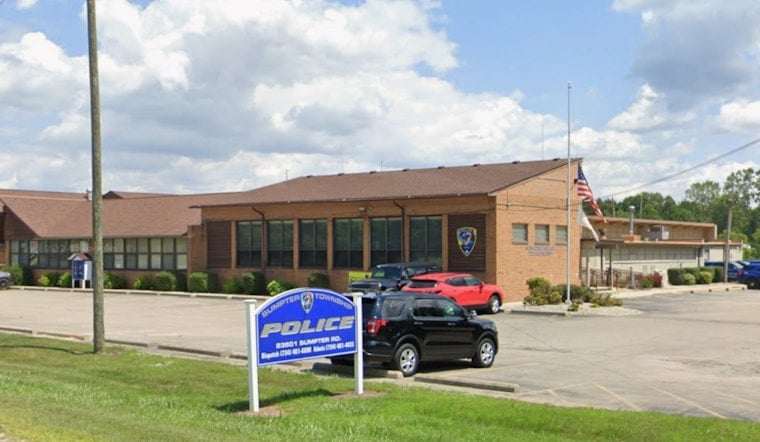
Sumpter Township's police department has canceled its agreement with Flock Safety, pulling the plug on a 60-day trial of automated license plate reader cameras just weeks after voters rejected a tax measure that funds local policing. The department said the cancellation took effect immediately, citing public feedback and a desire to preserve community trust over the technology's use.
The department began testing 11 Flock Falcon cameras across the township's 36 square miles in April, according to FOX 2 Detroit. In announcing the reversal, Sumpter Township police said public safety is built on direct relationships, transparency and shared values, and that the department had weighed community feedback carefully before deciding to end the trial. Officials added that while technology can enhance modern law enforcement, no camera removal was actually required under the terms of the agreement — the department chose to walk away regardless.
A Budget Already Stretched Thin
The timing is not incidental. On August 4, Sumpter Township voters rejected a police millage proposal by a lopsided margin, with 1,284 residents voting no against 982 in favor — a defeat that, per the seed report, broke down to roughly 57 percent opposition. Four days later, the township's Board of Trustees voted unanimously to send a revised measure back to voters in November, this time asking for a 2-mill increase that would raise the police levy from 3 mills to 5 mills, according to ClickOnDetroit.
Police Chief Eric Luke and Township Trustee Tim Rush have warned that if voters reject the millage again in November, the department's operating funds could be reduced by over 40 percent — a cut severe enough that township leaders have floated dissolving the local force altogether and relying on the Michigan State Police instead. The department's existing 3-mill operating levy expired in 2025, leaving only reserve funds to cover operations through the end of this year, the station reports.
Flat Revenue, Rising Call Volume
Sumpter Township's police funding structure has barely changed in 15 years. The department has relied on two main revenue sources — roughly $2 million in flat annual royalties from the Carleton Farms Landfill and the voter-approved millage — with the last rate increase dating back to 2010, according to The Belleville Independent. Landfill royalties have stayed flat for more than 15 years, meaning that portion of the budget has steadily lost purchasing power to inflation.
Meanwhile, demand for police service has nearly doubled. Calls for service jumped from 10,699 in 2021 to 20,663 in 2025, even as the department serves about 12,500 residents across 36 square miles with up to 18 sworn officers, per the same ClickOnDetroit report. Township officials also anticipate more than 2,500 new residents in the coming years due to mobile home park renovations and residential construction, adding further strain to a force already stretched by flat funding.
What Flock Cameras Actually Do
The canceled Flock Falcon units are solar-powered cameras mounted on poles in fixed positions that photograph every passing vehicle, though they do not photograph vehicle occupants or use facial recognition technology, per FOX 2 Detroit's reporting. Their artificial intelligence catalogs license plate state, plate number, vehicle make, model, color and unique appearance details, cross-checking that information against cataloged data to produce investigative hits. The cameras alert police to stolen vehicles, Amber Alerts and other criminal activity, but are not used for traffic enforcement. Critics cited by the station have raised concerns about stereotyping, data storage and surveillance of people who are not suspected of any crime; tools like DeFlock allow the public to map camera locations, while Flock's own Hopper feature offers routes covering more than 90,000 surveillance cameras nationwide, including privacy-first paths that avoid Flock and other ALPR cameras entirely.
A Regional Pattern of Pushback
Sumpter Township is not the only Metro Detroit community rethinking automated surveillance. In Westland, Chief of Police Kyle Dawley has said he will not bring the department's camera contract forward for a renewal vote, and the city's 32 Flock cameras are set to come down this month, following organizer petitions over the data's accessibility to out-of-state and federal agencies without local warrants. In Ferndale, officials severed their Flock contract in 2025 even after crediting the cameras with helping solve a double murder in Hazel Park and a separate murder in Ferndale — the city says it still wants license plate readers but is seeking a different vendor.
Not every suburb is retreating. Warren's City Council voted 4-3 in July to extend its $132,000, two-year Flock contract while adding new data-audit and access-review requirements, a compromise Hoodline covered in its cliffhanger vote coverage. And in Clawson, a deadlocked 3-3 council vote in May killed that city's four-camera renewal, prompting a police sergeant to place her badge on the podium and resign in protest, a moment Hoodline detailed in its report on the badge-on-the-podium walkout.
Cameras Credited in Other Cases
Elsewhere, police agencies have pointed to Flock hits as decisive in fast-moving investigations. Sterling Heights officers responded to a shooting of an 18-year-old on eastbound Hall Road near Schoenherr at 5:36 a.m., and Sterling Heights police credited Flock cameras with helping arrest a suspect less than three hours after the shooting. In a separate case from May, license plate reader cameras helped track an armed carjacking suspect wanted in Lake Orion; Oakland County Sheriff Michael Bouchard credited the camera hit with helping police take the suspect off the streets sooner.
State Lawmakers Eye New Guardrails
The debate playing out in individual townships is also unfolding in Lansing. In July, state Sen. Jim Runestad introduced Senate Bill 1131, paired with bipartisan House Bills 5492 and 5493, which would limit ALPR data storage to 14 days and require search warrants for database access outside active criminal investigations, missing persons cases or stolen vehicle tracking, according to Michigan Senate Republicans. Privacy advocates and lawmakers backing the bills argue that unregulated, continuous surveillance builds detailed tracking logs of law-abiding citizens.
Flock Safety itself has moved to get ahead of the criticism. On August 13, CEO Garrett Langley announced a nationwide policy update cutting the company's default data retention window from 30 days to 7 days and adding mandatory search audit controls, case codes and abnormal activity lockouts, per Police1. More than 180 law enforcement agencies across Michigan now use automated license plate readers, with Flock technology deployed in over 125 municipalities statewide — a footprint that has fueled the broader Fourth Amendment debate now playing out from Sumpter Township to Lansing.
For now, Sumpter Township's Board of Trustees says it will determine how to proceed with its police funding in the coming days and weeks, with the fate of the department's staffing and services likely to hinge on how voters respond to the revised millage request in November.





