

























































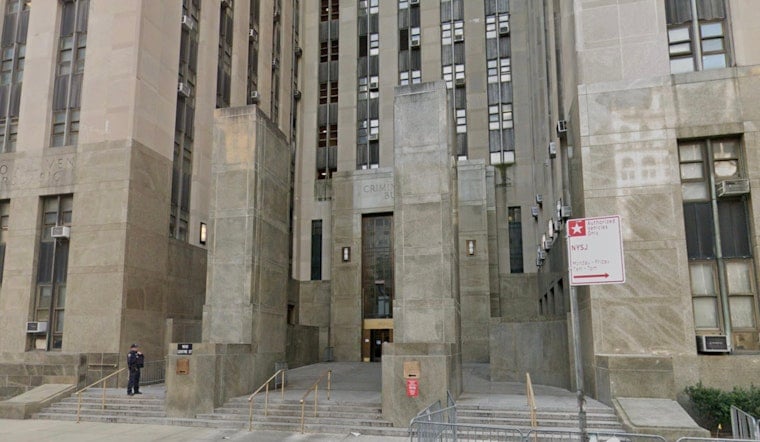
A Manhattan judge sentenced 35-year-old Robert Ray to seven years in prison Thursday for punching MTA station agent Tamika Davis in the face at the 53rd Street and Lexington Avenue subway station, then fleeing the scene — a crime made worse, prosecutors and union officials say, by a second unprovoked attack Ray launched on a correction officer while awaiting trial. Davis was left with facial swelling, a gash, and pain from the assault. Ray pleaded guilty to an assault charge and was sentenced in Manhattan Supreme Court to the seven-year term plus five years of probation upon release.
The attack unfolded around 6:05 a.m. in September 2024, according to court documents cited by the Manhattan District Attorney's Office, which detailed how Ray followed Davis as she checked escalators and walked toward a bathroom before running up and striking her in the face from behind without warning. As New York Daily News reporter Leonard Greene noted, Davis urged the NYPD to put more police officers in subways and on platforms in the wake of the assault.
New York City Transit President Demetrius Crichlow said justice was delivered for Davis, according to the same account. Davis, for her part, said Ray deserved more than seven years behind bars — a sentiment that echoes the maximum penalty available under state law for the crime.
A Second Attack Behind Bars
While held without bail at Rikers Island awaiting trial, Ray attacked a city correction officer from behind without warning, knocking her unconscious and causing serious injuries that required emergency surgery. The officer was taken to a local hospital following the assault. Corrections1 reported the victim was 38-year-old Shamika Mitchell, a 12-year veteran officer who was attacked from behind in a mess hall at the Otis Bantum Correctional Center, an assault that fractured her eye socket, per Corrections1.
Prison Legal News reported that Ray was arraigned separately in Bronx Criminal Court in February 2025 on charges of aggravated assault on a peace officer, assault, and attempted assault stemming from the jailhouse attack, after prosecutors revised initial attempted murder charges down to aggravated assault, according to Prison Legal News. That case remains a separate prosecution from the subway assault that led to Thursday's sentencing.
Why Seven Years Was the Legal Ceiling
Under New York Penal Law § 120.05(11), intentionally causing physical injury to a subway station agent, train operator, conductor, or bus driver performing assigned duties is classified as second-degree assault, according to Tilem & Associates. That charge is a Class D violent felony, and statutory records from the New York State Senate confirm such convictions carry a maximum sentence of seven years in state prison — meaning Ray received the harshest penalty the law allows for his crime against Davis.
John Chiarello, president of TWU Local 100, said Ray received the maximum penalty allowed under state law and urged city officials to keep violent, mentally ill people off streets and subways. Chiarello, who became interim union president in late January 2025 before being sworn in permanently the following month after former president Richard Davis resigned, according to The Chief, said TWU Local 100 members are injured nearly every day on the job.
A Pattern the Union Has Flagged Before
This isn't the first time Chiarello's union has criticized sentencing outcomes for attacks on transit workers. In February, TWU Local 100 publicly objected to a 2-to-4 year prison sentence given to a man who punched a subway conductor, arguing that such penalties fail to deter violent attacks on transit staff. Seven years, by contrast, represents the statutory ceiling — underscoring the union's broader argument that even maximum sentences under current law may not go far enough.
The case lands amid a mixed statistical picture for transit safety. Felony assaults on the New York City subway system rose from 380 incidents in 2019 to 593 in 2025, a 106.6% increase in the rate per million rides, according to crime analysis published by Vital City. A separate city public safety report found felony assaults targeting public-sector employees — including police officers, transit staff, and public safety personnel — climbed roughly 25% citywide in 2025.
At the same time, the Metropolitan Transportation Authority reported that overall subway crime dropped nearly 11% during summer 2025, following a $77 million state investment to expand police platform patrols and deploy SCOUT mental health outreach teams. Officials have pointed to that decline as evidence recent interventions are working, even as union leaders like Chiarello continue to argue that violent, repeat offenders like Ray still slip through gaps in the system before someone gets hurt.





