

























































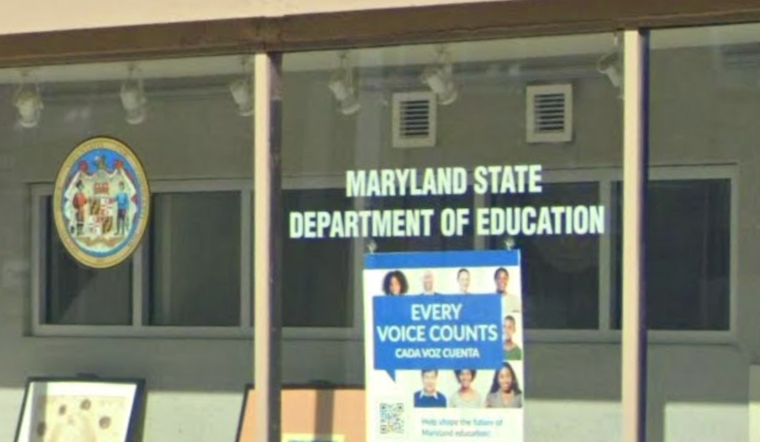
Maryland's State Board of Education voted unanimously to push back its requirement that every school district provide 60 minutes of daily math instruction for kindergarten through eighth grade, giving districts until fall 2028 instead of the original timeline. The delay comes after school leaders and arts advocates warned that some schools were already cutting into art classes, science and other subjects to squeeze in the extra math minutes.
The vote, held Tuesday, was reported by WTOP News, which detailed how the mandate had already produced strange workarounds in some classrooms. At one school, every teacher — regardless of subject or licensure — was required to teach math one day a week, according to the outlet's reporting. At another, students were required to spend half of their 60-minute art class period on virtual and independent math instruction instead of art.
Rachel McGrain, executive director of Arts Education in Maryland Schools, said the math requirement was already having negative effects in some school districts, per the same report. Marcy Leonard, whose comments were also captured by the outlet, said delaying the requirement until fall 2028 amounted to the organization wanting to “slow down to go fast.”
A Former Superintendent Pushes Back on the Board
Robert Miller argued the math requirement, as originally structured, could ruin a schedule that was already producing the state's best math outcomes while limiting students' access to the arts, the report noted. His concerns echoed those raised by school systems statewide as they worked to fit 60 daily math minutes alongside reading, science, social studies and specials like art and music.
Dr. Monica Goldson, Vice President of the Maryland State Board of Education and former CEO of Prince George's County Public Schools, took a different tack. She said the board's focus should be on what happens during those 60 minutes rather than simply increasing the number of minutes, arguing the state needs to improve instructional quality inside the classroom rather than mandate minutes alone.
Math Scores Remain Low Statewide
The urgency behind the mandate traces back to Maryland's math proficiency numbers, which remain stubbornly low. Per state test scores, 27% of Maryland students were proficient in math in 2025 — a modest improvement, according to the Education Data Center, from 26.5% the prior year and just 21.0% in 2022. Statewide Maryland Comprehensive Assessment Program results released in July put the more recent figure at 27.1% proficiency.
Those averages mask sharp disparities between districts. Howard County Public Schools recorded a 42.0% math proficiency rate, according to the district's own released test data, while Baltimore City Public Schools hovered around 10% — a gap that has made a single statewide 60-minute rule especially contentious among local school boards working from very different academic baselines.
Part of a Broader Overhaul
The daily-minutes mandate is only one piece of a much larger PreK-12 math policy Maryland adopted in 2025, representing the state's first major revision of public school math standards in 15 years, according to Mathnasium. The same overhaul restructures high school math, replacing the traditional Algebra I, Geometry and Algebra II sequence with a two-year Integrated Algebra I and Integrated Algebra II pathway set for full rollout in the 2027–2028 and 2028–2029 school years, as reported by the Howard County Public School System.
The changes are tied to Pillar 3 of the Blueprint for Maryland's Future, the landmark 2021 state law requiring public school students to demonstrate college and career readiness in English and math by the end of 10th grade, according to Conduit Street. Testing itself is also changing: starting in spring 2027, Maryland will retire the MCAP exam for grades 3 through 8 in favor of the Maryland System of Testing Academic Readiness, a redesigned exam that cuts testing time by roughly 25%, per the Southern Maryland Chronicle.
Anne Arundel County's Early Test Run
Some districts didn't wait for the state to blink. Anne Arundel County Public Schools rolled out pilot middle school schedules at Arundel, Bates and Corkran middle schools for the current school year to test what it would take to provide more than 60 minutes of daily math instruction, according to the district.
That pilot has not gone over smoothly with every parent. A petition launched in July, covered by The Capital, alleged that expanding math and reading instructional blocks forced a 26% reduction in annual classroom time for science and social studies at the pilot schools — a trade-off organizers say undercuts a well-rounded education even as it tries to shore up math skills.
Maryland's decision to delay the statewide mandate suggests state leaders are listening to those local growing pains, even as they remain committed to the underlying goal. Hoodline previously reported on related friction over classroom instructional strategies, as Baltimore County parents pushed back on device-heavy lessons amid concerns about slipping grades. For now, districts statewide have two additional years to figure out how to add math minutes without gutting the subjects that surround them.





