

























































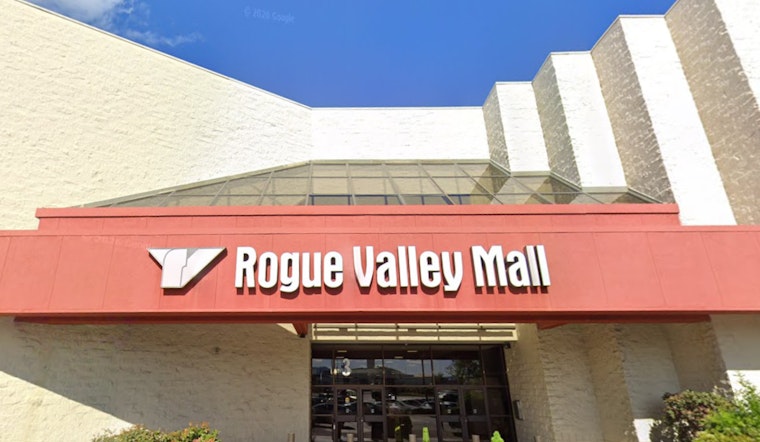
Inside the Rogue Valley Mall in Medford, Oregon, a music-and-movie store that most Americans assume vanished years ago is still ringing up sales of vinyl records and anime T-shirts. Directly across the corridor, an Orange Julius stand has been blending its signature orange drinks since the mall opened in 1986. Together, the two shops form what may be the most unlikely retail pairing left in the country: the last Sam Goody on Earth, and one of fewer than 20 remaining Orange Julius locations in the nation.
The story, first reported by The Oregonian/OregonLive, traces how a chain that once had more than 800 locations nationwide narrowed down to a single surviving storefront by 2024, after a sister location in Clairsville, Ohio, closed in December 2024. Sam Goody was founded in New York in 1951 by Sam “Goody” Gutowitz, and the brand passed through a series of corporate owners over the following decades — sold to American Can Co. in 1978, which also owned Musicland at the time. Trans World Entertainment bought Sam Goody in 2006 and converted nearly all of its stores to the F.Y.E. banner that same year, before selling the remaining Sam Goody name to Canada's Sunrise Records in 2020.
A Manager Fields the Same Question Over and Over
Christopher Freeman, manager of the Medford Sam Goody, told the outlet that customers regularly ask whether his store is truly the last one on the planet. The shop carries music and movies alongside pop-culture toys and collectibles, and per the report, its top sellers these days are anime T-shirts and new vinyl releases. Freeman even suggested the store sell “the last Sam Goody” merchandise to capitalize on its odd claim to fame, but according to the report, company leaders decided the shirts would not be profitable enough to produce.
Despite its dwindling brand recognition, the Medford location is described as doing well. That success lines up with a broader shift in the music business: U.S. vinyl record revenues hit $1.04 billion in 2025, the 19th straight year of growth and the first time sales topped $1 billion since 1983, according to Forbes. Vinyl LPs outsold CDs nearly two to one nationally in 2025, moving 46.8 million units compared to 29.5 million CD sales, even as paid streaming subscriptions made up 82% of overall music industry revenue, per Music Week.
An Orange Julius Owner With Inside Knowledge of Its Decline
Across the corridor, the mall's Orange Julius has operated in the same food-court spot since the Rogue Valley Mall first opened its doors, giving it nearly four decades of continuous service at one location. Clark Bonner, who bought the Medford Orange Julius business in 2020, said the stand has thrived despite what he described as neglect from its franchisor. Orange Julius began in 1926 as an orange juice stand in Los Angeles before growing into a chain with hundreds of locations, eventually ballooning to roughly 745 franchises after a 1967 sale to International Industries, the same company that ran IHOP during its own mall-expansion era.
International Dairy Queen bought Orange Julius in 1987 and gradually folded most standalone mall counters into co-branded DQ Treat Centers, and Berkshire Hathaway acquired International Dairy Queen in 1998 for roughly $590 million, bringing both brands under Warren Buffett's conglomerate. By 2020, most Dairy Queen locations had stopped serving Orange Julius products altogether, though the beverages remain available at select DQ Treat Centers. Bonner, who served on the Dairy Queen board for six years, blamed Dairy Queen management for failing to reinvest in the Orange Julius brand, saying the company has not provided new products or advertising support for it.
A Mall Under Financial Strain, Still a Community Anchor
The Rogue Valley Mall opened on October 15, 1986, as an 847,000-square-foot enclosed complex, making it at the time the largest indoor regional mall between Eugene, Oregon, and Sacramento, California, according to BestAttractions. Anchored today by JCPenney, Macy's and Kohl's, the mall has not undergone major renovations since it opened and still hosts nearly 80 tenants. It also functions as a community gathering spot for both older residents and younger visitors, and as a place to retreat when wildfire smoke fouls the outside air.
The mall's financial footing, however, has been shakier than its retail nostalgia suggests. Spinoso Real Estate Group was court-appointed to manage and market the property after its $44.3 million commercial mortgage loan defaulted in October 2022, according to CoStar, with court receivers relaunching sales efforts for the 454,000-square-foot leasable property earlier this year. That backdrop of financial uncertainty adds a layer of tension to the mall's role as a sanctuary for two retail relics that their own corporate parents have largely abandoned elsewhere.
The pattern is not unique to Medford. Hoodline previously reported that a standalone Orange Julius kiosk at the Tacoma Mall closed overnight in February, part of a broader elimination of independent mall beverage stands across the Pacific Northwest. Elsewhere, an Orange Julius counter continues to operate inside a Dairy Queen at the Las Vegas South Outlets, where Hoodline noted the food court has faced its own redevelopment pressures. Against that regional trend, the Rogue Valley Mall's pairing of a lone Sam Goody and one of the country's last Orange Julius stands looks less like coincidence and more like a holdout against a retail tide that has already swept through nearly every other American mall.



