

























































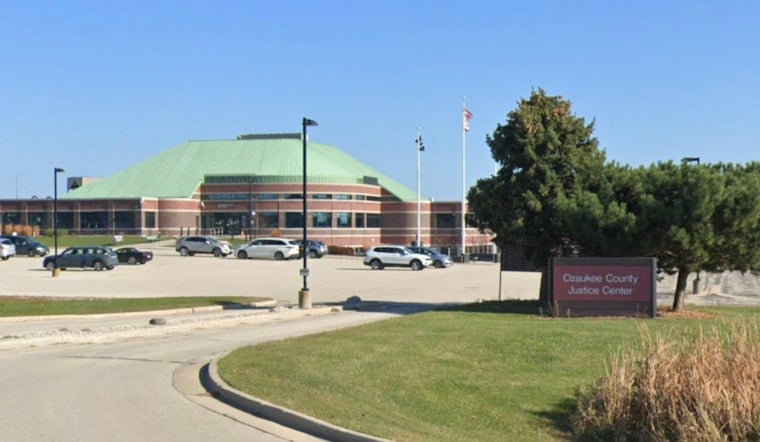
A former Thiensville police officer who fired 16 rounds at two loose pit bulls in Mequon, killing one and wounding the other, will face only a $500 civil forfeiture rather than criminal charges. Richard M. McCormick is scheduled for a court appearance in October after Ozaukee County prosecutors declined to pursue criminal animal cruelty charges over the April 23 shooting.
According to the Milwaukee Journal Sentinel, Mequon police had already responded that day to a call about two loose pit bulls at Highland and Cedarburg roads, giving the animals treats and planning to return in the morning with help from the Humane Society. McCormick was not dispatched to the scene and was outside his own jurisdiction when he encountered the dogs there roughly two hours later, the paper reported.
Body camera footage and police records reported by CBS 58 show McCormick fired 16 total rounds that night, reloading his weapon after his initial shots and continuing to fire while one dog lay wounded in the roadway. Mequon officers who had responded to the same dogs earlier in the evening never drew or fired their weapons, the station noted.
How the Shooting Unfolded
Per the Journal Sentinel's reporting, the dark brown dog was more than 26 feet from McCormick when he fired five more shots after it had already collapsed. McCormick then took four steps toward the animal and fired one additional round, saying, “he's dead” — but the dog was still alive, the paper reported. A final, close-range shot to euthanize the dog came six minutes later.
Thiensville Police Chief Curt Kleppin said McCormick remained concerned for his safety while continuing to fire, according to the Journal Sentinel. But Kleppin also said McCormick had gone outside his jurisdiction without reason and violated department policy, which explicitly prohibits warning shots — a rule the chief confirmed McCormick broke when he fired at least two rounds near the ground to try to scare the dogs, as documented by the Milwaukee Journal Sentinel's continuing coverage.
Why Prosecutors Chose a Fine Over Charges
In an August 5 legal memorandum, Ozaukee County District Attorney Benjamin Lindsay explained that prosecutors could not disprove McCormick's self-defense claim for his initial volley of shots, since a Mequon officer had previously drawn a weapon on the aggressive dogs earlier that day. But Lindsay found McCormick's continued firing after reloading was not supported by a reasonable threat, and said there was too little evidence he intended to treat the animal cruelly to support a criminal charge, according to CBS 58's review of the memo.
That left civil forfeiture as the only available penalty. Under Wisconsin Statute § 951.18, a first-time violation of the state's animal mistreatment law without proven intentional cruelty is classified as a Class C forfeiture, capping the fine at $500 rather than allowing for criminal detention, per the Animal Legal Defense Fund. McCormick was placed on leave immediately after the shooting and resigned during the internal investigation that followed — the second time in his career he has resigned from a department while under an internal affairs probe, according to CBS 58, after the Milwaukee Police Department had previously fired him following several internal investigations.
A Tiny Village Surrounded by Mequon
The jurisdictional question at the center of the case stems partly from geography. Thiensville is a 1.1-square-mile enclave of roughly 3,300 residents completely surrounded by the City of Mequon in Ozaukee County, with the two municipalities sharing joint services including a school district and chamber of commerce, according to background compiled from Wikipedia. That compact footprint means Thiensville officers frequently pass through Mequon territory, though McCormick entered the city that night without a request from local authorities or a 911 call.
Ranger's Long Road to Recovery
The surviving dog, nicknamed Ranger by rescue volunteers, spent 17 days surviving in the woods before being captured. Volunteer Danielle Dietz helped rescue the wounded dog from the woods, alongside Alicia Hegedus, and Karen Bohlmann helped track the animal during the search, per the Journal Sentinel's reporting. Ranger developed fistulas from his gunshot injuries and underwent surgery to remove a bullet from his hip at the Wisconsin Humane Society Ozaukee Campus before being released in June, according to CBS 58's coverage of his recovery.
Dietz and Hegedus adopted Ranger in July. The dog that was killed, meanwhile, was nicknamed B.D. by the same rescue volunteers. Dietz called the justice-system decision disappointing, and she and other volunteers are collecting donations for Ranger's ongoing medical care while planning a fundraising event. Hegedus said the rescue volunteers will continue pushing the issue, and the group plans to help police agencies with dog-encounter training going forward.
A Broader Pattern in Police-Dog Encounters
A national police-dog-encounter expert identified valid concerns about the shooting, according to the Journal Sentinel's reporting. The case also echoes a wider national pattern: a U.S. Department of Justice Office of Community Oriented Policing Services study estimated that officers nationwide shoot and kill 20 to 30 dogs per day, or roughly 7,300 to 10,000 fatal canine encounters annually, according to a report from the Office of Justice Programs. The Justice Department and the National Canine Research Council have since produced a five-part training program called Police & Dog Encounters, aimed at teaching officers canine body language and non-lethal de-escalation tactics, according to the COPS Training Portal.





