

























































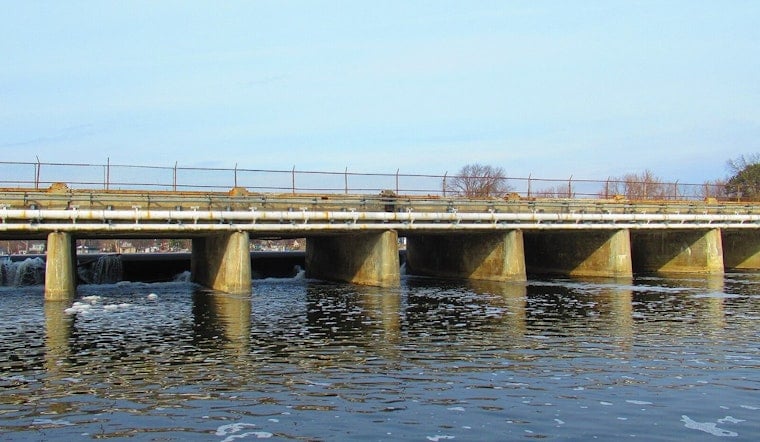
Huron-Clinton Metroparks has decided to partially tear down the Flat Rock Dam and replace that section with a series of rock arches, ending a long standoff over who should pay to fix the aging, high-hazard structure. The dam, built in the 1920s, once supplied hydroelectric power to a Ford-owned lamp factory that assembled headlights and other lighting systems from 1923 to 1950.
The decision, made on August 13, follows Flat Rock's own city council voting unanimously on July 20 not to buy the dam from Metroparks, according to The Detroit News. Flat Rock Mayor Steven Beller said the council decided buying the dam was not financially responsible for the city, adding that no one on council wanted to take on the future financial responsibility. The newspaper reports the city would have faced an estimated $25 million to $35 million in future costs had it taken ownership.
Metroparks had tried to avoid this outcome. Back in September 2025, the agency offered to sell the dam to Flat Rock for just $5, according to WDET 101.9 FM, along with up to $4.5 million to help build an updated fish ladder and cover operating costs. The Metroparks board had already delayed an earlier vote in the summer of 2025 specifically to give that sale attempt another shot, per the Detroit News report, but the offer ultimately went nowhere.
Why the Dam Has to Change
State regulators classify the Flat Rock Dam as a high-hazard potential structure, meaning its failure could cause loss of life or serious damage to critical infrastructure and the environment, the Detroit News reports. The dam sits just upstream of the West Huron River Drive bridge, a Canadian National railroad bridge, and an active oil and gas pipeline, according to the Great Lakes Fishery Commission, all of which engineers will need to protect during construction. Despite the hazard designation, the dam itself is currently in fair condition, the newspaper notes.
The commission also reports that the Flat Rock Dam and the adjacent, downstream Huroc Dam together block upstream migration for Lake Erie species of concern, including lake sturgeon, walleye, and white bass. Notably, while Metroparks owns the Flat Rock Dam, the Huroc Dam and surrounding Huroc Park downstream belong directly to the City of Flat Rock, splitting ownership of river barriers within the same municipality. A fish ladder installed at the dam in 1997 was meant to help, but it suffered repeated operational breakdowns and never fully restored upstream passage, according to Wikipedia.
What the New Design Looks Like
Rather than removing the dam entirely, Metroparks plans to install rock arches that function as naturalized ramps, allowing fish to pass while maintaining wetlands and water levels in the impoundment behind the dam. The agency says the approach is meant to preserve recreation and wildlife habitats while reducing the risk of infrastructure failure and enhancing fish passage. Similar rock arch rapids have been used elsewhere in Michigan to eliminate high-hazard dams while keeping upstream water levels intact, including a rock ramp project completed on the Cass River in Frankenmuth in 2014, according to Huron-Clinton Metroparks.
Amy McMillan said the health and safety of the region and the environment have always been Metroparks' first priority, according to the Detroit News. Metroparks staff recommended the partial removal and rock arch design back in the summer of 2025, and the Huron River Watershed Council formally endorsed that approach in September 2025, calling it, per its own statement, a “once-in-a-lifetime opportunity” that eliminates catastrophic dam failure risk while preserving upstream water levels, according to the Huron River Watershed Council.
Cost, Funding and What Comes Next
The partial removal and rock arch project will cost at least $13 million, the Detroit News reports. Metroparks currently has about $920,000 in grant funding for design and permitting, provided by the National Oceanic Administration Fisheries Regional Partnership, and the agency plans to pursue additional grants to cover the remaining cost. Design and permitting are expected to take about two years, after which Metroparks will seek bids from construction contractors.
Beller said residents understand the process will be long, even as many Flat Rock residents want the dam to stay as it is, according to the Detroit News. Design and permitting stages will include additional opportunities for public feedback, the agency says. The Huron River itself is no stranger to this kind of infrastructure debate — the 130-mile waterway contains 19 dams along its main stem and at least 96 dams across its broader watershed system in southeastern Michigan, according to a September 2025 statement from U.S. Representative Debbie Dingell.
Not everyone downriver is convinced the plan is harmless. Community leaders from neighboring towns like Rockwood raised concerns during 2025 public discussions that dam alterations could affect waterfront property values, alter river quality of life, or shift downstream water flow, according to the Detroit Free Press. Local opposition groups, including the Save the Flat Rock Dam coalition, also raised wildlife conservation concerns during public forums, pointing to active bald eagle nesting sites near the dam along Huron River Drive, according to WDET 101.9 FM.




.jpg)