

























































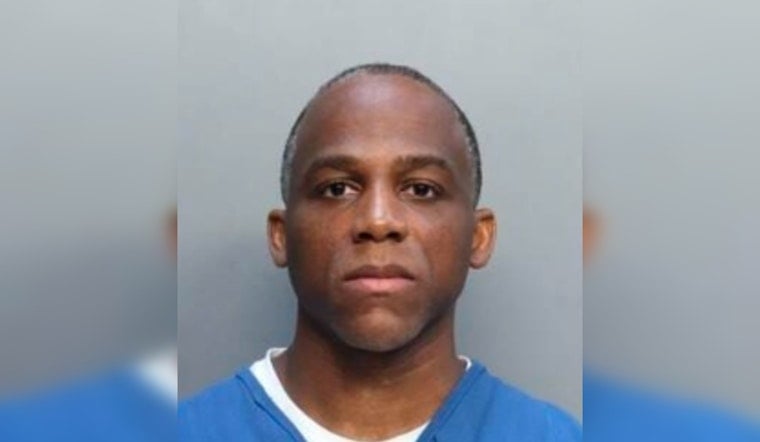
A man sentenced to life in prison for the 1998 murder of a Miami Central High School student now knows exactly when he could walk free. Jonathan Sawyer, now 45, had his life sentence reduced to 40 years followed by 10 years of probation, meaning he could be released as early as 2038 after completing a two-year transitional release program.
Sawyer was 16 years old when he and co-defendant Shawn Singletary shot and killed 18-year-old Ronniqueka “Nikki” Covington on January 17, 1998, according to the Miami Herald. The two fired 14 shots into a car, with Sawyer alone unloading seven rounds from a .45 caliber handgun, and also injured Covington's boyfriend, who was in the vehicle at the time. A jury convicted both men of first-degree murder and attempted murder in 1999.
Covington was an honor roll student at Miami Central High School, a member of the homecoming court, and a participant in the school's band and color guard teams, the Miami Herald reports. According to the same account, Sawyer and Singletary were not targeting Covington or her boyfriend when the shooting happened.
How a Life Sentence Became a Release Date
Eleventh Judicial Circuit Judge Andrea Ricker Wolfson presided over Sawyer's sentence review, the hearing that ultimately shaved decades off his original punishment. Wolfson had ruled four years earlier that Sawyer should spend the rest of his life in a Florida prison, according to the Miami Herald's reporting, before this reversal set his path toward eventual release.
The review was made possible by a wave of legal changes that reached back to Sawyer's 1999 conviction. The U.S. Supreme Court held in Miller v. Alabama in 2012 that mandatory life imprisonment without parole for juvenile offenders violates the Eighth Amendment's ban on cruel and unusual punishment. Florida responded in 2014 by enacting Florida Statute 921.1402, which established formal judicial sentence review hearings for juvenile offenders based on evidence of maturity, rehabilitation and background factors. Under that law, juveniles sentenced to life are entitled to a review after 25 years.
The Florida Supreme Court then ruled in the 2015 case Falcon v. State that the 2014 reform applies retroactively, opening the door for people like Sawyer, convicted long before the law existed, to seek review. A year later, in Atwell v. State, the state's high court further clarified that even older sentencing schemes with eventual parole eligibility still required individualized review hearings to satisfy Miller.
Rehabilitation, Remorse and a Contested Sentence
During the sentence review, the court considered rehabilitation, maturity, remorse and background, per the Miami Herald. Sawyer's attorneys said he accomplished a great deal during his roughly 28 years in prison, including earning a high school diploma, completing anger management and victim impact courses, and counseling at-risk youth.
Sawyer's relatives and friends testified that he matured in how he perceives the world and found a way to avoid conflict, according to the newspaper's account. The hearing also surfaced details about Sawyer's childhood: he witnessed his father kill his mother in a murder-suicide when he was 11, and his father had abused him and his siblings. During 2022 hearings, Sawyer apologized to Covington's loved ones and said he wanted to hold himself accountable, experience sincere remorse and begin making changes.
Prosecutors had pushed for a 50-year sentence, while defense attorneys requested Sawyer's release from prison and probation outright. Wolfson's 40-year sentence with 10 years of probation split the difference, and Florida law required her to attach the probation term once she found evidence of maturity and rehabilitation under the statutory framework. She also ordered Sawyer to stay away from Covington's loved ones and her boyfriend once released.
A Co-Defendant's Case Still Unresolved
Singletary is currently serving his life sentence at Everglades Correctional Institution, a Miami-Dade facility established in 1995 with capacity for 2,259 beds across minimum, medium and close security units and an onsite re-entry center. He had a resentencing hearing of his own in 2020, and court records indicate he may still receive a sentence review under the same statutory framework that reshaped Sawyer's fate — though the outcome of any such review remains an open question.
Sawyer's case is far from unique nationally. Data compiled by the Equal Justice Initiative shows more than 1,000 people automatically sentenced to die in prison for crimes committed as juveniles have since received resentencing hearings nationwide following the Supreme Court rulings barring mandatory juvenile life sentences. Florida itself held custody of more than 80,000 inmates as of mid-2021, giving it the third-highest state prison population in the country, according to reporting on Department of Corrections data.





