

























































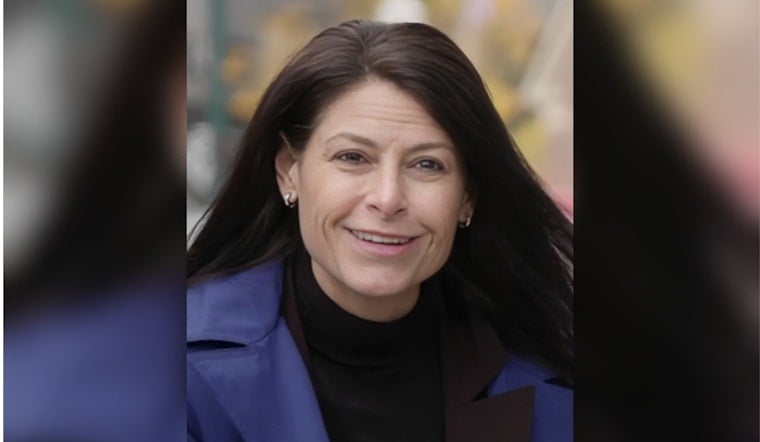
Michigan Attorney General Dana Nessel announced charges today against five non-U.S. citizens accused of illegally voting in the November 2024 presidential election, along with a sixth person accused of registering a non-citizen spouse to vote. The cases grew out of a broader investigation by Nessel's office into 38 suspected instances of non-citizen voting or related conduct spanning elections from 2009 to 2025, of which six resulted in criminal charges.
As reported by The Detroit News, Nessel, who serves as Michigan's attorney general and top law enforcement official, said her office takes election crimes seriously and prosecutes attacks on voting systems to the fullest extent of the law. Among the newly charged individuals is Basanth Sadasivian, a 29-year-old non-American citizen residing in the United Kingdom, who allegedly registered to vote in 2024 by email through the federal postcard application system using a Bloomfield Hills address, according to Nessel's office. Sadasivian is accused of then voting under that same federal postcard system in the 2024 general election and has been charged with one count of being an unqualified elector attempting to vote, a four-year felony.
A Local Case in Three Rivers
One of the defendants named in connection with the broader sweep is closer to home. Alondra Harker, a 26-year-old limited-term alien resident of Three Rivers, was charged in St. Joseph County 3B District Court with misdemeanor fraudulent registration after allegedly registering and voting in person during the November 2024 election, according to the Three Rivers Commercial-News. Harker was arraigned last month and faces up to 90 days in jail and a $500 fine if convicted.
The distinction between Harker's misdemeanor charge and Sadasivian's felony reflects a specific split in Michigan election law. Attempting to vote as an unqualified elector is prosecuted as a felony carrying up to four years in prison and a $2,000 fine, while fraudulent voter registration alone is a misdemeanor punishable by up to 90 days in jail and a $500 fine, the Commercial-News reports. Charges hinge on whether the accused merely registered or actually cast a ballot.
How the Cases Surfaced
The charges trace back to a review led by Michigan Secretary of State Jocelyn Benson's office, which spent months comparing more than 7.9 million active driver's license records against the state's roughly 7.2 million registered voters in the Qualified Voter File. That process, launched by the Michigan Department of State in December 2024, identified 15 individuals who allegedly were not U.S. citizens but cast ballots in the November 2024 presidential election.
Of those 15 cases, 13 were formally referred to Nessel for potential prosecution, according to MIRS News. One individual had died, and one case remained under internal investigation. State officials, in an announcement from the Michigan Department of State, noted that the 15 identified ballots represented approximately 0.00028 percent of the more than 5.7 million total votes cast statewide, a figure they say demonstrates that illegal voting by non-citizens remains extremely rare.
Ballots Already Locked Into the Count
Even with criminal charges moving forward, none of the illegally cast ballots can be pulled from Michigan's certified election totals. State constitutional ballot secrecy protections prevent election officials from retrieving or canceling an individual ballot once it has been fed into an in-person tabulator, as Bridge Michigan has explained. Because tabulators aggregate ballots anonymously, individual votes cannot be traced back to the voter after submission, meaning the certified results stand regardless of the prosecutions.
That mechanism was central to Bridge Michigan's coverage of an earlier case: in October 2024, Washtenaw County prosecutors charged a 19-year-old University of Michigan student from China with felony perjury and voting as an unqualified elector after he cast an early in-person ballot at an Ann Arbor campus polling site. Local clerks flagged the eligibility issue and referred the case to law enforcement before it became one of the state's first high-profile non-citizen voting incidents tied to the 2024 election.
Part of a Broader Enforcement Pattern
Nessel's office has pursued other election-integrity cases in recent years. In October 2024, the attorney general brought felony charges against four St. Clair Shores residents for double voting and three assistant municipal clerks accused of altering the Qualified Voter File during that August's primary, according to a release from the State of Michigan. Hoodline has also covered a related passport fraud case involving a Dominican national who admitted to illegal voting in the 2020 election.
The newest charges also arrive amid a national push on the issue. President Donald Trump issued Executive Order 14399 in March, directing federal agencies including the Social Security Administration and the Department of Homeland Security to share citizenship data with states and to prioritize federal prosecutions for non-citizen voting, according to a statement from The White House. Separately, voting by non-citizens in federal elections already violates 18 U.S.C. § 611, a federal misdemeanor carrying up to one year in prison, and can trigger mandatory deportation under 8 U.S.C. § 1227 regardless of whether the non-citizen understood the act was illegal, per guidance from U.S. Citizenship and Immigration Services.
Ongoing Michigan Debate Over Voter ID
Nessel said her office continues investigating claims of non-citizen voters and is committed to holding accountable those who violate election laws. Twenty-two of the 38 cases her office examined remain under review, while 10 were closed without charges.
The prosecutions land as Michigan weighs a proposal that would institute new identification standards for voters, part of a fight Hoodline has tracked as 750,000 signatures flooded Lansing earlier this year. That debate has also spilled into local politics, including a Detroit panel that erupted over voter-fraud claims tied to a federal citizenship verification proposal in July.





.jpg)