

























































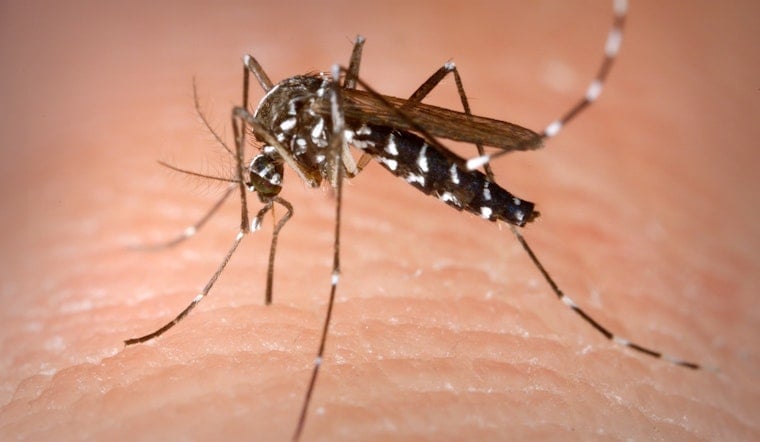
A man in his 90s from Middlesex County has become the first Massachusetts resident confirmed with West Nile virus this year, falling ill after exposure to the mosquito-borne disease. State health officials made the announcement as risk levels climbed to moderate in 70 communities across the Commonwealth, a sign that the season's most dangerous stretch for the virus is only beginning rather than winding down.
The case was confirmed by Massachusetts state health officials, as reported by MassLive. The virus has already turned up in 180 mosquito samples collected around the state in 2026, with positive pools identified in every Massachusetts county except Nantucket. State epidemiologist Robbie Goldstein said West Nile virus “can be a devastating disease, especially for older people or people with compromised immune systems,” underscoring why age remains the single biggest factor in how severely the illness can strike.
Risk Spans Nearly the Entire State
The affected communities span Barnstable, Berkshire, Bristol, Essex, Franklin, Hampden, Hampshire, Middlesex, Norfolk, Plymouth and Worcester counties, according to the same report. The state's first West Nile-positive mosquitoes of 2026 were announced back on June 16, meaning traps had been flagging the virus for more than two months before this first human illness surfaced. Public health records show mosquito traps had been testing positive across 13 counties since mid-June, according to the Massachusetts Department of Public Health.
Most people infected with West Nile virus never notice any symptoms at all, but severe illness can still result in hospitalization or death, the MassLive report notes. According to the CDC, West Nile is a mosquito-borne illness that can cause flu-like symptoms in those who do get sick. CDC surveillance data puts hard numbers behind that pattern: roughly 80 percent of infected people show no symptoms whatsoever, about 20 percent develop fever or flu-like illness, and fewer than 1 percent — about 1 in 150 people — go on to suffer severe neuroinvasive disease such as encephalitis or meningitis.
A Second Mosquito-Borne Threat Emerges in Plymouth County
The timing adds another layer of concern. Just two days before the human West Nile case was confirmed, the Massachusetts Department of Public Health announced the state's first Eastern equine encephalitis-positive mosquito sample of 2026, found in Kingston in Plymouth County, which pushed EEE risk levels to moderate in four communities. EEE is far rarer than West Nile but considerably deadlier, carrying an estimated human fatality rate of roughly 30 percent. The state's last major EEE outbreak came in 2024, when four human cases and one death were reported, following four separate years — 2021 through 2023 and again in 2025 — with no human EEE cases at all.
Culex pipiens and Culex restuans mosquitoes are the primary species spreading West Nile virus to people in Massachusetts, and they breed heavily in catch basins, artificial containers and urban drainage structures — one reason suburban and urban neighborhoods carry elevated risk. West Nile virus was first detected in the United States in New York City in 1999 and has since become the country's leading cause of mosquito-borne disease, averaging roughly 2,000 human cases nationwide each year.
Late Summer Marks Peak Season, Not the End
Goldstein said residents should take steps to prevent mosquito bites before the start of the school year and the arrival of fall, a reminder that risk does not fade just because summer is winding down. Public health data spanning the past decade shows that 80 percent of human West Nile cases in Massachusetts occur in August or September, while 12 percent develop after October 1, meaning the weeks ahead represent the height of transmission risk rather than its tail end.
State officials are urging people outdoors to use bug spray containing an EPA-registered ingredient such as DEET, permethrin, picaridin or lemon eucalyptus oil, and to wear long-sleeved shirts, pants and socks when possible. People should also avoid being outside from dusk until dawn, when mosquito activity peaks, and residents are encouraged to drain standing water around their homes to prevent mosquitoes from laying eggs nearby, as well as install and repair door and window screens to keep mosquitoes from entering homes.
Massachusetts recorded 273 human West Nile cases and 20 associated deaths between 2001 and 2025, according to the state's public health data. The Commonwealth reported nine confirmed human cases in 2025 and 19 in 2024, and whether 2026 trends closer to one year or the other may depend on how much rain and warmth the region sees before the first hard frost. State authorities discontinued routine testing and public reporting of dead birds back in 2008, shifting all of their surveillance resources to mosquito trapping and lab testing as the more reliable indicator of active viral circulation.
Livestock have occasionally served as early warning signs of the virus circulating locally. In July 2025, state officials confirmed a West Nile case in a goat in Lunenburg, in Worcester County, an event Hoodline covered in its report on the season's first animal case. Mosquito pools had already tested positive in Somerville and Jamaica Plain earlier this summer, part of a wave of detections Hoodline tracked as risk levels climbed across Middlesex, Suffolk and Worcester counties.



