

























































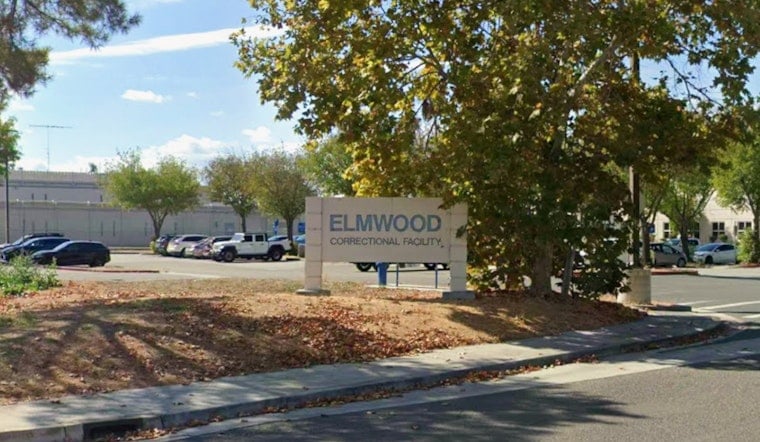
A jury has convicted two men of murder in connection with the January 2025 gang beating death of 23-year-old Oscar Umul Xicay at Elmwood Men's Jail in Milpitas, closing out a criminal case that began when Umul Xicay was picked up on a misdemeanor and never made it out of custody alive. Pedro Arevalos, 43, was convicted of first-degree murder along with a gang-motivation allegation, while Jordan Patrick Haase was convicted of second-degree murder but acquitted of the gang-motivation allegation.
According to The Mercury News, Umul Xicay had been in custody for less than 12 hours after a misdemeanor arrest when the attack happened. As reported by the Palo Alto Daily Post, Umul Xicay had been arrested for misdemeanor vandalism after shaking a keypad outside Mountain View police headquarters and running from officers — a low-level offense that nonetheless landed him in a high-risk housing unit with no known gang ties of his own.
Trial evidence showed that jail surveillance cameras recorded Norteño gang members holding a meeting at 11:38 a.m., using terms like “Sureño” and “he can't be here” — erroneously identifying Umul Xicay as a rival gang member just seven minutes before the attack began, per the Palo Alto Daily Post's coverage of the case. Umul Xicay was leaving the facility showers around 11:45 a.m. that day when Arevalos and Haase blocked his path through a barracks, according to case facts reported by The Mercury News. Arevalos blocked his escape while Jose Antonio Rufino Jr. and Haase dragged him back to the showers, where Rufino kicked him in the face and caused him to hit his head against a window.
An Attack Timed to Beat the Clock
The beating lasted about 18 minutes, and a jail deputy did not find Umul Xicay until 12:03 p.m. He was transported to Valley Medical Center, where staff removed a portion of his skull because of brain swelling. Dr. Marc Lee, the neurosurgeon who operated on him, testified during the July trial that the emergency surgery was a “salvage operation” and that Umul Xicay would have suffered severe brain damage even had he survived, the Palo Alto Daily Post reported. He was pronounced dead on January 31, 2025.
A May 2025 report by police auditor Julie Ruhlin found that gang-affiliated inmates had tracked deputy patrol movements and timed the assault to end five minutes before a scheduled hourly welfare check, exploiting unmonitored security cameras, according to the same outlet's reporting. The Elmwood housing unit had three of its ten deputy positions vacant at the time, The Mercury News reported, and the Office of Correction and Law Enforcement Monitoring, known as OCLEM, later reported that camera feeds were not continuously monitored. OCLEM blamed the killing on systemic issues including short staffing and predictable welfare checks, and separately found no individual liability among deputies in Umul Xicay's death — a finding OCLEM's own staff has criticized internal affairs investigators for reaching by relying heavily on deputies' logs and detectives' case files rather than independent review.
Six Defendants, Six Different Outcomes
The case against six original defendants wound down in stages over the past year and a half. Jose Antonio Rufino Jr. signed a plea agreement in June requiring him to serve 25 years to life plus a consecutive 3-year, 8-month term for seven unrelated convictions, after pleading no contest to first-degree murder, gang enhancement and gang conspiracy charges; he is now imprisoned at Wasco State Prison. Three other defendants — Alex Arreola, Ricardo Charles and Alexavier Victor Rodriguez — pleaded no contest to gang participation and gang conspiracy charges in March 2026 after initially being charged with murder, and were ultimately cleared of the murder charges. All six defendants had also faced torture charges that were dismissed. Arevalos and Haase now face a second trial phase covering gang enhancement and gang conspiracy charges, scheduled to begin Monday. Deputy District Attorney Noel Walton prosecuted the murder trial, which concluded in early August after a 12-member jury deliberated over several days on a half-day schedule, the Palo Alto Daily Post reported.
Advocates Say Convictions Don't Answer the Bigger Question
Sean Allen, whose comments were included in The Mercury News's reporting, said the murder convictions do not answer the institutional questions raised by the killing. Allen and the NAACP branch he represents have asserted that Umul Xicay was mistaken for a rival gang member because of his heritage, and Allen argued that he should never have been housed with Norteño-affiliated attackers in the first place. He said the same institutional failure that produced Umul Xicay's murder remains in place, pointing to OCLEM's own questioning of why Umul Xicay was jailed at all after a misdemeanor arrest.
Community advocates cited in the Palo Alto Daily Post's earlier reporting on the case likewise noted that Umul Xicay appeared to have been targeted over his heritage rather than any actual gang affiliation. The killing was not an isolated case: two Elmwood jail inmates have separately been convicted of murdering another inmate in an 11-minute gang beating, and a 2020 attack at the same facility involved 31 attackers, according to figures reported by The Mercury News.
A Facility Under Federal Watch
Santa Clara County's jail facilities have operated under two federal consent decrees since 2019 — Chavez v. County of Santa Clara and Cole v. County of Santa Clara — which mandate legally binding remedial plans addressing systemic safety, healthcare and operational deficiencies, according to Santa Clara County. A county audit found that as of mid-2024, only 51 percent — 316 of 623 — of recommendations from a 2016 Blue Ribbon Commission on jail reform, formed after the 2015 beating death of inmate Michael Tyree, had been fully implemented, with roughly 35 percent overlapping federal consent decree mandates.
The Umul Xicay case is not the first time an Elmwood employee has faced consequences for enabling inmate violence. Former correctional officer Francisco Izayas Castillo was sentenced in May 2026 to 45 days in jail after being convicted of misdemeanor battery for encouraging and allowing inmates to ambush another jailed man at Elmwood in 2022, telling inmates to “handle it” and opening the cell door, as KQED reported at the time — a case Hoodline covered in May. The killing also arrived amid a broader spike in custody fatalities: Santa Clara County jails recorded 10 in-custody deaths in 2024, the highest single-year total in two decades, with six of those deaths occurring at Elmwood, per the Palo Alto Daily Post's earlier reporting.
Sheriff's Office Points to Reforms Already Underway
The Santa Clara County Sheriff's Office, which runs the minimum-security camp at Elmwood Men's Jail, has announced a series of changes intended to enhance safety and reduce the likelihood of a similar incident, per The Mercury News. The office has established a Major Incident Review Board that will convene within 10 days of any critical incident to evaluate training, tactics, supervision, equipment and post-incident response; OCLEM will participate in that board. The sheriff's office has also consolidated barracks to streamline safety checks and reduced the minimum-security camp population from 400 to 200 people.
Additional technology upgrades are in the works. The sheriff's office is seeking a data hub to centralize jail video and data feeds, is exploring AI software to detect fights and medical emergencies, and plans to install larger video monitors while increasing camera coverage. Whether those measures address the classification and staffing concerns Allen and OCLEM have raised remains an open question that the criminal case itself does not resolve.





