

























































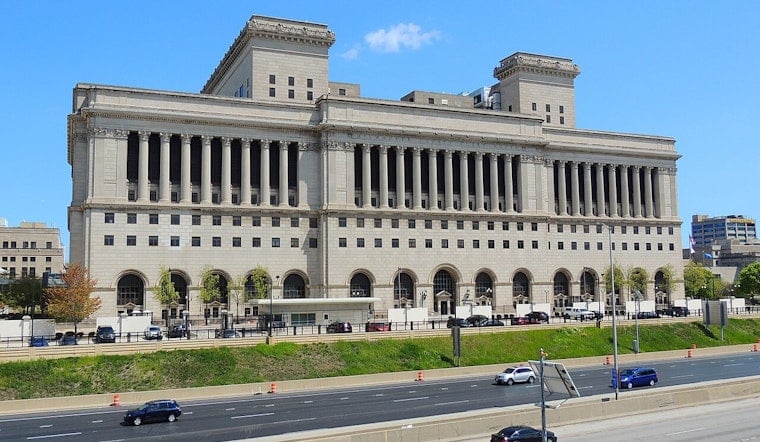
A Milwaukee County supervisor wants to scrap the pension system covering the county's seasonal lifeguards, pool attendants and park workers, arguing it delivers laughably small payouts while costing taxpayers hundreds of thousands of dollars a year to run. Sheldon Wasserman says he has introduced legislation to end the current Omnibus Budget Reconciliation Act plan, known as OBRA, and replace it with Social Security coverage for future part-time hires.
Wasserman told WISN 12 News that OBRA is “costly and ineffective,” and that most of his fellow supervisors do not even know what the program is. OBRA has operated since 1991 as a retirement option for county employees who do not qualify for either the Wisconsin Retirement System or Social Security, including seasonal and part-time workers. The proposed changes would affect several hundred current part-time county employees, according to the station's report.
The numbers behind Wasserman's push are stark. A county-commissioned study found that of 422 former employees eligible for an OBRA payment since 2019, 47 percent never actually received it, per the same account. Many seasonal and part-time workers no longer live in Milwaukee County by the time they are owed a payout, and the county sends up to five letters trying to track people down before unclaimed money reverts to the State of Wisconsin, the report notes.
Tiny Checks, Real Administrative Costs
Separate figures from a county-commissioned study presented to the Board's Personnel Committee in July show just how small those payouts are: the average OBRA lump-sum benefit since 2019 has been $501 overall, and only $322 for participants under age 65, according to WisPolitics. Meanwhile, the county has incurred an average of $194,000 per year in OBRA administrative costs, according to the county study cited by WISN — a bill Wasserman argues is disproportionate to the benefit retirees actually see.
The plan's finances look shaky beyond just the paperwork costs. Official Milwaukee County financial disclosure documents show the OBRA 1990 Retirement System had 5,524 vested participants as of December 31, 2019, but a funded ratio of just 39.3% and only $3.43 million in fiduciary net position. Actuarial projections presented to the Milwaukee County Pension Board in May 2025 by consulting firm Segal recommended a $328,000 county contribution to the OBRA plan for fiscal year 2026 alone to address plan liabilities.
A Soft-Close, Not an Immediate Shutdown
Wasserman is not proposing to yank benefits from anyone currently owed money. His plan calls for a soft-close: current OBRA participants would be asked whether they want to switch to Social Security or remain in the existing plan, while future new part-time hires would be enrolled directly in Social Security going forward. Wasserman said phasing out OBRA would require multiple steps and take several years, since the county must work with both the federal and state governments to complete the transition.
Wasserman told WISN he expects a vote on the legislation could come as soon as September or October. Milwaukee County Executive David Crowley's office said Crowley will review the proposed legislation, including its fiscal impact on the county, and that he remains open to creative approaches for identifying meaningful budget savings, per the station's report. The proposed changes could save the county money over the long run, though the review has not yet produced a final position.
The Shadow of Milwaukee's Pension Scandal
Wasserman framed the OBRA overhaul partly as a preventative move, saying Milwaukee County does not want a repeat of a future pension scandal. That warning carries weight locally: an investigation by Urban Milwaukee found that uncapped “backdrop” pension sweeteners approved in 2000 and 2001 ultimately cost county taxpayers more than $354 million across 2,476 retirees, with total costs projected above $460 million. An audit cited by PLANSPONSOR in 2002 found that officials had severely understated the initial cost of that expansion, which ballooned from an estimated $22.2 million to $112 million in immediate obligations through 2004 — a scandal that led to the resignation of then-County Executive F. Thomas Ament.
The OBRA proposal is the latest step in a broader unwinding of Milwaukee County's standalone pension infrastructure. Under 2023's Wisconsin Act 12, the county secured a 0.4% local sales tax specifically to pay down legacy pension liabilities, in exchange for closing its primary defined-benefit Employees' Retirement System to new full-time hires as of January 1, 2025, as Hoodline previously reported. An Urban Milwaukee analysis from December 2024 found the county's main pension system had reached a ratio of 2.58 retirees drawing benefits for every active employee still contributing, a demographic imbalance that has strained county budgets for years.
Financial research from the Reason Foundation published in January 2022 showed the county's main Employees' Retirement System carried $569 million in unfunded liabilities and a 75.3% funded ratio at the time, pressures that forced annual county pension contributions to nearly triple, from $19 million in 2015 to $57 million. Milwaukee County Civil Service regulations already exclude seasonal workers, hourly staff working fewer than 20 guaranteed weekly hours, and part-time employees earning less than 50% of the full-time rate from that main retirement system — which is why OBRA exists as a separate, smaller plan in the first place. Whether transitioning those workers to Social Security will create new employer-match costs for county departments, and how long federal and state approval of the change will take, remain open questions as Wasserman's legislation heads toward a possible vote this fall.





