

























































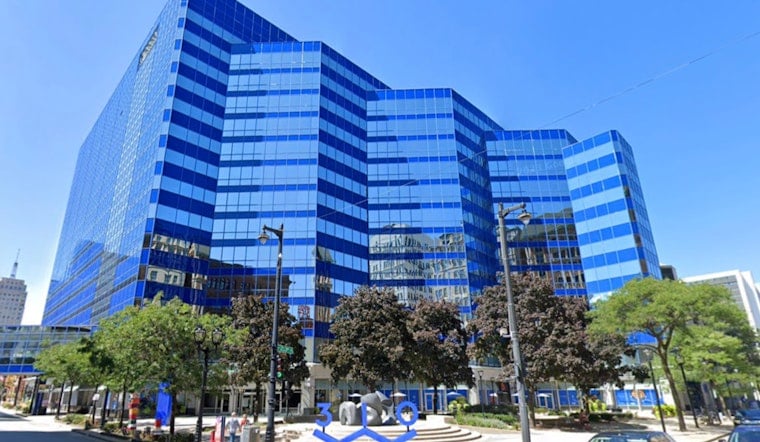
The hulking blue office tower at 310 W. Wisconsin Ave. has been part of Milwaukee's skyline for more than 45 years, but it could soon trade empty cubicles for people. Developer 310W Wisconsin Rollup LLC and its parent company, Time Equities Inc., have proposed a $73.6 million plan to convert the building's vacant east tower into 220 residential units, including studios, one-bedrooms, two-bedrooms and three-bedrooms, with 50 of them reserved as workforce housing.
Milwaukee's Department of City Development has announced a proposal to establish Tax Incremental District 137 to help fund the conversion, according to OnMilwaukee. The workforce units would be available to households earning between 70% and 90% of area median income. Milwaukee's Redevelopment Authority is set to review the proposed district at a meeting on Aug. 20, when the public will get a chance to weigh in, and project plans are expected to be posted online before then.
A $6.44 Million Bet That Shields City Taxpayers
The financing behind the incentive is designed to protect the city's budget, according to CBS 58. Under the developer-financed TID, Time Equities would cover all of the upfront conversion costs itself, and the city would reimburse the company up to $6.44 million over 18 years — but only using the new property tax revenue the finished project generates. If the building's value doesn't climb as projected, the city isn't left covering the gap.
Decades of Empty Offices Behind the Blue Facade
Before its current nickname, the 578,000-square-foot complex opened in 1983 as the Henry S. Reuss Federal Plaza, designed by architect Voy Madeyski for Perkins & Will, according to Urban Milwaukee. Its two towers are connected by a 14-story glass atrium — a design that worked fine for federal tenants until security regulations adopted after 9/11 made the open layout noncompliant, pushing those agencies out. That same dual-tower structure is why the current plan can convert just the vacant east side while leaving the west tower's office space untouched.
310 W. Wisconsin isn't alone in making this pivot. Downtown, the 35-story 100 East Wisconsin tower is in the midst of its own $165 million conversion into 373 apartments, backed by a $14.4 million city TIF subsidy and a $114 million HUD loan approved in May, as reported by Business Wire. That project has become a local template for combining city conversion incentives with federal financing.
Time Equities' struggles at 310 W. Wisconsin help explain why so many owners are making similar bets. The firm bought the tower for $19.5 million in December 2017, and the property was assessed at $22 million as of May 2025, per Urban Milwaukee. Commercial vacancy in the building climbed to 64% by 2019 after federal tenants and corporate occupants departed, and even a $30 million office overhaul couldn't fill the space, the outlet reported.
Part of a 20-Year Plan to Repopulate Downtown
City leaders have framed conversions like this as essential to hitting goals set in the Connecting MKE: Downtown Plan 2040, adopted by the Milwaukee Common Council in 2023, which calls for growing downtown's population to 40,000 residents by adding roughly 15,000 housing units, 20% of them affordable, according to the City of Milwaukee. Ald. Robert Bauman represents the downtown neighborhood where the tower sits.
310 W. Wisconsin joins a wider wave of similar moves around downtown. Developer Jeffers & Co. proposed converting part of the 20-story building at 633 W. Wisconsin Ave. into 228 apartments in 2025, Urban Milwaukee has reported, while OnMilwaukee's coverage points to the Wisconsin Tower and the former Boston Store building as earlier examples of the city's office-to-residential shift. Nationally, the pattern is even more pronounced — the same report notes that Chicago's Loop alone had 19 such conversion projects underway.
City and Company Officials Weigh In
Milwaukee Mayor Cavalier Johnson said the investment would expand the city's tax base and support its long-term economic health, telling OnMilwaukee that his administration remains committed to projects that increase housing options and strengthen the local economy. Johnson added that the project creates more opportunities for residents to find quality, affordable homes. Lafayette L. Crump said the plan continues the city's investment in affordable places for Milwaukee residents to live, while Time Equities' Brad Gordon said the company acquired the building with a vision of investing in Westown's revitalization.
Questions remain about the construction timeline and the final layout approvals for the 220 units. It's also unclear how the office space still occupied in the west tower will coexist day-to-day with hundreds of new residential neighbors — details the current proposal has not spelled out yet.





