

























































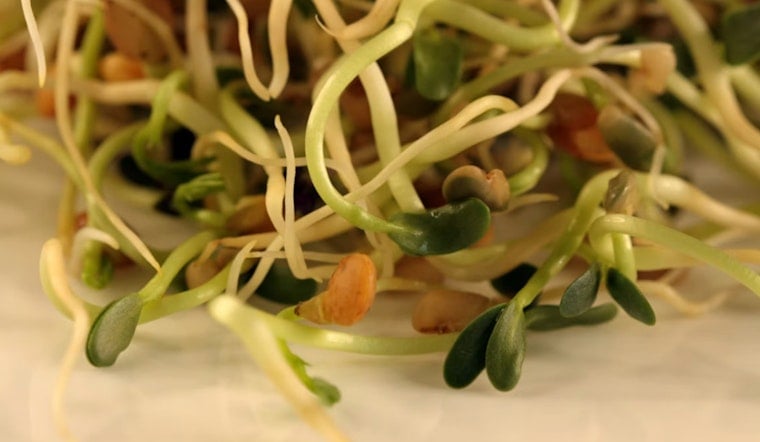
Health officials in Minnesota and Wisconsin have confirmed at least 41 combined illnesses tied to alfalfa sprouts contaminated with both E. coli and Salmonella, with two people hospitalized in Minnesota and one in Wisconsin. The illnesses trace back to Everything Sprouts, a Minneapolis wholesale grower whose products have also been sold under the Calco brand, and lab testing has turned up not one but three distinct bacterial strains circulating among sick consumers.
Minnesota has identified 23 outbreak-related cases while Wisconsin has recorded 18, according to the MPR News tally, with illness onset dates stretching from July 8 through August 8. Wisconsin's Department of Health Services separately reported that one person there was hospitalized, and the state is investigating alongside Minnesota, the U.S. Centers for Disease Control and Prevention, and the Food and Drug Administration, according to FOX6 News Milwaukee. Everything Sprouts is based at 2751 Minnehaha Avenue in Minneapolis and distributes to grocery stores and restaurants under both its own name and the Calco label, per the same MPR News account.
A Grower Already Under FDA Scrutiny
This isn't the first time regulators have flagged the facility. The FDA sent Everything Sprouts a formal warning letter in March 2025 following a late-2024 inspection that cited serious Produce Safety Rule violations, including roof leaks that let water drip near exposed sprouts and employee smocks, the outlet reported. That history has drawn scrutiny to whether known sanitation gaps at the plant played a role, even as investigators point toward another possible source entirely.
Laboratory testing by Minnesota officials identified a striking mix of pathogens among the sick: 13 cases of STEC O26:H11, seven cases of STEC O103:H25, three Salmonella cases, and one dual infection involving both Salmonella and STEC O168:H8, according to the Washington Times. Food safety legal and technical experts told the Marler Blog that outbreaks involving multiple distinct pathogens at once are rare and typically point toward contamination of the raw seed lot before sprouting, rather than sanitation problems at the sprouting facility alone.
Why Sprouts Keep Causing Outbreaks
Food safety researchers note that raw sprouts are an inherently high-risk produce category because seeds require warm, humid conditions during germination that let small, undetected microbial contaminants multiply rapidly, the Washington Times reported. That biology has made sprouts a recurring outbreak vehicle nationally: a December 2022 to February 2023 investigation linked 63 Salmonella cases and 10 hospitalizations across eight states to alfalfa sprouts from Nebraska's SunSprout Enterprises, according to the CDC. Minnesota and Wisconsin have been here before, too — a February 2016 joint investigation traced a cross-border E. coli O157:NM outbreak to alfalfa sprouts from River Falls, Wisconsin-based Jack & The Green Sprouts, per the Food Poison Journal.
Anyone with Calco or Everything Sprouts alfalfa sprouts at home should not eat them and should throw them away, FOX6 News Milwaukee reported. Wisconsin sees roughly 500 STEC infections and roughly 1,000 Salmonella infections in a typical year, the outlet noted, underscoring how common these pathogens are even outside an active multistate cluster.
Symptoms and Critical Treatment Guidance
STEC infections can cause bloody stools, diarrhea, stomach cramps, and low-grade fever, with symptoms typically arising two to five days after exposure; most people recover within five to seven days, but the infection can progress to hemolytic uremic syndrome, which involves acute kidney failure and other complications. Salmonella infections cause diarrhea, fever, and abdominal pain that usually appear six hours to six days after exposure, and while most people recover on their own, children, older adults, and people with weakened immune systems may need medical treatment for severe symptoms.
The Minnesota Department of Health issued a specific warning tied to treatment: diarrhea associated with Shiga toxin-producing E. coli infections should not be treated with antibiotics, since antibiotic use can trigger or worsen the acute kidney failure associated with hemolytic uremic syndrome. Anyone who ate the linked sprouts should watch for symptoms, and people with severe symptoms should contact a healthcare provider, according to FOX6 News Milwaukee.
Part of a Busy Summer for Minnesota Food Safety
This alfalfa sprout investigation marks Minnesota's second major foodborne illness probe this month, coming shortly after state health authorities identified more than 110 Salmonella cases tied to fresh jalapeño peppers, according to Bring Me The News. Hoodline previously covered Chipotle's jalapeño pullback tied to that earlier outbreak. Salmonella remains the leading cause of foodborne illness, hospitalization, and death in the United States and worldwide per the CDC, and infections are most common during summer months, the same agency notes.



