

























































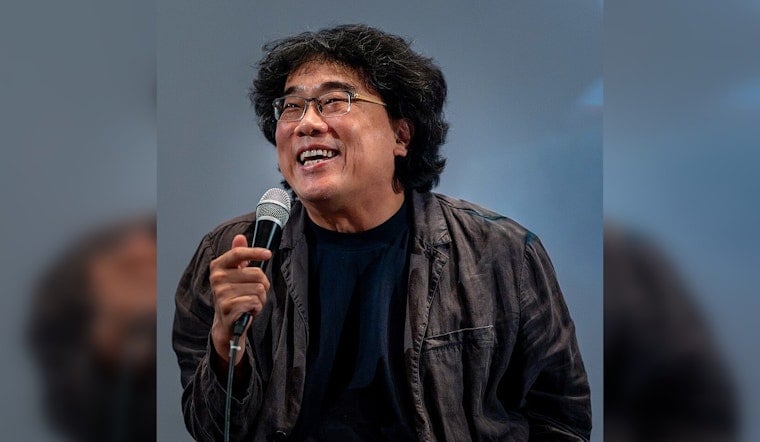
Nearly three decades before he won an Oscar for Parasite, Bong Joon-ho made a 31-minute graduation film about cockroaches, hypocrisy, and the ugly gap between what people say and what they do. That film, Incoherence, screens free next Wednesday evening at the Korean Cultural Center Los Angeles, paired with another landmark 1994 short from a director who helped open doors for women in South Korean cinema.
The screening runs from 6:30 to 9 pm on August 12 at the center's Ari Hall, located at 5505 Wilshire Boulevard in the Miracle Mile district, according to PBS SoCal. Admission is free, and the event is presented by the Korean Cultural Center Los Angeles, which operates under South Korea's Ministry of Culture, Sports and Tourism and hosts its public cinema programs in the same Wilshire Boulevard facility, per the Korean Cultural Center Los Angeles.
Two Debut Works, One Pivotal Year
The pairing puts Bong's Incoherence alongside Yim Soon-rye's Walking in the Rain, also known as Promenade in the Rain, both released in 1994. The 14-minute Walking in the Rain, Yim's directorial debut, follows a woman working at a run-down movie theater and helped establish Yim as a prominent figure among South Korea's first generation of acclaimed modern female directors, according to the Museum of Modern Art. The film went on to win the grand prize at the 1st Seoul Short Film Festival, per PBS SoCal's event listing, and Yim later directed feature films including Three Friends and Little Forest.
Incoherence, meanwhile, is an omnibus of four vignettes titled Cockroach, Out of the Alley, Night of Pain, and Epilogue, each satirizing the moral hypocrisy of societal elites, according to the Korean Film Council. PBS SoCal describes the film as offering a glimpse into Bong's distinctive social perspective and dark humor, noting that it prefigures the sensibility later seen in Parasite. The short earned Bong early international recognition at festivals in Vancouver and Hong Kong.
Both shorts trace back to the Korean Academy of Film Arts, a state-backed institution founded in 1984 that served as the primary incubator for South Korea's Korean New Wave directors in the 1990s and later expanded into feature film production in 2006, per the Korean Film Council. That shared pedigree extended into real-world collaboration: while attending the academy in 1994, Bong worked as cinematographer on classmate Jang Jun-hwan's short film 2001 Imagine, according to Koreanfilm.org. Jang's own 2003 cult sci-fi feature, Save the Green Planet!, will close out the Korean Cultural Center Los Angeles's retrospective in September.
A Scholar's Lens on Bong's Early Work
Interest in Incoherence has proven durable well beyond academic circles. In August 2025, South Korean multiplex chain Megabox gave the short a nationwide theatrical release across more than 50 theaters to launch its dedicated short film curation brand, according to Yonhap News Agency, an unusual commercial showcase for a film school project.
Wednesday's session will include commentary from Dr. Nam Lee, an associate professor of film studies at Chapman University and author of the book The Films of Bong Joon Ho, published by Rutgers University Press in September 2020. The book analyzes how Bong hybridizes Hollywood genre tropes with distinctly South Korean socio-political realities, and Lee's research more broadly focuses on socio-political themes in South Korean cinema. Each session in the series features invited film experts who provide commentary and lead question-and-answer discussions, per PBS SoCal.
Part of a Five-Decade Retrospective
The August 12 program is one installment in Frames of Korea Through Films, a five-screening cinematheque series running from May through September that showcases six films spanning five decades of South Korean cinema history. Alongside Walking in the Rain and Incoherence, the lineup includes Aimless Bullet (1961), The Road to Sampo (1975), Come, Come, Come Upward (1989), and Save the Green Planet! (2003), tracing the medium's arc from post-war trauma to modern genre blending.
The series is co-organized with the Korean Film Archive, established in 1974 as South Korea's primary national institution dedicated to collecting, preserving, and restoring historic motion pictures. The event itself is organized under the direction of Haedon Lee at the Korean Cultural Center Los Angeles. For Angelenos, the free programming offers a rare local window into state-supported film institutions that shaped some of South Korea's most celebrated directors long before their international breakthroughs.



