

























































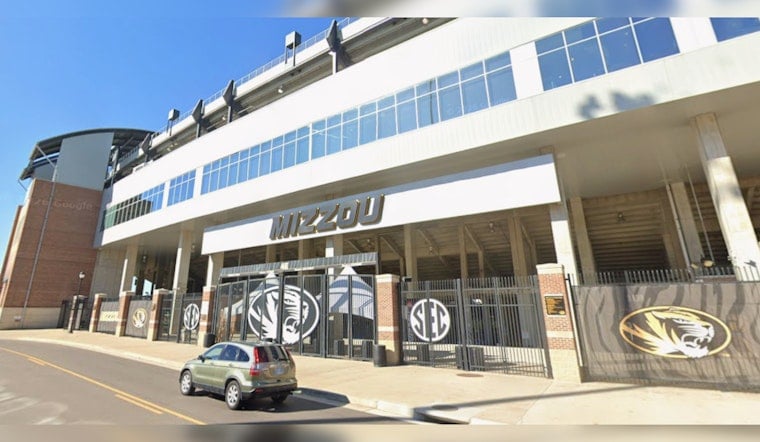
A 44-year-old electrician died of electrocution at the University of Missouri's Memorial Stadium in June, but the university did not publicly confirm his death until Monday, two months later, after reporters started asking questions. Corey Sooter, a foreman with BK2 Electrical & Design, was working on the $250 million Memorial Stadium Centennial Project when he was fatally injured on June 10.
The University of Missouri only acknowledged Sooter's death after inquiries from the St. Louis Post-Dispatch, according to KXEO. In a statement reported by ABC17News, the university said its community is deeply saddened by Sooter's passing and that it will comply with the Occupational Safety and Health Administration as the federal agency continues investigating. Columbia Fire Department records reviewed by ABC17News list electrocution as Sooter's cause of death.
Live Wires Found at the Scene
According to incident reports cited by ABC17News, first responders were dispatched to Memorial Stadium at 9:05 a.m. on June 10 and arrived five minutes later. Firefighters used a hot stick to check the electrical wiring at the scene and determined it was still energized, the reports state. University of Missouri medics treated Sooter at Faurot Field before he was taken for further care, per the fire department's account.
Federal regulations under 29 CFR 1926 Subpart K require employers to ensure electrical circuits are de-energized, tested, and locked out or tagged before workers handle or come near energized conductors, according to McConkey Insurance & Benefits. That standard for de-energizing live wires is expected to be central to OSHA's ongoing inspection of BK2 Electrical & Design, which the agency opened on June 11 at 1238 Mick Deaver Drive, an address adjacent to the stadium complex.
A Federal Deadline Looms in December
Under Section 9(c) of the Occupational Safety and Health Act, OSHA has a strict six-month statute of limitations from the date it opens an inspection to issue citations or propose financial penalties, according to Gross McGinley LLP. That places a firm deadline of December 11 for OSHA to finalize any findings or fines tied to Sooter's death. The station's report notes the inspection remains ongoing.
Electrocution is one of construction's so-called “Fatal Four” hazards, alongside falls, struck-by incidents, and caught-in/between hazards, which together account for roughly 60 percent of all construction worker deaths nationwide, per GPRS. Federal data compiled by the National Fire Protection Association shows 142 workers nationwide died from exposure to electricity in 2023, with construction and extraction workers accounting for the largest share at 37 percent, or 52 fatalities.
A High-Stakes Project With a Tight Deadline
Sooter's death occurred during the Memorial Stadium Centennial Project, a massive renovation of Faurot Field that broke ground in November 2024 and is scheduled for completion ahead of the 2026 football season to mark the stadium's 100th anniversary, according to University of Missouri Athletics. Baltimore-based Whiting-Turner Contracting Co. serves as general contractor on the project, with Kansas City firm DLR Group leading architectural design, per Coliseum. Missouri-based PayneCrest Electrical separately holds a $16 million subcontract under Whiting-Turner for major electrical work on the stadium overhaul, according to the company.
Remembered as a Mentor and Family Man
Sooter, a native of Holts Summit, Missouri, attended the Columbia Area Career Center and completed his apprenticeship through IBEW Local 257 before working for several electrical companies and eventually joining BK2 Electrical & Design, according to his obituary as reported by ABC17News. He was married and had one son and three daughters. In a June 13 Facebook post, BK2 Electrical & Design remembered him as a leader and mentor who “led by example, worked with integrity, and cared about people around him.”
Sooter was an organ donor, and his donation helped save five lives, according to his obituary. Following his death, IBEW Local 257 — the union where he trained as an apprentice — organized community support and fundraising efforts to assist his surviving family.




