

























































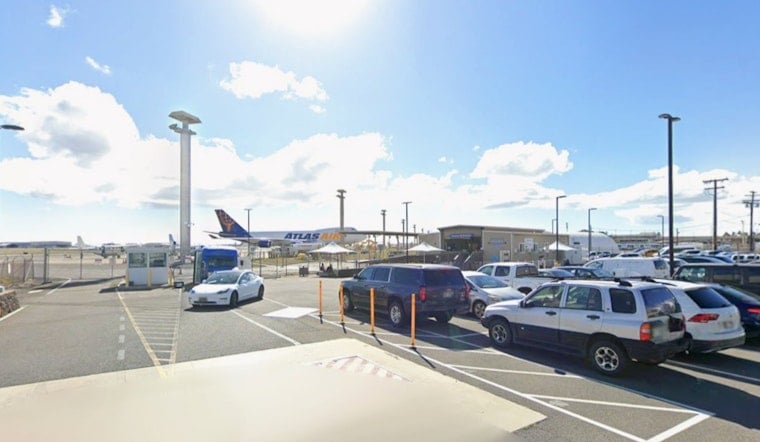
Mokulele Airlines rolled out three brand-new Cessna 208 Caravan aircraft and unveiled a freshly renovated Terminal 3 facility at Honolulu's Daniel K. Inouye International Airport this week, a move the carrier is calling one of the most significant expansions in its recent history. The company held blessing ceremonies Thursday and Friday across Honolulu, Lanai, Molokai and Maui to mark the milestone, with each new plane blessed at its home station between flights.
The additions matter far beyond a corporate press release for the neighbor islands that depend on Mokulele as their only scheduled lifeline. As reported by Hawaii News Now, the carrier said the new aircraft are just off the Cessna manufacturing line and will be folded into its existing inter-island schedule to expand capacity and strengthen reliability. Mokulele currently serves Molokai, Lanai, Kahului and the Big Island, and the Honolulu Terminal 3 facility had not been updated since it opened in 2018, per the same account.
Gary McKoy, Mokulele's vice president of airports and stations, framed the rollout as more than a fleet upgrade. He said the expansion is part of the airline's commitment to listening and meeting community needs, and that the blessing ceremonies reaffirm Mokulele's commitment to serving Hawaii, according to the station's report.
A Lifeline With a Rocky Recent History
The stakes behind this week's ceremonies run deeper than new paint and upgraded seating. Mokulele has been the sole scheduled commercial passenger airline for Molokai and Lanai since competitor 'Ohana by Hawaiian permanently halted operations in January 2021, according to The Molokai Dispatch. 'Ohana suspended service after pandemic travel restrictions drove down ridership and triggered labor contract provisions, the outlet reported at the time.
That single-provider status has made every Mokulele hiccup a community crisis. In August 2024, the airline temporarily grounded a portion of its fleet after uncovering landing gear servicing documentation discrepancies during routine maintenance, a disruption that stranded passengers across multiple islands and forced emergency cargo plane rebookings, as detailed by SFGATE. Just months later, in January 2025, Mokulele grounded its entire fleet out of an abundance of caution for maintenance checks, prompting state transportation officials to explore emergency backup charter contracts, according to ch-aviation. That grounding disrupted essential medical appointments and daily commutes for Molokai residents, per Hawaii Public Radio's reporting.
Federal Backing and a Frequency Boost
Mokulele's role as an essential service provider isn't just a matter of community reliance — it's also backed by federal money. In August 2024, the airline was awarded an $8 million, two-year Essential Air Service contract by the U.S. Department of Transportation to maintain subsidized flights to Lanai through August 2026, The Molokai Dispatch reported, part of a federal framework designed to guarantee air access for isolated communities that can't support unsubsidized commercial service on their own.
This year's expansion also comes on the heels of a major schedule overhaul. As part of its 2026 network changes, Mokulele added seven daily roundtrips to its Molokai schedule — five more connecting Molokai to Honolulu and two more to Kahului — making the Honolulu-Molokai corridor the most frequently flown airline route in the United States, according to Travel Radar.
A $22.4 Million Bet From Surf Air Mobility
Behind the new planes and the renovated terminal sits a much larger financial commitment. Mokulele's parent company, Surf Air Mobility, announced a $22.4 million investment plan in January 2026 to upgrade aircraft, modernize lounges and expand network capacity across its Hawaii operations through the end of this year, per Business Wire. Surf Air Mobility, which acquired Mokulele's parent company Southern Airways in 2023 and trades on the New York Stock Exchange, reported that Mokulele operated roughly 36,000 scheduled departures and carried 224,000 passengers across its Hawaii network in 2025 while maintaining a 96% controllable flight completion factor, with an average flight distance of just 51 miles between its nine served airports.
Mokulele's corporate structure can be confusing to fliers who only know the local brand. The airline operates under the air operator certificate of mainland carrier Southern Airways Express, which acquired Mokulele in 2019 before both companies were absorbed into Surf Air Mobility in 2023, according to Honolulu Civil Beat — though Mokulele has kept its distinct island identity even while sharing operating infrastructure with its mainland partners.
The renovated Terminal 3 facility on Aolele Street is built specifically for small commuter aircraft like Mokulele's nine-seat Cessna Grand Caravans, operating separately from the airport's main overseas terminals to handle short-hop inter-island flights, per Mokulele Airlines. It's a fitting stage for a company that is simultaneously testing what comes after the Caravan altogether.
Looking Toward an Electric Future
Hoodline previously reported on Surf Air's electric plans, and the timeline has since moved forward. In June 2026, Mokulele and Surf Air Mobility began trial flights in Hawaii using BETA Technologies' ALIA electric aircraft to test zero-emission inter-island transport, according to Hawaii Public Radio. The carrier's short routes, averaging just 51 miles, make Hawaii an appealing testing ground for battery-electric regional aircraft, the station reported.
For now, though, the immediate story is about rebuilding trust the old-fashioned way: more planes, a renovated terminal and public ceremonies meant to reassure residents who have lived through more than one grounding. Whether three new Caravans and a modernized gate area are enough to erase memories of stranded medical appointments and canceled commutes remains an open question for the communities that have no other way to fly.



