

























































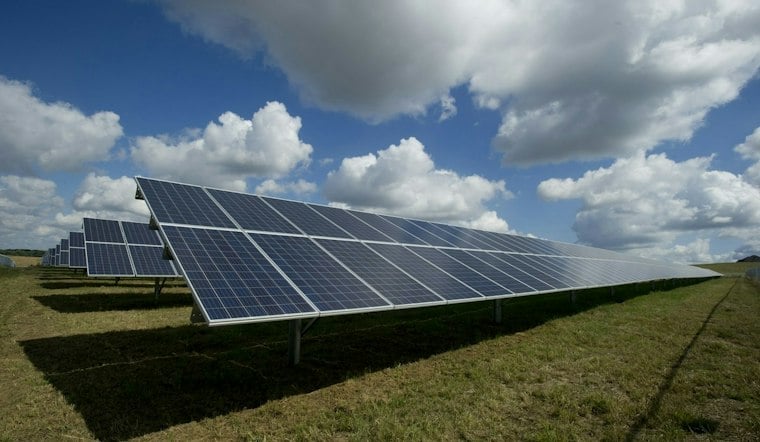
Hawaiian Electric has filed an application with Hawaii's Public Utilities Commission seeking approval to purchase power from Pulehu Solar, a 20-megawatt solar project with 80 megawatt-hours of battery storage planned on Haleakala Ranch land three miles makai of Kula, on the west side of Pulehu Road. If approved, the utility says the facility could generate enough clean energy annually to power the equivalent of nearly 10,000 Maui households.
The application, filed for a 20-year fixed-price power purchase agreement, marks the latest step in a years-long effort to bring the project online. As reported by Hawaii News Now, Brendan Bailey, Hawaiian Electric's vice president of resource procurement, said Pulehu Solar would add locally produced renewable energy to Maui's grid while reducing exposure to imported fuel price volatility. The project was selected through Hawaiian Electric's renewable energy procurement process, and its battery system is designed to store solar power for use during evening hours when the sun isn't shining.
A Project Downsized by Years of Economic Headwinds
Pulehu Solar wasn't always a 20-megawatt project. Longroad Energy originally submitted a proposal in 2020 for PUC review to build a 40-megawatt solar and 160-megawatt-hour battery installation on the same Haleakala Ranch land, with an initial power rate of 9.2 cents per kilowatt-hour, according to Longroad Energy. That version of the project didn't survive the economic shocks that followed. The developer withdrew it in May 2022, citing a 57% jump in solar panel costs, per Honolulu Civil Beat, which also described soaring ocean freight rates. Those broader pressures forced multiple Hawaii solar developers to renegotiate contracts or scrap projects entirely during that period.
The scaled-back 20-megawatt version now moving through regulatory review reflects those harsher economics and years of conversations with the community that will live next to it. Outreach with nearby residents, community organizations, cultural practitioners, businesses, and elected officials began in 2017 and covered project design, wildfire mitigation, visual impacts, and cultural resources, the utility said. The utility said the revised design relocates the battery storage system and substation farther from nearby homes, widens firebreaks, adds landscaping and vegetative screening, lowers the placement of solar arrays, and adjusts the layout to avoid identified cultural resources.
Urgency Tied to Statewide Clean Energy Deadlines
The filing is being expedited through Governor Josh Green's CREDIT task force, a 2025 executive order initiative designed to fast-track renewable project reviews across state agencies before federal clean energy tax credits expire, according to Hawaii Free Press. That urgency sits atop a legal mandate: under state law, Hawaii's electric utilities must hit 40% renewable net generation by 2030, 70% by 2040, and a full 100% renewable portfolio by the end of 2045, per the Hawaii Public Utilities Commission.
Maui's grid is already ahead of the statewide pace, having reached a 41.1% renewable portfolio standard in 2024, compared to Oahu's 30.8% and a consolidated statewide average of 35.8%, according to Hawaiian Electric. Even so, Pulehu Solar would remain modest next to Maui's largest existing solar farm — the 60-megawatt AES Kuihelani facility in Central Maui, paired with 240 megawatt-hours of storage, which entered commercial service in May 2024.
Why Reliable Replacement Power Matters Now
The stakes extend beyond clean-energy targets. Pulehu and other replacement renewable projects are important to Maui grid reliability, as Hoodline previously reported.
Pulehu Solar and Kaheawa Wind 1 are among Maui's renewable energy projects, and Ukiu Energy is associated with a 40-megawatt biofuel project in Puunene, according to the Hawai'i State Energy Office. Statewide, Hawaiian Electric is negotiating seven renewable energy projects this year as it works toward its decarbonization deadlines.
What Happens Next
The Public Utilities Commission will now review the proposed power purchase agreement and determine whether the project is in the public interest and provides value to Maui customers. If approved, Pulehu Solar would move through final permitting, financing, and construction before beginning commercial operation. The project sits near Pulehu Road in Upcountry Maui.



