

























































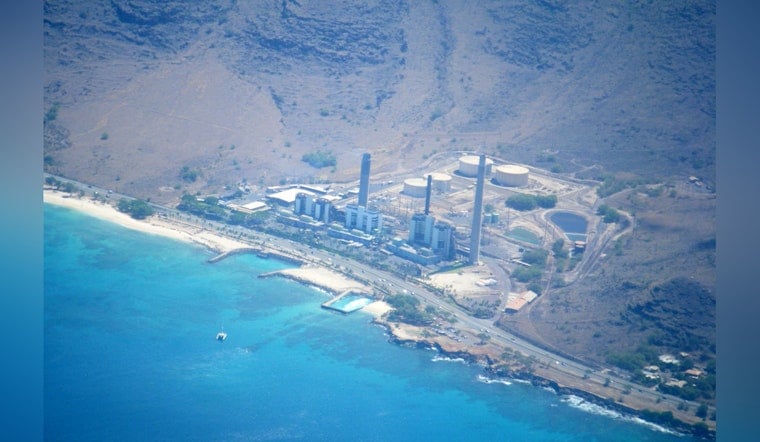
The U.S. Environmental Protection Agency has stepped in to stall a Hawaii strategy that would have forced two oil-fired power plants into retirement, throwing the islands’ clean energy timeline and grid planning into uncertainty. At the heart of the move is a simple but high-stakes question: did the state fully account for legal exposure and reliability risks before it tried to lock in hard shutdown dates? The dispute spotlights rising tension between Hawaii’s aggressive climate goals and a federal regulator that is putting property rights and grid stability front and center.
EPA partial disapproval and why it matters
According to the EPA, the agency issued a partial approval and partial disapproval of Hawaii’s 2024 Regional Haze State Implementation Plan. The rejected portions were the ones that leaned on enforceable retirements of oil-fired units without buy-in from the plant owners. EPA concluded that Hawaii did not provide the assurances required by the Clean Air Act and warned that approving forced closures without consent could run into the Takings Clause of the U.S. Constitution.
The agency signed off on other, more technical pieces of the haze plan, but it also gave Hawaii a clear ultimatum: fix the legal and reliability issues in a revised SIP or face a federal implementation plan if the problems are not resolved within two years.
Which generators were on the chopping block
The long-term strategy that ran into trouble centered on permanent shutdowns at two aging oil-fired facilities, the Kahului Generating Station on Maui and the Kanoelehua-Hill Generating Station on the island of Hawaii. Together they add up to roughly 55 megawatts of capacity.
Reporting from E&E News puts Kahului at about 34 megawatts and Kanoelehua-Hill at about 21 megawatts, and notes that both are located near Haleakala National Park and Hawaii Volcanoes National Park, the Class I areas that the regional haze rule aims to protect. EPA’s partial disapproval hinges on the legal and reliability questions tied to shutting those particular units before replacement generation is fully locked in.
Utility concerns and replacement projects
Hawaiian Electric has told regulators that it pulled back from earlier plans to retire certain boilers after would-be replacement renewable projects were delayed or collapsed, raising real-time concerns about maintaining energy reserves on Maui and the Big Island. The utility points to a steady buildout of wind, solar, and battery storage, and says it reached a consolidated 37 percent renewable portfolio in 2025, but it also cautions that island grids still need firm, dispatchable capacity while intermittent resources are phased in.
To cover that gap, the state Public Utilities Commission has moved to approve new firm generation and repowering efforts, including a Waiau repower project meant to add fuel-flexible capacity, according to a PUC news release. Those bridge strategies are part of the backdrop for EPA’s scrutiny of how and when older oil units can actually be taken offline.
Legal stakes laid out in the rulemaking record
EPA’s action rests on obligations under Section 110 of the Clean Air Act and on constitutional issues flagged in the rulemaking record. The agency’s position is that any state plan that relies on enforceable retirements the owner does not accept has to include clear legal assurances that the measures are valid. The Federal Register notice and EPA’s analysis explain that blessing closures a source owner has not agreed to could amount to an uncompensated taking, which in the agency’s view provides a legal basis to disapprove that slice of a state plan.
That legal framing was central to EPA’s decision to partially disapprove Hawaii’s long-term regional haze strategy rather than give it a full green light.
Part of a broader enforcement pattern
Advocates and energy analysts say Hawaii’s situation is not a one-off. Earlier this year EPA rejected parts of Colorado’s regional haze plan for similar reasons after that state’s anticipated plant retirements turned out to be less certain than regulators had assumed. The Harvard Environmental & Energy Law Program’s tracker describes how EPA is increasingly insisting that states show retirements are both legally enforceable and operationally secure before counting them toward haze requirements.
Critics argue that this approach could limit states’ ability to push polluting plants into early retirement. Supporters counter that it helps avoid last-minute backtracking and surprise reliability problems when planned closures do not unfold as expected.
What’s next for Hawaii
The clock is now ticking. Hawaii has to send EPA a revised SIP that answers the agency’s legal and reliability concerns or risk having a federal implementation plan imposed within two years, consistent with EPA guidance. Environmental groups are expected to jump into the fray, and utility officials say the decision highlights the delicate balancing act for islands that are trying to retire fossil infrastructure while leaning more heavily on intermittent renewables, as reported by the AP.
For now, the Kahului and Kanoelehua-Hill units stay in Hawaii’s generation mix while state and federal officials sort through what a legally solid, grid-safe path to cleaner air will actually look like.





