

























































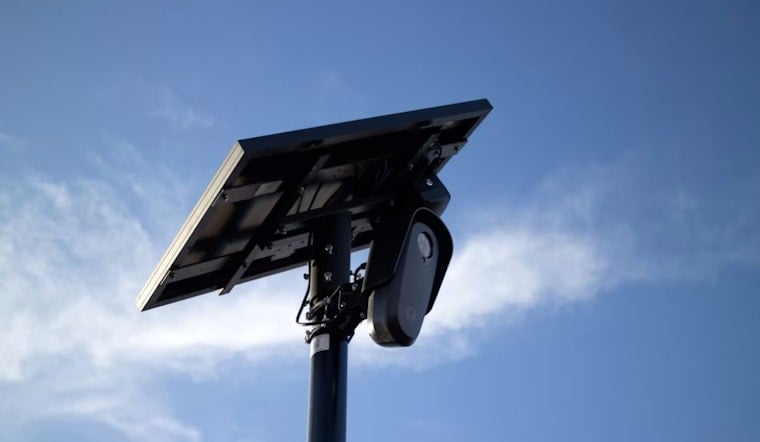
Monterey County leaders are pursuing millions of dollars in federal grant funding to expand Automated License Plate Reader cameras across multiple cities, with officials framing the technology as a critical tool for preventing and investigating gang-related violence. The push would build on a surveillance network that already blankets much of the county, and it lands at a moment when neighboring jurisdictions are pulling back from the same technology over privacy concerns.
According to CBS News, which first reported on the funding effort, county leaders are specifically targeting the money to add cameras in several cities as part of a broader gang-violence prevention and investigation strategy. More than 300 Flock Safety ALPR cameras are already operating across Monterey County, according to Monterey County Weekly, installed through contracts between the Atlanta-based vendor and local law enforcement agencies, including the Monterey County Sheriff's Office and police departments in Salinas, Seaside, Monterey, Pacific Grove, Sand City, Soledad, and Greenfield. Those agencies pay to access data the vendor-owned cameras collect, with vehicle photos and details stored in cloud databases for 30 days, the outlet reported.
A Camera Network Already Under Attack
The expansion push comes just weeks after someone tried to physically dismantle part of the existing network. In July, 40-year-old Marcus Bee of Pismo Beach was arrested on suspicion of felony vandalism and held on $30,000 bail after allegedly driving 150 miles to intentionally run over and pull down at least three Flock cameras in the rural South County communities of Lockwood and Bradley, per the Monterey County government's own account. Nearby non-ALPR surveillance cameras reportedly captured Bee's vehicle, leading deputies directly to his identification and arrest, according to the county.
The incident illustrates a form of direct, physical resistance to the camera systems that has emerged even as officials prepare to ask for more federal money to grow the network further. It's a reminder that not everyone in the county views the cameras as welcome infrastructure.
Santa Cruz Cut Ties With the Same Vendor
The expansion request also arrives against the backdrop of a regional reckoning with Flock Safety's practices. Santa Cruz became the first city in California to terminate its contract with the company in January, after audit reports revealed that local license plate data had been accessed by out-of-state agencies on behalf of federal immigration authorities, in violation of state law, according to Santa Cruz Local. The Santa Cruz City Council voted 6-1 to end the agreement after discovering that system settings had allowed unauthorized out-of-state queries, the outlet reported.
State-level scrutiny extends well beyond Santa Cruz. A review of 845 California Highway Patrol ALPR systems turned up widespread compliance issues, including thousands of search queries referencing an “ICE case” or originating from out-of-state agencies, prompting warnings from California Attorney General Rob Bonta, according to Voices of Monterey Bay. State officials found that vendor-wide system settings had repeatedly bypassed local policy restrictions meant to keep that data walled off, the outlet reported.
Under California law, including Civil Code Section 1798.90.5, known as SB 34, and the California Values Act, or SB 54, law enforcement agencies are strictly prohibited from sharing ALPR records with federal or out-of-state agencies for civil immigration enforcement. Community advocates in agricultural Monterey County have raised concerns that the camera grid poses risks to mixed-status farmworker families, the same outlet noted.
State Lawmakers Push for Tighter Rules
The legal landscape around how long that data can be kept is also in flux. State Sen. Sabrina Cervantes introduced Senate Bill 1013 this year to enforce a 30-day retention limit and require mandatory state Department of Justice audits of ALPR systems, according to CBS 8. The bill follows Gov. Gavin Newsom's veto in October 2025 of Cervantes's prior proposal, SB 274, which would have set a 60-day retention limit; Newsom argued at the time that mandatory short retention windows could hamper cold-case and missing-person investigations, per the same report.
Federal funding for local ALPR expansion is not new to Monterey County. In February 2023, U.S. Reps. Jimmy Panetta and Zoe Lofgren highlighted $1.16 million in federal community project funding secured for the Salinas Police Department, which included money to add 20 new license plate reader cameras to the city's network, according to a release from Panetta's office.
An Alternative Approach Gets Federal Money Too
Not all of the county's federal funding is going toward surveillance hardware. In August, Lofgren announced a separate $250,000 federal grant from the Department of Health and Human Services to extend Monterey County's STRYVE youth violence prevention program, according to a statement from her office. The initiative, credited with reducing youth violent assaults and juvenile arrests since 2011, relies on environmental design and community interventions alongside law enforcement efforts, the release stated.
The debate over expanding automated surveillance to curb gang violence isn't unique to Monterey County. San José Police have used ALPR technology integrated into their Real Time Intelligence Center to track armed robbery suspects, as Hoodline previously reported, while West Hollywood opted to keep its Flock Safety cameras but added local safeguards against federal data sharing. Meanwhile, the Monterey County Sheriff's Office faced its own scrutiny in late 2024 over delays in fully deploying body-worn cameras for deputies after program funding was reduced during county budget adjustments, according to a statement the office posted on Facebook, a contrast some oversight groups have noted as license plate surveillance tools continued to expand.





