

























































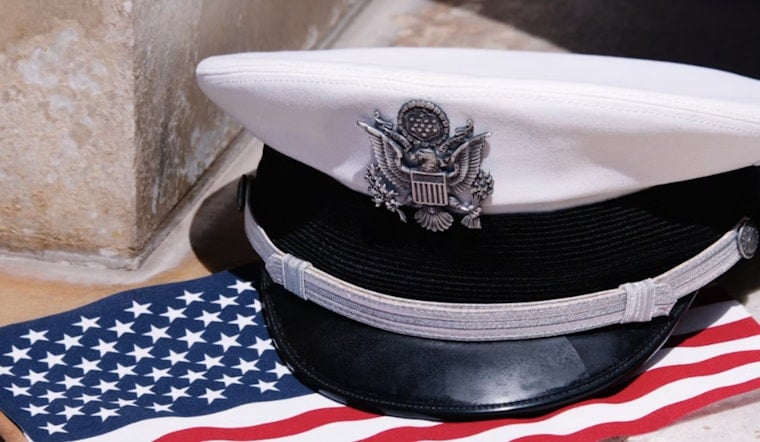
More than 400 military families traveled to a hotel on San Antonio's River Walk this week for the 18th annual National Military Suicide Loss Survivor Seminar and Good Grief Camp, a gathering built around one shared, devastating experience: losing a loved one in the military to suicide. Among them was Olga Schultz, who lost her son Gabriel, a U.S. Navy service member, to suicide four years ago, just days before his 25th birthday.
The seminar was organized by the Tragedy Assistance Program for Survivors, known as TAPS, a nonprofit that reached out to Schultz after Gabriel died, according to San Antonio Report. Gabriel left behind his wife, Alexandria, and their 8-month-old daughter, Bernadette. Schultz later became a TAPS peer mentor herself, now working specifically with Spanish-speaking survivors, and she plans to attend the next seminar alongside her daughter Jeanne.
A Network Built on Peer Support
TAPS was founded in 1994 by Bonnie Carroll after a 1992 Alaska military plane crash killed her husband, Army Brigadier General Tom Carroll, along with seven other soldiers, according to background compiled by the organization. Carroll started the group after recognizing there was no long-term peer bereavement network across military branches for surviving families, and the model has since grown into what TAPS describes as a prevention-through-postvention approach, using survivor-to-survivor connection as a way to reduce suicide risk among the newly bereaved.
That demand has been rising. TAPS connected with 9,611 newly bereaved military and veteran survivors in 2023 alone, an average of 26 new survivors a day, marking the highest number of newly connected survivors in the organization's 30-year history. Roughly 30% of those survivors were grieving a loss specifically to suicide.
Lisa Wright, a TAPS mentor, said she plans to call 500 people this year, making the initial outreach calls to survivors and then checking in frequently through the year following a death. At this year's San Antonio seminar, 29 of her roughly 500 mentees were spouses in attendance. Wright said connection with other survivors can bring relief and hope to people navigating some of the most isolating grief imaginable.
Mentors Who Have Lived the Loss
Many of the seminar's mentors are themselves survivors. Lynn Paljarvi's husband died by suicide in 2017, when their children were 5 and 7 years old. Donald Current, a retired San Antonio Marine, volunteers as a Good Grief Camp peer mentor and mentored campers ages 12 to 14 this year; last year he attended one of his mentees' San Antonio high school graduations. Current said one camper told him he wished society would normalize the word suicide rather than avoid saying it.
Abby Daniels, stationed at Lackland Air Force Base, has volunteered with TAPS while on active duty and has served as a peer mentor since 2016. The seminar served adults, while the Good Grief Camp portion of the event served children, offering activities alongside the grief programming, including nature walks, art classes and a Spanish-only workshop. Participants also shared what organizers describe as “God winks,” a term used to describe signs participants feel connect them with deceased loved ones, per the seminar's programming.
Why San Antonio, Why Now
San Antonio's role as a repeat host for national military survivor gatherings traces back to its identity as “Military City USA.” The city is home to Joint Base San Antonio, a Department of Defense consolidation of Fort Sam Houston, Lackland Air Force Base, Randolph Air Force Base and Camp Bullis that supports more than 80,000 active-duty personnel and a military-connected population exceeding 250,000 residents, according to Joint Base San Antonio. The joint base trains more than 39,000 military students annually and includes Brooke Army Medical Center, the Pentagon's only Level I Trauma Center.
The gathering also lands amid a broader national reckoning with military suicide. More than 140,000 veterans have died by suicide since 2001, per VA data, and a 2021 study found that active-duty service members and veterans have died by suicide at four times the rate of those killed in post-9/11 combat operations. The U.S. Department of Veterans Affairs' annual suicide prevention report, released in February, found that 6,398 veterans died by suicide in 2023, an average of 17.5 deaths per day, with 61% of those who died having not received VA health care in the last year of their life. That figure marked a slight decline from 6,442 deaths in 2022, though rates per 100,000 veterans ticked up slightly for both men and women.
Active-duty numbers moved differently. The Department of War's annual military suicide report, released in March, found that 471 service members died by suicide in 2024, an 11% drop from 531 deaths in 2023, even as National Guard suicide rates rose 13%. That decline followed a gradual upward trend in active-duty suicide rates that had persisted from 2011 through 2023.
The Outsized Risk to Those Left Behind
Researchers have long flagged that people close to someone who dies by suicide face elevated risk themselves. Close contacts of suicide deaths are 65% more likely to contemplate suicide, underscoring why postvention gatherings like the TAPS seminar are treated as a public health intervention rather than simply a support group. Firearm access compounds the danger within military and veteran communities specifically: according to the American Foundation for Suicide Prevention, male veterans face a 62.4% higher rate of firearm suicide than non-veteran civilians, while female veterans face a 281% higher rate, with firearms remaining the leading method of suicide death among active-duty members and veterans alike.
Federal policy has shifted in response to some of these pressures. The Brandon Act, signed into law in December 2021 as part of the National Defense Authorization Act, allows active-duty service members to request a confidential mental health evaluation directly from a supervisor without needing command approval, according to Military OneSource. The law is named for Navy Petty Officer 3rd Class Brandon Caserta, who died by suicide in 2018 following what was described as toxic leadership conditions. Separately, the VA's COMPACT Act, implemented in January 2023, guarantees any eligible veteran in an acute suicidal crisis up to 30 days of free inpatient emergency care and 90 days of outpatient mental health treatment at any VA or non-VA facility, regardless of enrollment status.
The VA has also pushed funding toward community-level prevention. Its Staff Sergeant Parker Gordon Fox Suicide Prevention Grants Program has funded 95 community organizations nationwide since 2022, generating more than 24,400 suicide prevention referrals and 854 high-risk emergency interventions, with an additional $52 million allocated in May 2025 to expand those community partnerships.
Texas Overhauls Veteran Mental Health Administration
Closer to home, Texas has been restructuring how it delivers veteran mental health services. House Bill 114, passed by the Texas Legislature in 2025 and effective as of September 1, 2025, transferred the state's Mental Health Program for Veterans to the Texas Veterans Commission in an effort to centralize care and mandated a statewide suicide prevention action plan. San Antonio lawmakers reviewed the rollout during legislative hearings in July, where officials said contracts had successfully transferred but rural staffing gaps remained a persistent problem, as Hoodline previously reported.
For Schultz, Wright, Paljarvi, Current and the hundreds of other families who gathered on the River Walk this week, the policy debates unfold alongside a grief that does not observe a legislative calendar. Schultz has said that grief resurfaces around both military and family holidays, a reminder that the losses being mourned in San Antonio are ongoing, not confined to any single anniversary.





