

























































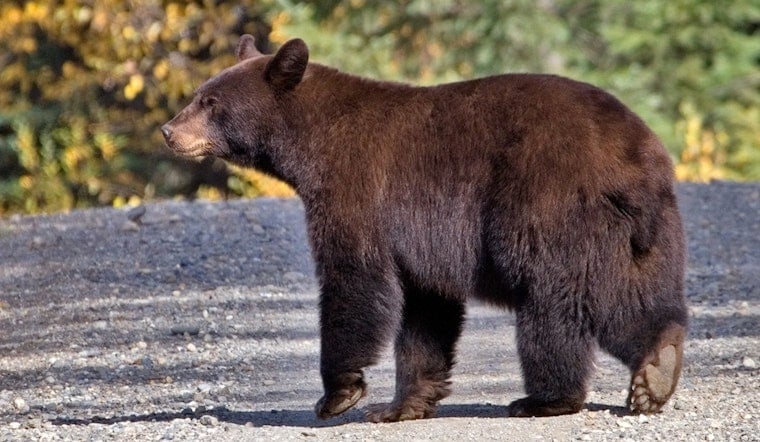
A mother bear and two of her cubs spent hours trapped inside a covered water cistern near Marshall Canyon Trail in La Verne on Saturday, in a rescue that required firefighters to drain the tank, saw open its concrete lid, and lower a ladder so the animals could climb to freedom. A third cub had already slipped out through the tank's vent hole before help arrived and waited nearby, watching for the rest of its family to emerge.
Emergency calls came in around 1:12 p.m. Saturday, bringing the La Verne Fire Department, the Los Angeles County Fire Department's Urban Search and Rescue team, and California Department of Fish and Wildlife officers to the 6600 block of North Stephens Ranch Road, according to SGV CityWatch. The bear family had become stuck in the water cistern off Marshall Canyon Trail, according to the Los Angeles County Fire Department, which was called to the scene after people in the area discovered the bears stuck inside, as reported by NBC Los Angeles. Roughly 40 firefighters worked to free the trapped animals, per that outlet's report.
The bears were first noticed by two cyclists riding near the trail, who heard distress noises and what they described as howling coming from inside the covered structure shortly before noon, according to CBS News. That same report notes that one of the mother bear's three cubs had already escaped through the tank's vent hole on its own before rescue crews arrived, taking refuge in a nearby tree to wait for its family while temperatures in La Verne reached 98 degrees.
Cutting Into the Tank to Reach the Trapped Bears
Rescuers drained the water out of the cistern to prevent drowning, then used rotary power saws to cut open and widen the cement lid's existing vent hole, according to MyNewsLA. Crews then inserted a ladder into the tank so the mother bear and her two remaining cubs could climb out, an approach the outlet's report indicates was chosen specifically to avoid tranquilizing the animals. NBC Los Angeles reported that the two cubs used the ladder to exit the tank almost immediately, while the mother bear hesitated before eventually following them out.
The rescue stretched into the evening as the exhausted bears rested inside the cistern before attempting the climb. By 7:45 p.m., after resting from the exhaustion brought on by hours in the heat, the mother bear and her two cubs successfully climbed out via the lowered ladder and fled into the surrounding wilderness, per the same MyNewsLA account. All three cubs and their mother ultimately ran off together into the wild once reunited, according to NBC Los Angeles.
Why Bears Keep Turning Up Near La Verne's Foothills
The rescue took place at the edge of Marshall Canyon Regional Park, a 679-acre stretch of the San Gabriel Mountain foothills with 4.1 miles of trails that directly link La Verne's open space to the Angeles National Forest and Claremont Hills Wilderness Park, according to the Los Angeles County Department of Parks and Recreation. That connected corridor is part of why wildlife regularly moves between wilderness and residential infrastructure in the area.
Black bears are not native to the San Gabriel Mountains. The region's current population descends from 28 bears relocated from Yosemite National Park in 1933 by state wildlife officials after California's native grizzly bears were wiped out, according to the Los Angeles County Sheriff's Department. Statewide, California's black bear population has grown to an estimated 60,000 animals under the California Department of Fish and Wildlife's 2025 Black Bear Conservation and Management Plan, up from an estimated 10,000 to 15,000 in 1980. Southern California and Central Coast bear populations still make up less than 10% of the state's total, with solitary adult males roaming home ranges between 15 and 80 square miles, according to Los Padres ForestWatch.
State Policy Favors Rescue Over Relocation
California Department of Fish and Wildlife policy updated in 2022 directs officers to prioritize non-lethal rescue, hazing, and habitat return for bears that are not behaving aggressively, reserving lethal removal for cases involving an imminent threat to human safety. That guidance helps explain why wildlife officers coordinated with local fire crews on a structural rescue involving saws and a ladder rather than sedating or relocating the bear family. The mother bear and her cubs were ultimately returned safely to the same wilderness corridor they came from, with no injuries reported among the rescue crews or the animals.





