

























































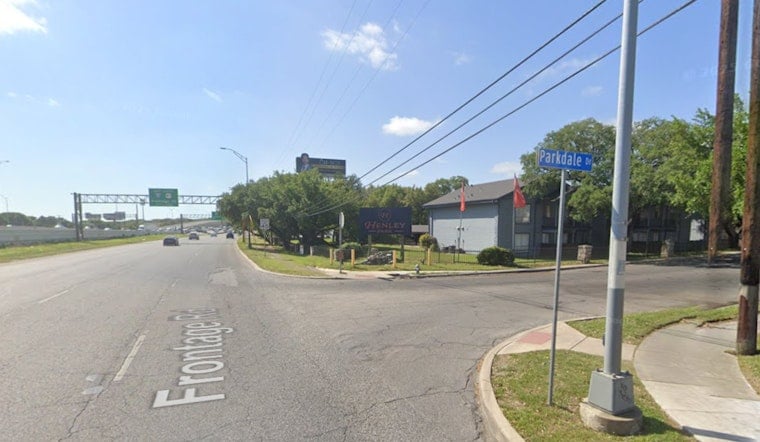
A motorcyclist was killed just after 10:30 p.m. Tuesday in a crash along Interstate 10 West near Parkdale Street on San Antonio's Northwest Side, and investigators are still trying to determine exactly what happened. Police say the motorcycle came to a stop roughly 300 feet away from where the rider ended up, a detail that has become central to the ongoing investigation.
According to KABB, San Antonio police are investigating whether anyone else was involved in the crash, as well as what led up to it. No further details about the rider's identity, other vehicles, or a possible cause have been released, and officers have not said whether they believe another car struck the motorcycle or fled the scene.
A Recurring Pattern On San Antonio's Highways
This is the latest in a string of fatal motorcycle crashes on San Antonio freeways this month alone. Hoodline previously reported on a rider killed after hitting a barrier on an I-35 offramp downtown, and on a separate case where a biker was left critical in a Loop 410 hit-and-run that investigators believed involved a vehicle that rear-ended him and left. Another rider died on a San Antonio highway earlier in August after the other driver involved was arrested on suspicion of DWI, and June brought two more fatal motorcycle crashes near the Loop 410 and I-10 interchange on the Northwest Side.
The pattern reflects broader numbers across the region. Bexar County consistently ranks second among all 254 Texas counties for total motorcycle collisions and rider fatalities, trailing only Harris County, according to Angel Reyes & Associates. Statewide, the Texas Department of Transportation recorded 557 motorcyclist deaths and 2,468 serious injuries in 2025, with motorcyclists making up roughly 15% of all traffic fatalities in Texas.
Why Freeways Like I-10 Carry Outsized Risk
Roughly 60% of San Antonio's most severe traffic collisions happen on state-maintained highways such as I-10, I-35, and U.S. 90 rather than on city streets, per city traffic safety data. Those corridors sit under state rather than municipal control, which can complicate local efforts to intervene with infrastructure changes or targeted enforcement.
Single-vehicle wrecks account for about a quarter of all motorcycle crashes in San Antonio, and local traffic reporting suggests roughly two-thirds of those solo incidents trace back to rider error, such as losing control on a curve or braking suddenly. It remains unclear whether Tuesday's crash falls into that category or involved another vehicle, and police have given no indication either way as the investigation continues.
State Law Limits What Happens Next
If investigators ultimately determine another driver was involved and left without stopping, Texas law treats that seriously. Under Texas Transportation Code § 550.021, failing to stop and render aid after a crash resulting in death is a second-degree felony, carrying two to 20 years in state prison and fines of up to $10,000, according to FindLaw.
Separately, questions about helmet use often arise in motorcycle fatality investigations, though Texas law limits how officers can approach that issue. Under Texas Transportation Code § 661.003, riders 21 and older may legally go without a helmet if they have completed an approved safety course or carry qualifying health insurance, while anyone under 21 must wear one. The same code, in section 661.003(c-1), bars officers from stopping or detaining a motorcyclist solely to check whether they meet those exemption requirements — that verification can only happen during a stop initiated for a separate traffic violation.
Statewide Push To Reduce Motorcycle Deaths
Texas transportation officials have leaned into awareness campaigns as fatalities persist. In May, TxDOT launched its annual Share the Road: Look Twice for Motorcycles campaign, using traveling virtual reality exhibits to show drivers how easily motorcycles can hide in blind spots and heavy traffic, as reported by WFAA. TxDOT data shows about 37% of fatal motorcycle collisions in Texas happen at intersections, making them the single most common location for deadly rider crashes, often tied to drivers failing to yield or misjudging a motorcycle's speed.
San Antonio has its own framework for tracking these incidents. The city became the first in Texas to adopt a formal Vision Zero action plan back in 2015, and in December 2025 it launched an interactive High-Injury Network Dashboard to map high-risk corridors and interchanges across the metro area. Whether Tuesday's stretch of I-10 West near Parkdale Street factors into that data remains to be seen, and police have not said when they expect to release further findings on the case.





