

























































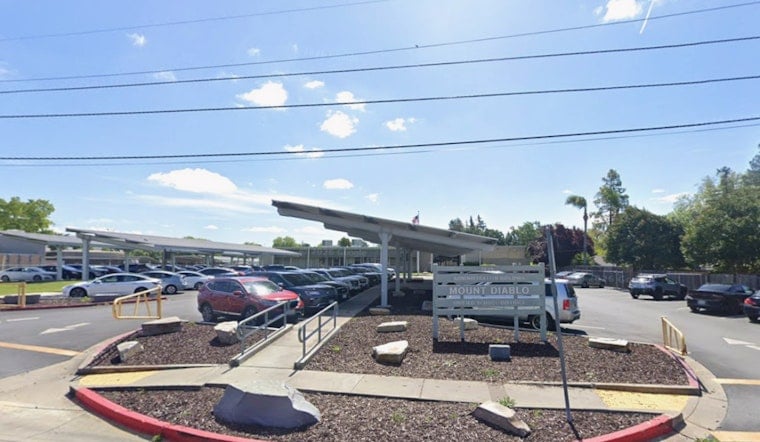
Mount Diablo Unified School District built a $75 million solar energy system a decade and a half ago on the promise of massive long-term savings for its 52 campuses. Now more than half of that system sits dark, and the district is paying roughly $2 million more per year on electricity just to keep the lights on across Concord, Pleasant Hill, Walnut Creek, Clayton, Martinez and Pittsburg.
The scale of the failure was laid out by Melanie Koslow, MDUSD's executive director of maintenance, operations and facilities, who presented findings from inspection firm Sunup Solar to the district's Board of Education, according to The Mercury News. Sunup Solar found that 43 of the district's 77 inverters are offline, leaving the overall solar system down 60 percent and knocking out nearly 8 of the system's 11 megawatts of generating capacity, the outlet reported.
Solar inverters are the components that convert direct current electricity generated by panels into the alternating current used by the power grid, and when they fail, the panels above them stop delivering usable power even if the panels themselves remain intact. The mismatch is significant: MDUSD's solar system was installed in 2010 and completed in 2012, but according to Koslow, per the same account, no one has quite figured out why the system has fallen into such poor condition. That uncertainty tracks with a warning MDUSD officials reportedly received in 2024, when Schneider Electric flagged that about 30 percent of the district's panels already appeared to be down.
A $65 Million Contract Undone by Bankruptcy
The district's solar buildout traces back to Measure C, a $348 million general obligation bond that Mount Diablo voters approved in 2010 with 60.7% support, creating a Citizens' Bond Oversight Committee to track how the money was spent, according to the district's own audit records. That committee has since raised repeated concerns about the district's power usage, the report notes.
SunPower Corporation won a $65 million contract in 2010 to install, monitor and maintain solar panels at 51 district sites, later adding $9.9 million to the project price in 2011 for plan reconfigurations tied to a future heating, cooling and ventilation project, per the same account. The contract reportedly included a 20-year performance guarantee, and SunPower promised the district it would save about $192.5 million over 30 years — a bet that, according to the report, has so far yielded roughly $17 million in actual general fund savings.
That promise collapsed when SunPower Corporation filed for Chapter 11 bankruptcy in August 2024, a filing Hoodline covered in SunPower's bankruptcy filing. Court filings with the U.S. Bankruptcy Court for the District of Delaware show SunPower sold its operating assets to Complete Solaria for $45 million in September 2024, but the deal explicitly excluded legacy customer agreements, leases and equipment warranties tied to installations completed before September 30, 2024. Complete Solaria rebranded as SunPower Inc. in April 2025, per the Mercury News report, and later formally adopted that name in October 2025 — meaning the company now carrying the SunPower brand and Nasdaq ticker never assumed responsibility for the equipment installed at MDUSD's 51 sites, according to EnergySage.
Warranty Leads and an Unanswered District
Koslow said she has leads on a possible answer about whether MDUSD's system remains under any form of warranty, but she also said conversations with previous vendors about a possible warranty had fallen apart, per the same account. The district approved a Sunup Solar inspection contract on March 25 and tapped Capital Engineering to both assess the district's financial losses and to develop a plan to remedy the failure. Koslow told the board the cost of the system being down is significant and said the cost to eventually restore it will be significant as well; she expects to return before the board next month with more details, according to the report.
Not everyone is satisfied with how the district has handled the fallout. Jim Walsh said the district dropped the ball, per the Mercury News account, and MDUSD did not immediately respond to questions about who bears responsibility for maintaining the system following SunPower's bankruptcy, the outlet reported.
A Nationwide Pattern of Aging Solar Equipment
MDUSD's predicament is not unique. Clean energy research firm Wood Mackenzie has found that nearly one-third of all U.S. solar capacity will reach the 15-year mark by 2026, according to PV Hardware, forcing asset owners nationwide to confront early-generation inverters with expected lifespans of just 10 to 15 years, compared to 25 to 30 years for the panels themselves. Central inverters endure continuous thermal and electrical stress that wears down internal components well before the panels above them fail.
The financial squeeze is compounded by California's electricity rates. Commercial rates from investor-owned utilities including Pacific Gas and Electric surged 64.4% between 2021 and 2024, according to Climatec, meaning that losing nearly 8 megawatts of solar capacity forces districts like MDUSD to buy replacement power at peak commercial rates. Electricity and natural gas typically represent a school district's second-largest operating expense after staff salaries and benefits.
Replacing the failed equipment will not be simple or cheap. Technical guidance from solar manufacturer SolaX Power indicates inverter replacements typically cost 10% to 15% of a system's original installation cost, and central string inverter faults account for more than 43% of all ongoing solar maintenance calls industrywide. Any repair work at MDUSD's 51 campus sites will also have to clear California Division of the State Architect review, which requires stamps from a licensed structural engineer on K-12 solar and structural modifications to verify seismic safety, wind loading and ADA accessibility, according to Laguna Consulting Engineers — a process that will likely extend the timeline before any of the district's dark panels come back online.
MDUSD is also not alone among districts and homeowners caught by vendor collapse. More than 100 U.S. solar installers have filed for Chapter 11 bankruptcy or shut down between 2023 and 2026, according to Solar Equity Solutions, leaving over one million American installation sites with orphaned systems and unhonored warranties — a trend Hoodline has also traced in a Tampa homeowner's $20K solar bill following the Freedom Forever bankruptcy. For now, MDUSD families and staff are left waiting on Koslow's promised update to the school board, with no confirmed timeline or funding source yet in place to bring the district's largest-in-the-nation K-12 solar system back to full strength.





