

























































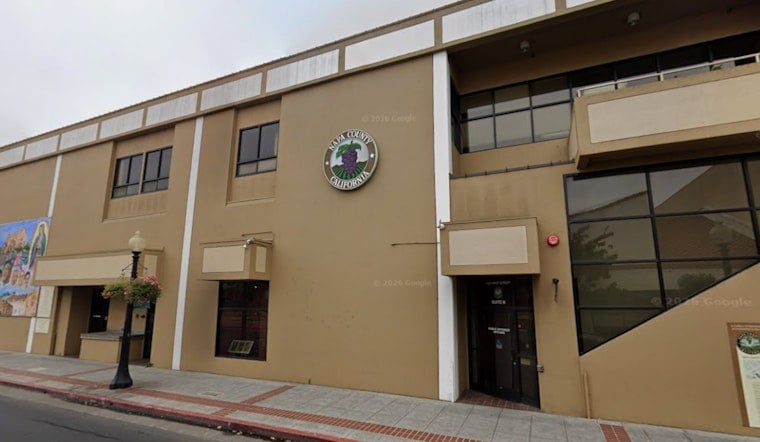
A Napa County jury acquitted 25-year-old Alan Jazeel Martinez of murder and involuntary manslaughter yesterday in connection with the fentanyl-related death of 17-year-old Monica Flores, even as it convicted him on six separate felony drug charges tied to the same case. The Santa Rosa man was found guilty of two counts each of selling fentanyl to a minor, possessing fentanyl for sale, and transporting fentanyl for sale following a three-and-a-half-week trial.
Napa County District Attorney Allison Haley announced the verdict, which closes out one of the most closely watched prosecutions in the county's history, according to a Napa County District Attorney's Office press release. Flores, a Vintage High School senior, was found dead in her Napa home bedroom on May 25, 2022, after overdosing on fentanyl, a death that triggered an 11-month multi-agency police investigation into where the drugs came from, according to a City of Napa press release.
Press Release: Napa Jury Acquits Alan Martinez of Murder, Involuntary Manslaughter Charges Linked to Fentanyl-Related Death of Napa Teenager pic.twitter.com/HXDCww0vsj
— Napa County District Attorney's Office (@NapaCountyDA) August 28, 2026
The jury trial was prosecuted by Napa County Deputy District Attorneys Agnes Dziadur and Katie Gross, who also presented evidence on aggravating factors and special allegations once the verdicts came in. The court found true a special allegation that Martinez has a prior strike conviction on his record, per the same press release.
Martinez is scheduled to return to Napa County Superior Court for sentencing at 8:30 AM on September 28, in Department 4. Public Information Officer Carlos Villatoro is handling further media questions about the case for the district attorney's office.
A Case Built on a Legal Long Shot
When Haley's office filed murder charges against Martinez and a co-defendant back in June 2023, it marked the first time in Napa County history that prosecutors charged a drug supplier with murder for an overdose death, as reported by CBS News. The charges followed a joint operation in which Napa Police SWAT, Napa Sheriff's deputies, and Sonoma County law enforcement agencies executed a search warrant on Pioneer Way in Santa Rosa, with both suspects originally booked on 11 felony counts.
Convicting a drug seller of second-degree murder in California requires prosecutors to prove implied malice — that the seller knowingly performed an act dangerous to human life with conscious disregard for that danger — a legal standard adapted from the 1981 People v. Watson DUI murder precedent, according to the Hedding Law Firm. That burden proved decisive: in April, Napa County Superior Court Judge Scott Young had denied a defense motion to dismiss the murder charge before trial, allowing the case to reach a jury, but jurors ultimately declined to find that Martinez acted with the required disregard for Flores' life.
The outcome stands in sharp contrast to that of Martinez's co-defendant, Luis Fajardo Melgoza, who was 21 when he avoided trial in late 2024 by pleading no contest to second-degree murder and admitting all alleged aggravating factors connected to Flores' death, according to the Napa County District Attorney's Office. Melgoza had been accused of jointly selling fentanyl-laced pills to Flores. A third co-defendant, 24-year-old Erika Garcia Chavez, also pleaded no contest in late 2024, to felony possession of a controlled substance for sale and conspiracy, and was set to be sentenced once Martinez's proceedings concluded.
Part of a Broader Push by Napa Prosecutors
Martinez's case is not the only instance of Napa County prosecutors reaching for homicide charges in a fatal fentanyl exposure. The district attorney's office also filed first-degree murder charges against two Napa parents following the August 2024 overdose death of their 3-year-old child, a case in which the parents pleaded not guilty earlier this year, as Hoodline previously reported.
The county's overdose crisis remains far less severe than some of its neighbors, even as it continues to shape local prosecutorial strategy. Federal health statistics compiled in 2026 showed Napa County's drug overdose mortality rate stood at 11.3 per 100,000 residents in 2024, among the lowest county rates in California, compared with neighboring Lake County's rate of 91.5 per 100,000, according to USAFacts. Locally, the Napa County Health and Human Services Agency operationalized $10.8 million across 37 health strategies in 2024, funded in part through National Opioid Settlement revenues, Tobacco Settlement funds, and the Mental Health Services Act, according to a Live Healthy Napa County report.
For now, Martinez's six felony narcotics convictions stand as the only accountability the case will produce, with his prior strike conviction expected to factor into sentencing next month. Whether the split verdict discourages or emboldens future implied-malice murder filings against drug suppliers remains an open question among legal observers watching how California prosecutors handle the fentanyl crisis.





