

























































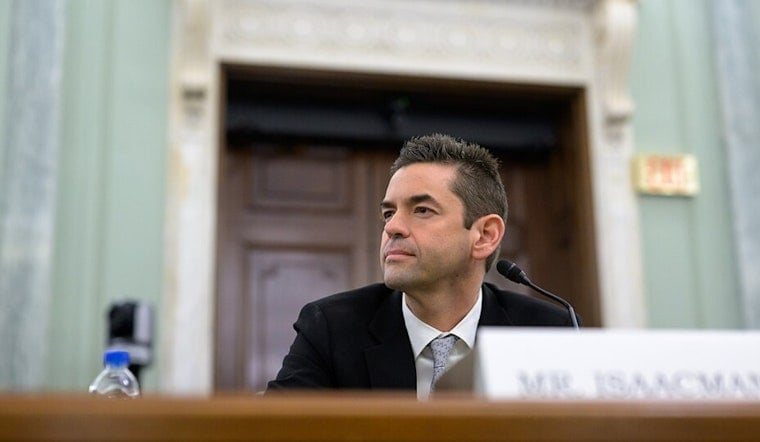
NASA Administrator Jared Isaacman walked through Rocketdyne's Mason campus this week and came away calling the roughly 350-person site one of the space agency's most important partner relationships, just days after the company split off from its longtime parent in a major corporate shakeup. Isaacman described the region's capabilities as a very important capability for NASA's next chapter in space, and he said the agency needs the best and brightest from across the nation to pull off what comes next.
The timing is no accident. As reported by Axios, Isaacman's visit came less than two weeks after L3Harris Technologies completed the sale of a 60% majority stake in its commercial space propulsion, power, and electronics business to private equity firm AE Industrial Partners in an $845 million deal that closed August 4, re-establishing Rocketdyne as an independent company. L3Harris kept a 40% minority stake while AE Industrial Partners took operational control, according to a report from Air & Space Forces Magazine.
Under the terms of that deal, L3Harris retained full ownership of the RS-25 rocket engine operations that power NASA's Space Launch System, while the newly independent Rocketdyne kept the RL10 upper-stage engine, space electronics, and nuclear space power portfolios. Rocketdyne's Mason site serves as the company's center of excellence for space electronics, according to the Axios report, with avionics and communications technology that supports launch vehicles, Mars rovers, Mars communications, and NASA's Artemis moon missions.
A Slogan That Might Need Updating
Kristin Houston, identified in the Axios report as a Rocketdyne representative, said the company's longtime slogan has been “from Mason to the moon,” but suggested its reach may soon extend further. She said the destination may expand to “Mason to Mars or elsewhere,” a nod to the company's growing role in nuclear propulsion research alongside its established work on moon rockets and landers.
That nuclear ambition centers on SR-1 Freedom, a planned NASA spacecraft designed to test nuclear electric propulsion on a journey toward Mars. NASA's own workforce guidance, updated in May, confirmed the mission is targeting a 2028 launch. Isaacman called nuclear power in space perhaps NASA's next giant leap and the potential beginning of the agency's next great chapter, framing the technology as key to shortening travel times for future crewed missions to the red planet.
Part of a Booming Regional Aerospace Corridor
Rocketdyne is adding to a growing aerospace corridor stretching from Cincinnati to Dayton, an ecosystem anchored by Wright-Patterson Air Force Base and GE Aerospace, per the same Axios account. The region has become a dense aerospace hub, and Rocketdyne has said it wants to keep investing in southwest Ohio, where companies benefit from access to engineers, researchers, suppliers, and experienced aerospace workers.
The Mason visit lands amid a wave of major regional investment. Earlier this summer, 3D-printed jet engine maker Beehive Industries announced a $70 million expansion in southwest Ohio, a project Hoodline previously reported is expected to create more than 200 jobs through the acquisition of local machine shops Able Tool Corporation and Planet Products. Hybrid-electric aircraft startup Electra also revealed plans that same week for an $850 million aircraft manufacturing operation near Springfield, aiming to eventually produce up to 800 aircraft a year.
Ohio's aerospace footprint extends well beyond the Cincinnati-Dayton corridor, supporting more than 110,000 industry employees across over 600 companies statewide as of last year, according to 10TV, which noted Ohio serves as the top supplier state to commercial aircraft manufacturers Airbus and Boeing. That statewide strength is reinforced locally, where Mason officials approved a concept plan earlier this year to rezone 528 acres along the U.S. 42/Ohio 741 corridor into an expanded research and development park aimed at attracting advanced manufacturing tenants, a move Mason approved for elite tenants earlier this year.
Isaacman, who assumed office as NASA's 15th Administrator in December after his nomination by President Donald Trump, previously commanded the all-civilian Inspiration4 spaceflight and performed the first commercial spacewalk during the Polaris Dawn mission. His visit to Rocketdyne underscores how NASA views the Mason workforce and its capabilities as important players in the next era of American space exploration, even as the company navigates life under new private-equity ownership.





.jpg)