

























































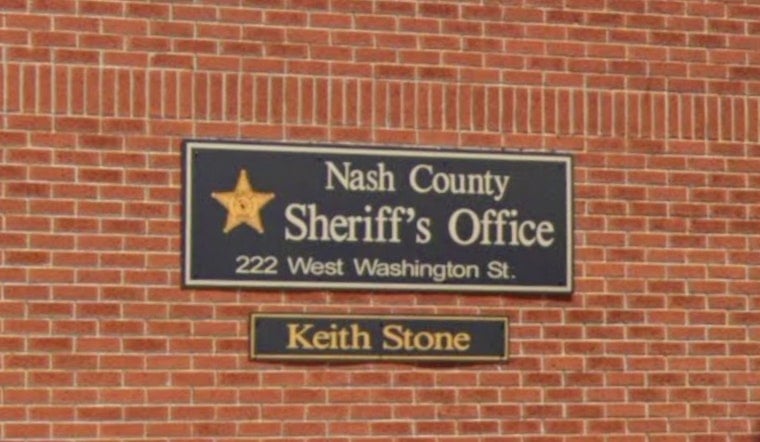
Dale Griffin, the longtime director of Nash County EMS, died after drowning during a beach trip in Carteret County on Saturday, according to the Nash County Sheriff's Office. Griffin had spent 38 years with the agency, most recently leading it as director since December 2023, and his death has left the Nash County community mourning a man colleagues describe as a mentor and friend.
The Nash County Sheriff's Office shared news of Griffin's passing on Facebook, and Nash County EMS followed with its own tribute honoring his service, leadership, friendship, and legacy. As reported by ABC11, the sheriff's office extended condolences and prayers to Griffin's family, friends, and loved ones, while Nash County EMS asked the public to keep both Griffin's family and the Nash EMS family in their thoughts and prayers. Griffin is survived by his wife, Julie, and daughters Harlee and Grace.
Stacie Shatzer said Griffin was deeply respected by his colleagues and the Nash County community, a sentiment echoed throughout the outpouring of tributes that followed his death. Nash County EMS described him as a mentor and dear friend whose loss reverberated across the department he helped build over nearly four decades.
A Four-Decade Career Capped By Leadership
Griffin's path through Nash County EMS traced almost the entire modern history of the agency. He worked as a paramedic and field training officer from 1998 to 2025, moved into roles as program manager and training officer between 2015 and 2022, served as operations officer from 2022 to 2023, and finally took the helm as EMS director in December 2023, according to the Legeros Fire Line.
That tenure included steering the department through the COVID-19 pandemic, when Griffin co-presented an operational report to the Nash County Board of Commissioners in January 2021 detailing how the virus reshaped field operations, staff exposures, and ambulance decontamination protocols. Nash County EMS experienced an 18% surge in call volume during the pandemic's peak, a strain that tested the agency's rural infrastructure long before Griffin's death brought fresh attention to its mission.
More recently, Griffin advocated for the paramedics under his command. In May 2025, he told the Nash County Board of Commissioners that county-budgeted pay increases had helped boost employee recruitment and retention, addressing staffing shortages that had slowed EMS response times across rural North Carolina during and after the pandemic, according to The Nashville Graphic. In August 2025, under his leadership, the department also expanded community readiness by supplying local municipal police departments with automated external defibrillators, since officers are often first on scene for medical calls in municipal areas, per the CARES Registry.
A Procession Home To Greenville
On Sunday, emergency agencies organized an escorted procession to carry Griffin's body from Carteret Health Care in Morehead City to a funeral home in Greenville. According to WXII 12 News, the multi-county escort involved Carteret County Emergency Services and state communications channels as first responders paid tribute to Griffin along the route.
The circumstances of the drowning itself remain limited to what the sheriff's office has confirmed: that Griffin drowned during a beach trip in Carteret County on Saturday. The specific beach location and the ocean conditions at the time have not been detailed in official statements.
The Rural EMS System Griffin Led
Nash County EMS, the agency Griffin spent his career building, covers roughly 94,970 residents across ten 24-hour ambulance stations and handles about 27,000 emergency calls a year, according to the county's official website. The department was established in 1986 with just six employees and two ambulances before growing into the multi-station system Griffin ultimately directed.
That system leans on a joint first-responder network with 16 local volunteer fire departments, which allows medical first responders to reach emergency scenes across the entire county before an ambulance arrives. Behind those field crews sits the Nash County Emergency Communications Center, staffed by 22 dispatchers certified across all three National Academy of Emergency Dispatch protocol systems covering medical, fire, and law enforcement calls — a full three-protocol accreditation held by few 911 centers in North Carolina.
The scale of that workload has drawn state attention. Hoodline previously reported on Stein's $10M EMS pledge, noting that Governor Josh Stein pledged $10 million in state support for rural EMS agencies in June, citing Nash County EMS's roughly 30,000 calls in 2025 as an example of the strain facing rural departments across the state.
Rip Currents Remain A Persistent Coastal Threat
Griffin's death adds to a grim toll that North Carolina's coast has recorded for years. Rip currents are the leading weather-related killer in the coastal Carolinas, causing nearly 200 drownings between 2000 and 2025 — far more than hurricanes or tornadoes combined, according to the National Weather Service. The agency estimates rip currents account for more than 80% of beach rescues nationwide each year.
For a community that depended on Griffin to lead its emergency response for nearly four decades, his death is a stark reminder that the hazards he spent his career training others to respond to can affect anyone, anywhere, including off duty. Nash County EMS and the sheriff's office have asked residents to hold his family, and the broader EMS family he led, in their thoughts.





