

























































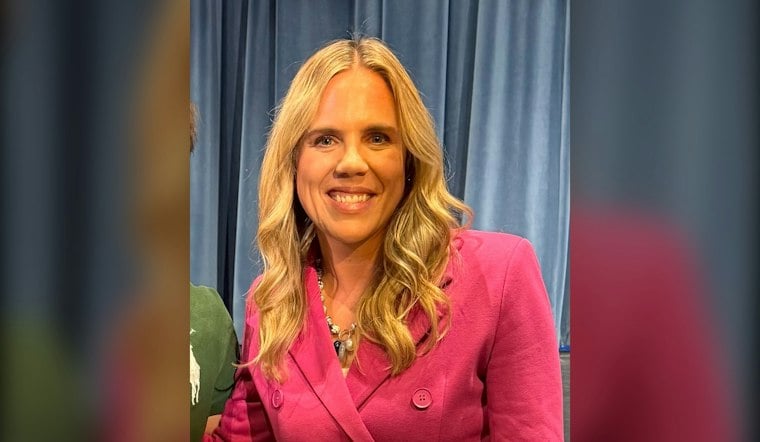
Dr. Annie Andrews stood before a crowd of bipartisan supporters at the Westside Community Center in Anderson, pitching herself as a pediatrician and mom who understands what rising grocery, gas and insurance bills are doing to South Carolina families. The Democratic Senate candidate used the stop to push an affordability message on Oct. 23, while South Carolina early voting, which began Oct. 19, was still in its first week, with the Nov. 3 election against Republican Sen. Darline Graham drawing closer by the day.
An Affordability Pitch in the Upstate
The event, billed as “A South Carolina You Can Afford,” gave Andrews a chance to lay out a platform built around health care costs, fuel prices and tariffs, according to WSPA 7News. She told the crowd she supports suspending the federal gas and diesel tax to bring down fuel costs, and she took aim at what she called “the unconstitutional on again, off again tariffs that are driving up inflation.” Andrews also said insurance premiums had doubled and tripled for many families while prescription drug costs kept climbing.
On health care specifically, Andrews outlined a plan she said would let the federal government negotiate prescription drug prices, keep rural hospitals open and hold insurance companies accountable, per the same outlet's report. She said she also has a plan to stop impending Medicaid budget cuts. If elected, Andrews said her top priority would be to fix what she described as America's broken health care system while tackling the broader affordability crisis families are facing.
PAC Money Question and a Flat Denial
When a reporter raised an allegation that Andrews had received $215,000 in PAC money, she pushed back directly, saying, “I don't take corporate PAC money.” The exchange came as the campaign has sparred publicly over outside spending in the race — Graham has been outraised by Andrews overall, but millions of dollars in outside spending from the GOP and conservative PACs has kept Graham's side ahead in the advertising wars, the Post and Courier reports. A Super PAC affiliated with Sen. Tim Scott is separately putting about $750,000 behind ads criticizing Andrews, according to a Federal Election Commission filing cited by the Post and Courier.
Andrews also fielded questions from attendees on local schools and young voter participation, according to WSPA. She told the crowd she has now campaigned for 18 months and would not be beholden to anyone but South Carolina voters if sent to Washington. She said she worries Graham would “disappear into Washington” after securing a full six-year Senate term, framing the election as a choice about accountability as much as policy.
A Crowd Crossing Party Lines
Attendee Kristian Colaiacovo said people from different parties showed up because they support Andrews and are hoping for change, according to the same WSPA report. Colaiacovo said South Carolina Republicans have held a legislative supermajority trifecta for more than two decades and argued the state ranks near the bottom nationally on education, healthcare, wages, mental healthcare and infrastructure. Colaiacovo also said Andrews and fellow Democrat Jermaine Johnson could help the state improve.
That bipartisan appeal echoes broader polling trends in the race. Surveys from Republican-aligned pollsters have suggested that as many as one in five Republicans might cross party lines to back Andrews, as the Post and Courier has reported.
A Race Too Close to Call
Just how close the contest actually is depends on which poll you believe. A poll from Fresh Start SC was reported to show Andrews leading Graham with 45% of the vote, according to the WSPA report, while a separate Democratic-aligned PAC poll put Andrews ahead 45% to 44%, per the Post and Courier. But an Insider Advantage poll conducted in late September showed Graham leading 46% to 45% among likely voters, according to WSOC-TV, and a Real Clear Politics average cited by Al Jazeera showed Graham leading by about 2.7 points. A survey from Republican pollster Robert Cahaly similarly found Graham ahead by roughly three points, within the poll's margin of error, per the Post and Courier.
The uncertainty has shown up in how forecasters frame the race. The Cook Political Report shifted its rating on Oct. 20 from “likely Republican” to “lean Republican,” according to the Post and Courier's account, though another report from ms.now described the shift as moving from “solid Republican” to “likely Republican.” Either way, Wjcl.com described recent polling as showing a close race overall, while noting Graham remains favored in a state dominated by Republicans.
Graham's Path, Trump's Backing and the History Books
Graham, who was appointed to finish her late brother Lindsey Graham's Senate term before winning the Republican nomination, has Trump's endorsement and a $5 million commitment from the Senate Leadership Fund, according to WJCL. Trump visited Pendleton to campaign for Graham, and during that trip he called Andrews “the most extreme and one of the most crazy people in the entire country,” saying her election “would be a disaster.” The Senate Leadership Fund has described its $5 million as “an insurance policy” for the race, per ms.now, while the super PAC MAGA Inc. spent more than $800,000 backing Graham during the primary.
The stakes for Democrats are steep by any historical measure — South Carolina has not elected a Democratic senator since 1998, per WJCL. Andrews has been crisscrossing the state to chip away at that drought; a town hall in Winnsboro earlier this month meant she had visited all 46 South Carolina counties since launching her campaign last spring, according to the Post and Courier.
Turnout Trends as the Clock Winds Down
Early voting turnout has been robust by midterm standards but has slipped day to day. Just over 363,500 South Carolinians cast ballots during the first four days of early voting, well above the 173,107 ballots cast in the same period during the 2022 midterms, though short of the more than 500,000 ballots cast in the comparable window of the 2024 presidential election, according to the Post and Courier. Daily turnout has declined since polls opened, falling from 98,695 voters on Oct. 19 to 82,886 on Oct. 22, the outlet reported.
Anderson County sits in deep-red territory — Trump carried Anderson County by a 48-point margin in 2024 and neighboring Pickens County by 53 points, per the Post and Courier — making Andrews' appearance there notable regardless of which poll proves accurate. Still, at the Westside Community Center, Andrews told supporters she expected to win outright on Nov. 3, saying “we're going to win on November 3rd.”
What Voters Need to Know Before Election Day
South Carolina's early voting period runs through Saturday, Oct. 31, with centers open from 8:30 a.m. to 6 p.m. Monday through Saturday; they will be closed this Sunday, Oct. 25, according to WSPA. On Election Day itself, polls will be open statewide from 7 a.m. to 7 p.m., a schedule confirmed by the South Carolina Election Commission.
All voters must present valid photo identification when checking in, including a South Carolina driver's license, SCDMV ID card, photo voter registration card, federal military ID or U.S. passport, according to the South Carolina Election Commission. Anderson County's own voter guidance, available through the Anderson County government website, notes that state law requires voters to register at least 30 days before an election.





