

























































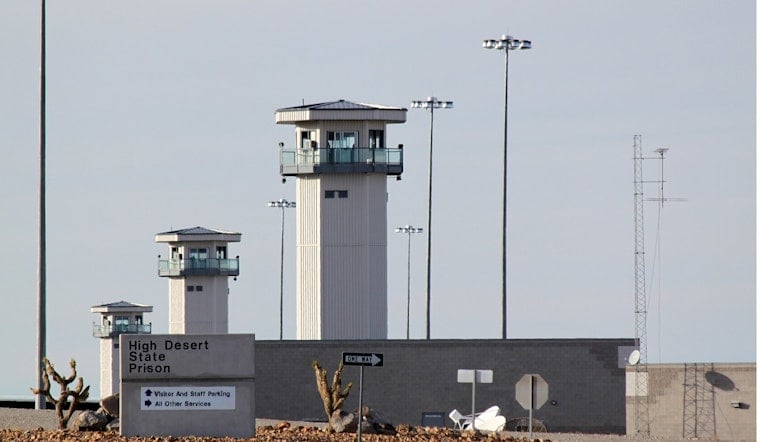
A 24-year-old Nevada inmate died 18 days after he was hospitalized with severe injuries at High Desert State Prison, and his parents now say guards beat him into a fatal brain injury. A lawsuit filed Monday in Clark County District Court alleges the assault began when officers entered Malik Avila’s cell over suspected cellphone use. The case turns on a grim split between the family’s account and the official death ruling, which classified the death as an accident.
Eileen Avila and Kareem Gray’s 29-page complaint names warden Jeremy Bean, the Nevada Department of Corrections, High Desert guards and medical staff as defendants. It also names Nevada Donor Network and two employees, alleging the family was misled about Avila’s condition and pressured over organ donation. The filing seeks compensatory and punitive damages, policy changes involving training, supervision, use of force and offender medical care, plus a jury trial, according to the Las Vegas Review-Journal.
The Nevada Department of Corrections’ public account is spare: Avila was pronounced dead on Nov. 22 at MountainView Hospital after being held at High Desert State Prison. NDOC said he was serving 120 months to life for second-degree murder connected to a 2018 killing in Dayton and that an autopsy had been requested under state law, as detailed in a department release. The lawsuit says Avila was airlifted from the Indian Springs prison on Nov. 4 after suffering the injuries.
According to the complaint, guards entered Avila’s cell over suspected cellphone use and continued punching him in the face and body until he collapsed. One punch allegedly caused him to strike the right side of his head, resulting in a traumatic brain injury. Attorney James Urrutia, who represents the family, said a whistleblower recording and a 911 call support the account that Avila’s last words were, “Please stop.”
The lawsuit also alleges that medical care was delayed and that prison staff provided Avila’s relatives with conflicting explanations, including suggestions that he may have ingested a substance. A prison nurse reportedly told 911 dispatchers that Avila was unconscious and convulsing and possibly had a brain injury, while the complaint says a hospital toxicology test later came back negative for drugs. Those allegations and the family’s account of the response were reported by the Review-Journal.
Official Death Ruling Conflicts With Lawsuit Allegations
The Clark County Coroner’s Office attributed Avila’s death to a lack of oxygen and blood flow to the brain, along with cardiac arrest associated with a tonic-clonic seizure, and ruled the manner of death an accident. The autopsy report has not been publicly released. That leaves the lawsuit’s central claim—that the alleged beating caused the brain injury and that inadequate care contributed to Avila’s death—to be tested in court.
The case arrives as High Desert faces continued scrutiny over deaths and alleged mistreatment inside Nevada prisons. In a separate case, a prior High Desert lawsuit led to a $4.6 million wrongful-death settlement involving the family of Christian Walker, who also alleged guards beat him and failed to provide adequate care.
What Happens Next In The Civil Case
A civil complaint presents allegations, not findings of liability, and no criminal charges against guards have been announced in Avila’s death. NDOC said it does not comment on pending litigation, while the Nevada Donor Network did not respond to the Review-Journal’s request for comment. Avila’s parents are asking a jury to award damages and the court to order changes in how Nevada prisons train staff, document force and handle medical emergencies.





