

























































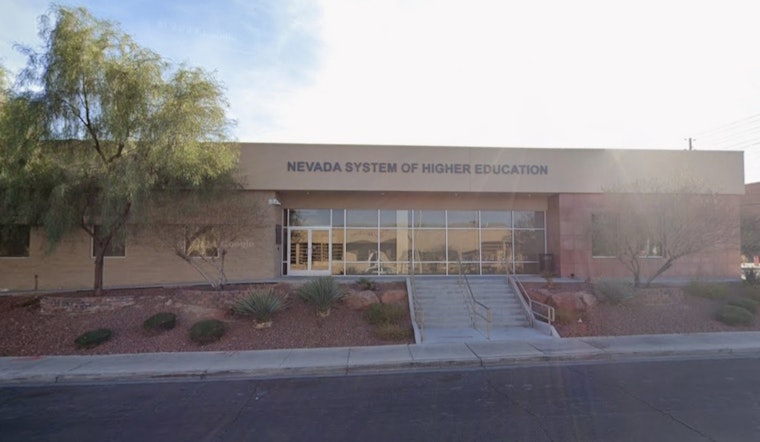
The Nevada System of Higher Education's Board of Regents voted 11-2 to postpone a decision on whether to eliminate its Inclusion, Diversity, Equity and Access Committee, after students and community members warned that dissolving the body would silence marginalized voices on Nevada's campuses. The pause comes as the system's colleges are already absorbing millions in canceled federal grants and a wave of quiet rebranding tied to the Trump administration's crackdown on campus diversity programs.
According to the Las Vegas Sun, students sent almost 600 letters urging regents not to eliminate the committee, a groundswell that appears to have shifted the board's calculus. Regents Jeffrey Downs and Patrick Boylan both opposed the postponement, with Downs noting that the committee had received no request to meet and consider an item and arguing that some of its elements could simply be folded into other committees. Regent Heather Brown countered that improving the committee would be preferable to eliminating it outright, according to the same report.
The committee itself has not met in a year, and the Nevada System of Higher Education had already removed it from its roughly 600-page governing code almost a year before the postponed vote, the article notes. Regent Amy Carvalho was the sole regent who opposed that October 2025 decodification, when the board voted 12-1 to strip the committee from the code. Regent Pete Goicoechea proposed reevaluating the council's function and returning responsibilities to individual campuses, while Regent Matt McNair characterized the decodification as an effort to clean up the code rather than an attempt to minimize the issues the councils addressed.
A Body Born in 2005, Stripped of Power by 2026
The Board of Regents originally created the diversity body back in 2005 as the Cultural Diversity and Security Committee, removed its security responsibilities in 2009, and renamed it the Inclusion, Diversity, Equity and Access Committee in 2022, according to the Nevada System of Higher Education. Before it was decodified in October 2025, the five-person IDEA Council was led by the NSHE chancellor and held mandatory systemwide anti-discrimination training while drafting major inclusion policies, including the system's Juneteenth resolution, per reporting from the Sun.
Regent Kelechi Odunze said the Board of Regents should be promoting opportunities across Nevada, a sentiment that underscores what students framed as the stakes of the debate. Chris Heavey announced in October 2025 that UNLV would break up its own Office of Diversity Initiatives, and the university has since created a new associate vice provost position to oversee campus-wide engagement in its place. The UNLV Young Democratic Socialists of America chapter created an action network form allowing students to message regents directly, a tactic that fed into the letter-writing campaign that ultimately swayed the board.
Federal Pressure Squeezes Nevada Campuses
The postponement did not happen in a vacuum. President Trump signed an executive order on January 21, 2025 declaring certain campus DEI practices illegal discrimination, and that order directed each federal agency to identify up to nine targets for civil-rights compliance investigations while also requiring the attorney general and education secretary to issue compliance guidance tied to federal funding. The order also listed universities with endowments over $1 billion among possible investigation targets.
A federal judge blocked a related executive order directing agencies to terminate equity-related grants or contracts in February 2025, but that injunction was lifted the following month, clearing the way for cuts to proceed. UNLV, Nevada State University and the College of Southern Nevada have together lost nearly $18 million in combined federal funding as the administration intensified its crackdown on campus DEI programs.
The U.S. Department of Justice opened a formal Title IV and Title VI compliance investigation into UNLV on September 30, 2025 to evaluate the university's handling of antisemitism reports and equal treatment obligations, according to the U.S. Department of Justice, which provides $1.83 million in direct federal financial assistance to UNLV. UNLV was required to provide campus-wide communications to the DOJ by November 1, 2025, and the department separately requested messages between the Board of Regents and UNLV concerning discrimination, free speech or protest policies. Months earlier, in March 2025, the U.S. Department of Education named UNLV as one of 45 universities under investigation for alleged racial preferences and stereotypes, focusing on partnerships with The PhD Project, a nonprofit that supports historically underrepresented groups pursuing business-related doctoral degrees. Education Secretary Linda McMahon insisted that student programs evaluate applicants on individual merit rather than race, as reported by NPR. McMahon has also eliminated seven federal grant programs supporting minority-serving institutions.
TRIO Program's End Hits Low-Income Students
The fallout has already reached students directly. The Trump administration canceled the College of Southern Nevada's Student Support Services grant, cutting $300,000 in annual funding that served more than 200 students, and the cancellation ended the school's TRIO program entirely. That program had served more than 3,000 low-income, first-generation and disabled students since it was established in 2000, and maintained an average 90 percent rate of academic good standing and persistence among participants before the grant was pulled, according to the College of Southern Nevada.
Campuses have also moved to rename or dismantle diversity offices ahead of federal scrutiny. Nevada State University closed its Office of Community, Equity, Diversity and Inclusion on May 1, 2025, while UNLV replaced its Office of Diversity Initiatives with a broader campus-wide initiatives effort. The College of Southern Nevada quietly renamed its Office of Diversity to the Office of Civic and Cultural Engagement, and UNLV scrubbed diversity hiring guidance documents from its public website, according to The Nevada Independent. Nevada's higher education institutions receive more than half their funding from non-state sources, including federal grants, which helps explain the urgency behind the rebranding.
A Nationwide Retreat, With Local Stakes
Nevada's moves mirror a broader national pattern: tracking data from the Chronicle of Higher Education shows hundreds of U.S. colleges and universities altered, rebranded, or eliminated DEI programs in 2025 and 2026 in response to federal executive orders and state legislative mandates. The pressure on Nevada's system is compounding with other financial burdens already facing students. The Board of Regents voted 8-5 to approve a 12 percent tuition hike at four-year universities and a 9 percent hike at community colleges, phased in over three years beginning this fall.
The 13-member Board of Regents elected Regent Stephanie Goodman as chair and Regent Carol Del Carlo as vice chair to lead the governing board for the 2026-2027 academic term, a body that oversees Nevada's seven public higher education institutions and the Desert Research Institute. Even as diversity offices shrink and federal investigations continue, physical expansion is moving forward elsewhere in the system — Nevada State University broke ground in April 2026 on a new downtown North Las Vegas campus backed by a $200 million redevelopment plan, aimed at expanding four-year degree access in historically underserved neighborhoods. For now, the fate of the IDEA committee itself remains unresolved, with the postponed vote leaving students, faculty and regents to keep making their case before any final decision is made.





