

























































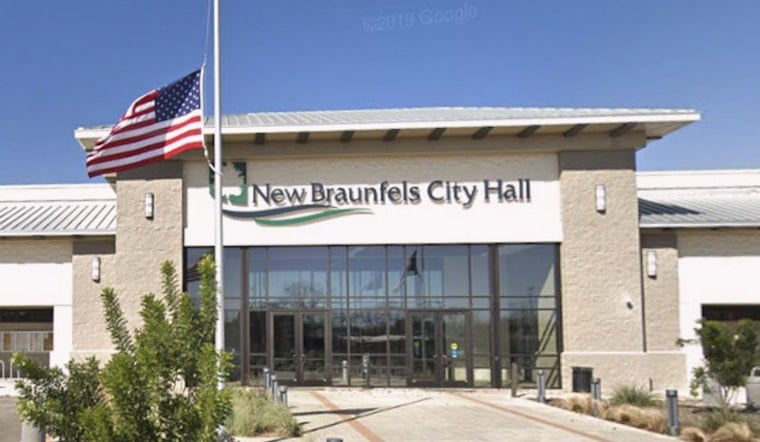
New Braunfels City Council voted last Monday to deny homebuilding giant Lennar's appeal for more than $2 million in parkland fee reimbursements at its Navarro Ranch subdivision, ruling that the company's private park amenity largely consists of land needed for drainage rather than qualifying green space. The decision, handed down August 10, closes out a years-long dispute over whether Lennar met the city's requirements for a discount on park development fees tied to the single-family subdivision in the Guadalupe County extraterritorial jurisdiction.
The fight centers on New Braunfels' Parkland Dedication and Development Ordinance, which requires developers to either hand over 7.85 acres for a public park, pay park development fees instead, or set aside that same 7.85 acres and build a qualifying private park of their own. Get that last option right, and a developer can recoup up to 75% of the park development fee. As reported by Community Impact, Lennar fell well short of that threshold, developing just 5.93 acres that comply with city requirements according to a presentation at the meeting.
City officials say the shortfall traces back to how Lennar handled a recreational trail built to pad out the private park's acreage. Deputy City Manager Jordan Matney told council that Lennar ultimately determined the trail had to function as drainage infrastructure and could not be formally designated as parkland, a conclusion that undercut the company's case for reimbursement. Matney also said Lennar initially indicated it would set aside acreage specifically for a private park before that plan ran into trouble.
A Park Built Before It Was Approved
Compounding the ordinance violations, the city says Lennar built its 3.78-acre private park in Navarro Ranch back in 2019 before ever receiving city approval for the design. Lennar submitted several plat applications proposing private-park land in future subdivision phases between 2019 and 2023, but those applications did not comply with New Braunfels' subdivision platting ordinance, according to the report.
District 2 Council Member Michael Capizzi was blunt about the sequence of events during deliberations, saying Lennar had not met the requirements for more than $2 million in reimbursement and that development began before any approval was granted. Parks board chair Jeff Bransford reinforced the ordinance's core standard, saying a park may include some drainage function but cannot consist entirely of drainage — and warned that carving out exceptions beyond what the ordinance allows could erode its strength and set an unwanted precedent.
Board Vote and a Contested Appeal
The dispute first came to a head on July 14, when the New Braunfels Park and Recreation Advisory Board voted unanimously to deny Lennar any fee reimbursement, citing what it described as persistent noncompliance. Lennar representatives later requested an appeal of that denial, which the city says brought the matter to the full City Council earlier this month.
According to Matney, Lennar did not send a representative to the parks board meeting where the denial vote occurred, even though Bransford had emailed Lennar representative John Ortiz to notify him about the session. Lennar's Nick Reynolds pushed back on that framing, saying the project team was unaware the matter would be brought to the parks board at all and that it had been working in good faith with the city's Parks and Recreation Department toward a resolution.
Lennar's Defense and the Council's Final Word
Reynolds also argued the appeal was less about the reimbursement fee itself and more about exploring other options to meet the parkland dedication requirement. Lennar representatives asked the council to postpone the item for discussion at a later date, but council members denied that request along with the underlying appeal, leaving the $2 million reimbursement off the table. Per Matney, the city says the property has no other land-use options that would bring it into compliance, and Matney indicated the reimbursement money — had it been approved — would have gone toward funding additional amenities or parkland acquisition in the area.
Part of a Bigger Pattern in New Braunfels' ETJ
The city's parkland rules aren't new. New Braunfels modernized the ordinance in May 2018, establishing a baseline dedication ratio of one acre of parkland for every 168 dwelling units and a two-acre minimum, according to the City of New Braunfels. Filings from December 2021 show earlier phases of the same subdivision — Navarro Ranch Units 6, 8, and an Amenity Phase — were assessed $217,000 in parkland fees for 125 proposed dwelling units, with reimbursement held contingent on amenity completion even then.
The city's parks department has leaned heavily on its reputation for fiscal discipline in these disputes, having earned the 2023 Texas Gold Medal Award from the Texas Recreation and Park Society for cities between 50,000 and 100,000 residents, recognizing its long-range planning and resource management. That track record helps explain why officials were unwilling to bend the ordinance for one of the nation's largest homebuilders, even as Lennar continues to expand aggressively across the region.
Navarro Ranch sits in New Braunfels' extraterritorial jurisdiction in Guadalupe County and is served academically by the Navarro Independent School District, reflecting the layered jurisdictional patchwork that comes with building in an ETJ. Lennar's footprint in the area is far from limited to this one subdivision — the company is also advancing the 250-acre Botanical Farm Municipal Utility District nearby, which Hoodline previously reported received procedural consent from council in February to pursue state approval for the Colina Ranch and Autumn Ridge subdivisions. Lennar maintains active home collections throughout the Austin-San Antonio growth corridor, including in Seguin and San Marcos, part of a broader regional expansion that keeps testing how strictly cities like New Braunfels enforce their own growth-management rules.
It remains unclear whether Lennar will attempt to reconfigure Navarro Ranch's land use, absorb the $2 million cost without reimbursement, or challenge the city's interpretation of the ordinance going forward.




