

























































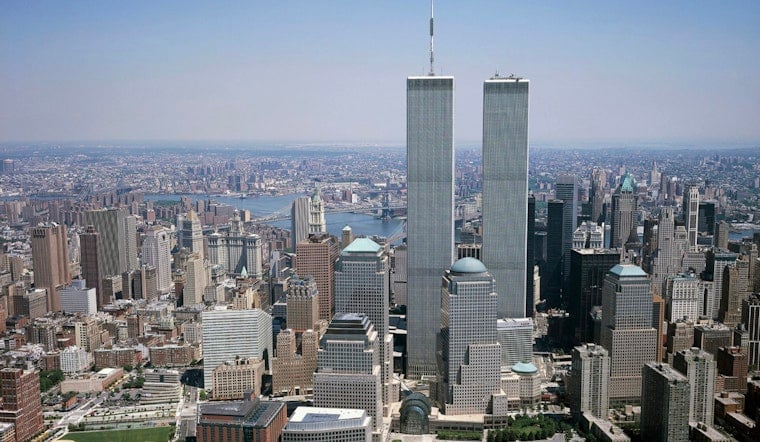
Twenty-five years after the September 11 attacks, New York City officials have identified another World Trade Center victim — an adult female whose family has chosen not to come forward publicly — using a DNA technique that did not exist a quarter-century ago. The identification makes her the 1,651st person formally named among the nearly 3,000 killed at the World Trade Center, and it marks the first time investigators have used this particular method to crack a 9/11 case in the attack's 25-year history.
The breakthrough came from forensic investigative genetic genealogy, a technique that combines DNA testing with family tree research, according to ABC7 New York. The identification was made jointly by the Office of the Chief Medical Examiner and the NYPD Detective Bureau. Dr. Jason Graham called it a breakthrough, and Jennifer Odien said the method shows real promise for cases that have long resisted resolution, per the same report. Gregory Paduoano added that the technology simply was not available 25 years ago, when the initial identification effort began.
Why Thousands of Fragments Still Have No Name
The scale of what medical examiners have been working against is staggering. Response and recovery workers ultimately retrieved approximately 21,905 human remains from Ground Zero, the vast majority tiny, heavily degraded bone fragments, according to KPBS. Extreme heat, jet fuel exposure, bacterial degradation, and the structural collapse of the towers left much of that material effectively unreadable to early DNA science. The World Trade Center attack, which struck on September 11, 2001, remains the largest mass murder in United States history, and the resulting identification effort is considered the most complex forensic identification undertaking the country has ever seen, per ABC7 New York.
Nearly 1,100 World Trade Center victims remain unidentified, representing about 40 percent of the total killed, ABC7 New York reports. The medical examiner's office and police department are now focusing specifically on DNA profiles that do not match any existing reference sample, a subset of roughly 47 profiles considered potentially ripe for identification through genetic genealogy. Genetic genealogy cannot be used for every case, officials cautioned, but where reference matches have failed, it offers a new path forward.
From Cheek Swabs to Ultrasonic Pulverization
The forensic toolkit available today looks nothing like what investigators had in the fall of 2001. In the immediate aftermath, the medical examiner's office collected over 17,000 ante-mortem reference samples from victims' families — cheek swabs alongside personal items like toothbrushes, razors, and hairbrushes — as reported by CBS News. Those original samples remain central to identification work today, even as the science built on top of them has changed dramatically.
Over the ensuing two decades, scientists evolved their techniques from short tandem repeat testing to ultrasonic ball-bearing pulverization, Next-Generation Sequencing, and now single nucleotide polymorphism analysis paired with family tree research, according to Forensic Mag. Before adopting genetic genealogy, the medical examiner's office relied on Next-Generation Sequencing to identify John Ballantine Niven, a 44-year-old South Tower insurance executive, as the 1,650th victim in January 2024, per the NYC Office of Chief Medical Examiner. Then in August 2025, city officials announced three more identifications — Ryan Fitzgerald, Barbara Keating, and an unnamed woman — pushing the total to 1,653 at that time.
Search efforts also extended well beyond the original Ground Zero footprint. A 2006 forensic investigation uncovered more than 700 small bone fragments on the rooftop of the damaged Deutsche Bank building across the street, CBS News notes, underscoring how far human remains were scattered by the towers' collapse. A peer-reviewed statistical modeling study published in Forensic Science International projected that advanced DNA re-testing of the remaining 3,404 unidentified fragmentary remains could yield approximately 76 additional first-time identifications, according to research indexed on PubMed.
A Repository at Bedrock, and a Promise to Keep Trying
Unidentified and unclaimed remains are housed 70 feet below ground at bedrock level within a private repository operated by the medical examiner's office at the National September 11 Memorial & Museum, adjacent to a Reflection Room reserved exclusively for victims' families. It is a solemn arrangement distinct from the museum's public spaces, reflecting the ongoing, unfinished nature of the identification mission. Genetic genealogy of the kind used in this case has also helped police solve long-unidentified cold cases elsewhere, and its use in forensic work is shaped by federal guidance from the U.S. Department of Justice, which sets privacy protocols and requires agencies to rely on designated public DNA databases with thorough genealogical verification, as Hoodline has previously reported.
The Office of the Chief Medical Examiner has pledged to never stop trying to identify the nearly 1,100 victims who remain unnamed, and officials say they plan to keep applying new scientific innovations as they emerge, per ABC7 New York, whose report was written by Aaron Katersky. The effort continues alongside a grim parallel toll: the cumulative death count among 9/11 first responders and survivors from exposure-related illnesses such as cancer now exceeds 4,000, surpassing the 2,977 people killed on the day of the attacks, as Hoodline has reported. Twenty-five years on, both the identification effort and the health crisis it runs alongside remain very much unfinished business for New York.



