

























































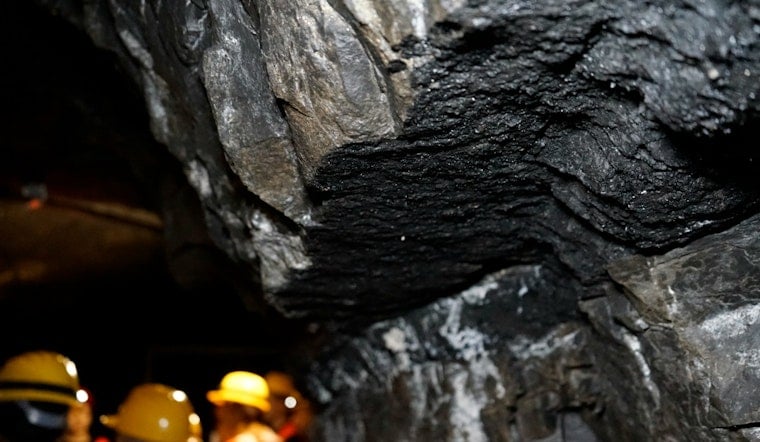
A 90-acre former limestone mine at the northwest corner of the Interstate 470-Missouri Route 350 interchange in Lee's Summit is headed for a decade-long makeover that starts with removing and stockpiling topsoil, followed by rock removal and collapse activities. The site's new operator, West Pryor Quarry, has submitted an application for a 10-year special use permit to reclaim roughly 35 acres of the property, work that includes collapsing old mine rock ceilings and pillars before any future development can rise above them.
The property was mined underground using the room-and-pillar method starting in the early 1960s, with operations continuing into the 1980s, according to The Kansas City Star. That mining left behind hollowed-out voids beneath the surface, and property assessments have found the land above those areas is undevelopable and unable to support structures as it sits today. J&M Sarai LLC purchased the mining property in June, taking over a site whose mined area has a minimum of seven documented collapses.
Three homes sit nearby along Northwest Clifford Road, and the newspaper's report notes that two of the documented collapses are located within 250 feet of that road. Per the project narrative described in the permit application, a collapse on Clifford Road could prevent residents from accessing their property altogether. Lee's Summit and Kansas City are working together on an alternate route for affected residents. Missouri Department of Natural Resources records show that the state’s Mine Map Repository houses more than 2,000 maps of underground mines of various mineral commodities, including 1,193 underground mine maps.
How the Collapse-and-Fill Process Will Work
The reclamation work will begin with removing and stockpiling topsoil along I-470, the same report states. From there, crews will bring in rock crushers to break up the collapsed material, and crushed rock will be removed from the site as work proceeds at a pace of around 3.5 to 4 acres per year. Fill may be brought in separately to raise portions of the area to the elevations required for future construction, and topsoil will eventually be returned and graded back over the mine floor.
Project officials said the reclamation project will stabilize the undermined ground and create an opportunity for development that doesn't currently exist on hollowed-out land. The previous site operator had already completed about 24 acres of reclamation work before the ownership change, meaning the new plan builds on groundwork already underway rather than starting from scratch.
The approach involves collapsing ceilings and pillars in abandoned room-and-pillar mines, with fill potentially brought in separately. Not every old mine gets that treatment, though. Some structurally sound room-and-pillar mines in the region were instead repurposed into subterranean business parks, most famously the SubTropolis complex; Kansas City's underground business space totals about 20 million square feet, according to the Kansas City Public Library. SubTropolis relies on thick, intact limestone pillars, while the West Pryor site is planned for surface collapsing before anything can be built on top.
Safety Measures and a New Access Road
The special use permit calls for earth berms and fencing to be built to screen surrounding areas and provide site security during the reclamation period. That's consistent with Missouri Revised Statutes Section 444.774, which requires a barrier or berm at least three feet high when surface mining has occurred up to the statutory minimum distance from a public right-of-way, subject to exceptions, according to Justia Law.
The reclamation project will also create a new access road in the future development area, though it won't be built over any undermined area, addressing one of the core hazards the collapse work is meant to fix. For the three homes along Clifford Road, the newspaper's reporting characterizes the disruption from nearby reclamation work as a short-lived inconvenience rather than a lasting problem.
Not every cost tied to the mine's history falls on the developer, however. Missouri's Abandoned Mine Lands program can fund soil stabilization or mine filling on such sites, but state funds do not cover private home or structural repairs caused by mine subsidence, according to guidance from the Missouri Department of Natural Resources. That leaves property owners or their private insurers responsible for any structural damage tied to historic collapses, even as the broader reclamation moves forward under state oversight. According to the Missouri Department of Natural Resources, Missouri now receives the minimum program funding amount for abandoned mine land reclamation, approximately $3 million per year.
What Could Eventually Get Built There
Beyond the immediate safety work, a conceptual development plan envisions future zoning that would allow apartments and businesses once the land is stabilized. The mining property sits close to the $180 million, 70-acre Streets of West Pryor mixed-use development that broke ground at I-470 and Pryor Road with retail, dining, apartments, and senior living, according to MetroWire Media, underscoring how much commercial investment has already reshaped that stretch of the I-470 corridor.
Brownfields and former industrial sites like the West Pryor mine are part of redevelopment efforts that can involve years of stabilization work. To keep up with growth pressures along the corridor, the city has also commissioned traffic planning studies to expand Pryor Road into a multi-lane corridor, according to Affinis Corp, reflecting how the reclamation project is only one piece of a much larger infrastructure push in the area.





