

























































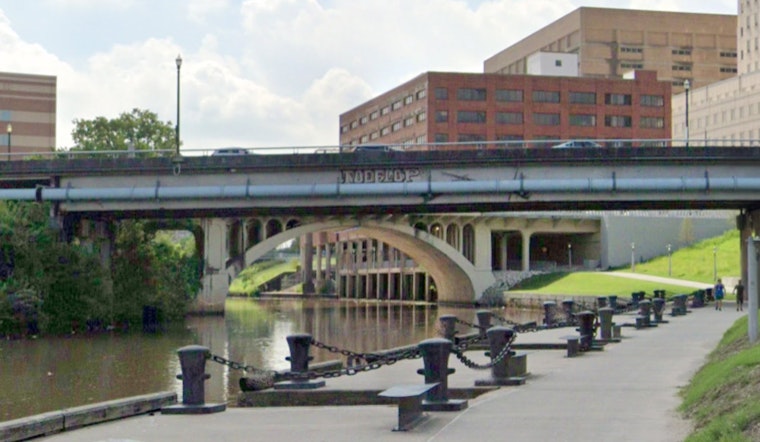
A new report set for release Thursday raises fresh concerns about potentially unsafe levels of bacteria in Houston bayous and waterways across Texas, with Buffalo Bayou singled out among the local waters examined. Researchers and water quality experts plan to lay out the findings at a 10 a.m. news conference at Allen's Landing Park in downtown Houston, the spot where White Oak Bayou meets Buffalo Bayou.
The report and an accompanying online mapping tool examine water quality samples collected from waterways across the state, according to Click2Houston. The map is designed to let the public identify specific Texas waterways where pathogens, including E. coli, have been detected, and to see the underlying testing results for themselves. E. coli is a type of bacteria that can signal contamination from human or animal waste, and exposure to water carrying it can lead to waterborne illness, particularly when the water is swallowed.
Who's Presenting the Findings
The Thursday briefing is expected to draw a lineup of researchers and local officials, per the same Click2Houston report. Speakers include Dr. Ryan Bare of the Houston Advanced Research Center, Dr. Matthew Berg, CEO and principal scientist of Simfero, Jesse Dickerman with Harris County Pollution Control, Beth Martin of Environment Texas Research & Policy Center, and Guadalupe Fernández with Bayou City Waterkeeper. Texans regularly turn to rivers, lakes, and bayous for swimming, fishing, and paddling, which is part of why the report's authors say the pathogen data matters to ordinary recreational users, not just regulators.
Environment Texas Research & Policy Center is releasing the findings as part of a report titled Are Texas Rivers and Lakes Safe for Swimming?, and the organization says the results point to a need for greater investment in wastewater infrastructure. The group is recommending that governments boost funding to address aging or inadequate wastewater systems, arguing that increased investment would reduce the amount of contamination reaching Texas waterways in the first place.
What Texas Law Says Is Safe
State regulators already have a numeric bar for what counts as safe. Under Title 30 of the Texas Administrative Code, the Texas Commission on Environmental Quality sets a freshwater safety threshold for primary contact recreation, activities like swimming, tubing, and wading where water is likely to be swallowed, at a geometric mean of 126 colony-forming units of E. coli per 100 milliliters, with a single-sample maximum of 399 CFU per 100 mL. Bacterial contamination is not a niche problem in Texas: monitoring data compiled by the Sierra Club shows E. coli, primarily from human and animal waste, is the leading cause of water quality impairments statewide, responsible for 44% of all surface water pollution listings in Texas. Nationally, swimming in waters contaminated with fecal bacteria is tied to an estimated 57 million cases of waterborne illness a year, according to national public health data cited by Axios.
A Pattern of Contamination Along the Gulf Coast
The scale of the problem extends well beyond inland bayous. An Environment Texas report released in July found that 141 of 167 tested Texas coastal beaches exceeded EPA safety thresholds for fecal indicator bacteria on at least one testing date over the prior year, as MySA reported at the time. Separate environmental assessment data shows 28% of evaluated Texas river miles and 38% of lake acreage statewide fail to meet basic safety standards for contact activities such as swimming and fishing, according to figures published by SpringWell Water Filtration Systems.
Houston's Sewer System Under Federal Watch
Houston's infrastructure struggles help explain why bacteria keeps showing up in local waterways. The city's wastewater system serves an estimated 3 million residents across 6,200 miles of sewer lines, 380 lift stations, and 39 treatment plants, treating an average of 250 million gallons a day, per city figures. In April 2021, a federal court approved a $9 billion, 15-year consent decree between Houston, the EPA, and the State of Texas requiring sweeping structural repairs to eliminate recurring sanitary sewer overflows.
Progress on that mandate has been slow. An independent engineering review commissioned by Bayou City Waterkeeper in April found that five years into the 15-year decree, five of the city's nine highest-priority sewer overflow areas remained stuck in the design phase, with active construction underway in only one, according to the Houston Chronicle. Municipal compliance records analyzed by Bayou City Waterkeeper also show the city had paid $1,266,400 in stipulated non-compliance penalties to the U.S. Department of Justice as of June 2024 for missed consent-decree deadlines.
Falsified Test Results Add to Distrust
Public confidence in official water quality reporting has taken additional hits this year. In June, the former CEO of a Conroe-based environmental laboratory and two co-defendants pleaded guilty in Houston federal court to violating the Clean Water Act after admitting they altered 36 wastewater test reports between 2021 and 2024 to hide elevated E. coli, ammonia, and phosphorus levels from state and federal regulators, according to the Department of Justice. Hoodline previously reported that the defendants used remote-access software and digital backdoors to bypass audit trails before submitting the doctored reports to TCEQ and the EPA, in a case detailed in June. Thursday's new report and mapping tool arrive against that backdrop, offering the public a separate, independent look at where pathogens are showing up in Texas waters.





