

























































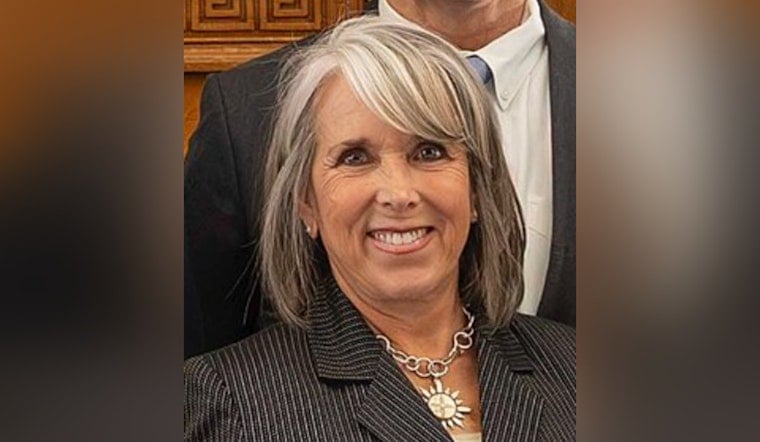
Next week, the Tobin Center for the Performing Arts becomes ground zero for a two-day push to confront San Antonio's mental health crisis, with mental health professionals, law enforcement officers, and faith leaders sharing the stage to address the wellbeing of South Texas residents. The 11th Annual Pathways to Hope Mental Health Conference runs Friday and Saturday, August 28 and 29, and it's free and open to the public.
The conference is hosted by NAMI of Greater San Antonio, and this year's lineup includes New Mexico Governor Michelle Lujan Grisham and Bexar County Judge Peter Sakai as keynote speakers, according to Pathways to Hope. More than 30 presenters and 20 workshops are scheduled across the two days at the venue, located in downtown San Antonio. The event was also covered by KABB, which reported that the conference brings together mental health professionals, law enforcement, and faith leaders to give the public opportunities to learn directly from experts.
A Decade-Old Effort Keeps Growing
Pathways to Hope launched in August 2016 as a collaborative project between Bexar County, the Bexar County Health Collaborative, and local faith organizations, designed from the start to reduce stigma around mental illness by uniting clergy with clinical providers, per the San Antonio Report's coverage at the time. That origin explains why faith leaders remain fixtures on the agenda alongside doctors and police a decade later. The event has scaled up considerably since then: last year's 10th annual gathering drew 1,562 attendees, 92 speakers, 50 educational sessions, and 35 community partner organizations, according to Pathways to Hope.
Behind the conference's growth is Norma Quintero, cohort development director at NAMI of Greater San Antonio, along with Lauren Byrd, the organization's CEO, and Maria Hoenigman, its director of programs, per KABB's reporting.
Youth Get Their Own Day of Programming
Saturday brings the 2nd Annual Youth Conference, running parallel to the main event with sessions built for young people ages 12 to 19 and their caregivers. Topics include school safety, intergenerational communication, and the school-to-prison pipeline, according to Pathways to Hope's youth conference page.
The youth-focused track arrives amid a mixed picture for teen mental health in San Antonio. City of San Antonio Teen Mental Health Survey data cited by the San Antonio Report showed local teen self-harm reports dropped from 26% in 2022 to 11% in 2024, while teen suicidal ideation fell from 28% to 14% over the same span. Still, disparities persist among vulnerable groups: 2025 University Health data found LGBTQ+ youth in Bexar County reported 30% suicidal ideation compared to 9% among heterosexual peers.
Adult Depression Rates Outpace State and National Averages
The conference's timing lands against a backdrop of sobering adult numbers. A July 2025 report by University Health's Institute for Public Health found that 18% of Bexar County adults reported frequent mental distress, defined as 14 or more poor mental health days per month, and 27% had been diagnosed with a depressive disorder, both figures surpassing state and national averages.
Access to care also remains geographically uneven across the county. Bexar County increased its mental health provider ratio from 188 to 250 providers per 100,000 residents between 2020 and 2025, but much of that expansion concentrated in wealthier northern neighborhoods, leaving persistent shortages south of U.S. 90, according to Texas Public Radio. Statewide, Mental Health America's 2025 State of Mental Health in America report ranked Texas 19th nationally for youth mental health prevalence and access, an improvement over prior rankings that placed the state near the bottom for overall mental health care access, per KVIA.
New State Law Complicates School-Based Screening
Legislative changes are also shaping how youth mental health can be monitored going forward. Texas Senate Bill 12, effective September 2025, mandates written parental consent before public schools can conduct activities that collect data on student emotional well-being, a shift that the San Antonio Report notes complicates school-based youth mental health monitoring efforts. That new requirement sits alongside the Saturday youth panels' focus on communication between generations, underscoring how conversations that once happened through school screenings may now need to happen at kitchen tables, or at events like this one.





